
Understand the wheel before you place a bet
 Available in US
A practical guide to European roulette’s single zero, table bets, free-play terms and the limits of betting strategies.

The European Wheel: One Zero, One House Edge
European Roulette is built around a wheel with 37 pockets: the numbers from 1 to 36 and a single zero. That green zero is easy to overlook when you first sit down, but it is part of every calculation behind the game. The wheel’s layout gives the game its familiar rhythm: the ball spins, bounces across the pockets, and settles on one result.
The house edge is the casino’s built-in mathematical advantage over time. In European Roulette, it is 2.70%. That does not mean the casino takes that share from every stake, or that a particular session will end with a predictable loss. It describes the long-run effect of the rules across repeated play. In a short session, results can swing either way; the edge is a feature of the game, not a forecast for your next spin.
I find it useful to keep that distinction clear. The number tells you something about the structure of the game, not whether a bet is sensible for your budget. A lucky run does not erase the edge, and a losing run does not mean the wheel is due to pay you back. Each result stands on its own.
Choosing European roulette in New Zealand means finding a casino that suits what you want to check before you play. This list gives you a concise reference to the available operator details.
-
Lamabet
- Payout speed
- 1-3 business days
Lamabet lists a payout speed of 1–3 business days, a useful detail for you to consider when reviewing your options.
-
Ricky Casino
- License
- Tobique Gaming Commission, licence no. 0000002
Ricky Casino lists a licence from the Tobique Gaming Commission, licence no. 0000002. You can use this information as part of your checks.
-
7Bit Casino
- License
- Tobique Gaming Commission, licence no. 0000091
7Bit Casino lists a licence from the Tobique Gaming Commission, licence no. 0000091. This gives you a specific licensing detail to review.
-
BitStarz
- License
- Curaçao Gaming Authority, licence no. OGL/2024/165/0185
BitStarz lists a Curaçao Gaming Authority licence, no. OGL/2024/165/0185. You can consider this stated licence information when assessing the operator.
-
Zotabet
- License
- 07017519840
- Payout speed
- 1-3 business days
Zotabet lists licence number 07017519840 and a payout speed of 1–3 business days. These are the stated details available for your review.
-
Neospin
- License
- Tobique Gaming Commission, licence no. 0000064
Neospin lists a licence from the Tobique Gaming Commission, licence no. 0000064. You can check this licensing detail as part of your research.
-
Play Grand
- License
- Malta Gaming Authority, licence no. MGA/B2C/370/2017
Play Grand lists a Malta Gaming Authority licence, no. MGA/B2C/370/2017. This gives you a specific licence reference to consider.
-
Wintino
- Payout speed
- 1-3 business days
Wintino lists a payout speed of 1–3 business days, giving you one practical detail to consider.
-
N1 Casino
- License
- Malta Gaming Authority, licence no. MGA/B2C/394/2017
N1 Casino lists a Malta Gaming Authority licence, no. MGA/B2C/394/2017. You can use this stated licence reference in your review.
If you are looking at European Roulette online in New Zealand in 2026, the basic wheel remains the same whether the game is presented digitally or through a live table. The single zero is the detail to check first. It identifies the wheel and anchors the stated house edge; the look of the interface does not change that underlying feature.
At a European Roulette casino table, you may see the wheel and betting area presented together, but they serve different purposes: the wheel determines the result, while the betting area is where stakes are placed. You do not need to memorise every detail before understanding the central point. This is a game with one zero, and that zero gives the house its mathematical advantage.
Keep it simple.
Try European Roulette Free Before You Play for Money
A free European Roulette game is useful for one simple reason: it lets you learn the interface without putting money at stake. You can see how the wheel and betting area are presented, try placing different kinds of bets, and get used to the rhythm of a spin. If you have never played online, that small bit of practice can make the real-money version feel less unfamiliar.
Look for a demo or practice option on the game’s opening screen. The wording varies, and some versions may open straight into a game rather than offering a separate choice. A free game should let you make selections using play credits or an equivalent on-screen balance, not a deposit from your account. Check which mode you are in before you start; the interface may look much the same in demo and cash play.
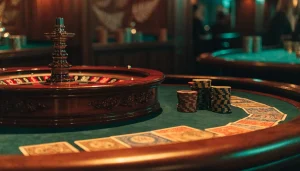
The wheel is the part to recognise first. European Roulette has 37 pockets, with one zero among them. In a game window, the wheel may be shown beside the table, above it, or in a separate view. You do not need to memorise the order of the numbers before practising. Notice where the result appears and how the game marks it once the spin is over.
Then take a moment with the betting area. It usually represents the numbers and other available selections in a compact layout, with controls for choosing a stake and confirming your bet. Try selecting a number, then remove it or change the selection before confirming, if the interface allows. The point is not to build a system; it is to find out what each button does while mistakes cost nothing.
A free European Roulette game online can also help you learn the pace of a particular interface. Some games wait for you to place and confirm a bet; others move through the spin and result with less delay. See where the balance is displayed, how you clear a selection, and whether the game makes it clear that your bet has been accepted. Those are practical details, especially on a small phone screen where controls can sit close together.
Do
- Use demo mode to learn the interface
- Practice placing and clearing bets
- Check which mode you are in before starting
Don't
- Use free play to predict future results
- Look for a cheat hidden in the buttons
- Assume demo success guarantees real money wins
If you want an online European Roulette simulator, a demo game serves much the same practice purpose: it reproduces the basic game screen and lets you test the controls. It is not a tool for predicting future results. A run of outcomes in a free game gives you no special information about what the next spin will show, and it cannot provide a reliable trick for winning every time. A roulette game has no dependable cheat hidden in its buttons.
It is also worth treating free play as rehearsal, not proof that you are ready to stake money. You can take your time, repeat a selection, and explore the controls without the pressure of a real balance changing. That makes it easier to notice confusion—perhaps you thought you had selected a number when the interface had not registered it. Better to spot that in practice.
Before moving from a free game to European Roulette online for real money, pause and check that you have deliberately changed modes. Do not assume a familiar screen means you are still using play credits. A demo can help you understand how the game works, but it cannot recreate the feeling of risking your own funds or make those decisions for you. If you do choose to play for money, only risk what you can afford to lose.
Free European Roulette games online are best used in short, purposeful sessions. Practise navigating the screen, placing and clearing a selection, and reading the result. Once those steps feel clear, you have got what the demo is for. No magic trick.

Free Play, Free Spins and What “Free” Really Means
“Free” can describe two different things at a roulette site. One is a practice game, where you use play credits rather than money. The other is a promotion that gives you spins under specific terms. They may appear side by side, but they are not the same offer, and the difference matters before you press a button.
A practice game is for getting familiar
A free European Roulette game is generally a version of the table that lets you try the interface without staking real money. You can see how the controls work, select bets and watch a round resolve. The credits shown on screen are part of the demonstration; they are not a cash balance and cannot be withdrawn as winnings.
That makes free play useful for learning the software, not for testing whether you can make money. A practice result does not create a real balance, and any success in the demo does not carry over to a later paid game. It is a low-pressure way to get your bearings. No cash at stake.
Some games open directly in a browser, while others are presented through a casino app or a page that asks you to sign in. “No download” describes the way you access the game, not a different kind of roulette. A browser-based demo can still depend on the site’s own availability and interface. If a game asks you to deposit before it will let you try its practice mode, that is not the same as an unrestricted free-play option.
You may also see free roulette described as live. That label can refer to a live-dealer table, but it does not, by itself, tell you whether you are watching a demonstration or placing real-money bets. Check the game screen and the surrounding account page. A live presentation is a format; “free” is about whether your own money is being risked. Don’t infer one from the other.
Promotional spins are different
Free spins are usually presented as part of a promotion rather than as an open practice table. The offer may assign spins to a particular game or make them available after an account action. The important distinction is that promotional spins come with offer terms. They are not simply practice credits with a friendlier label, and they should not be assumed to work on any roulette table you choose.
Promotions can also be described loosely as free play, even when the play is tied to a bonus. Read the on-screen wording carefully: does it open a demo, or does it add promotional play to an account? If the offer is connected to a deposit, an account requirement or another condition, the word “free” does not erase that condition. New Zealand operators may set eligibility criteria and limits on when an offer expires, which games count towards its requirements, and whether withdrawals affect it. The details are part of the offer, not decoration.
There is a specific distinction to keep in mind with bonus funds and free-spin winnings: bonus money must be wagered 50X within 30 days, while winnings from free spins must be wagered 50X within 7 days. A withdrawal request voids all active or pending bonuses. Those terms matter if you are considering a promotion; they do not change what a practice game is.
Check what the screen is offering
Before you start, look for clear wording such as “demo,” “practice,” or “real money.” If there is a balance display, find out whether it represents demo credits, promotional funds or withdrawable cash. A button marked “play” is not enough to establish that distinction.

If your aim is simply to get comfortable with European Roulette, choose a clearly labelled practice mode and treat its credits as temporary. If you are looking at free spins, read the linked promotion terms before accepting anything. They may not be usable on the roulette game you had in mind.
I treat the two options as separate tools: practice mode lets you explore a game without staking cash; free spins belong to a promotion and carry its conditions. Clear labels help, but a quick look at the terms is still worth the time. “Free” can mean different things.
European vs American Roulette: The Extra Pocket Matters
The difference between European and American Roulette is easy to miss when you are looking at the betting layout. The important change is on the wheel: European Roulette has 37 pockets, with a single zero, while American Roulette has 38, adding a double zero. That extra pocket changes the chance that any given bet wins—and gives the house a larger edge.
The two wheels share the single-zero pocket. On the American wheel, the double zero is an additional losing result for most bets. The table may look familiar, but that extra result matters whenever the ball lands in it. It is not a decorative detail.
What the house edge tells you
European Roulette has a house edge of 2.70%; the American version’s is 5.26%. In plain terms, the house edge describes the casino’s mathematical advantage across repeated play, not what must happen in one session. You can win a spin on either wheel, but the double zero makes the American game less favourable to the player over time.
European Roulette
Features 37 pockets with a single zero and a house edge of 2.70%.
American Roulette
Features 38 pockets with a single and double zero, resulting in a house edge of 5.26%.
That does not mean the European wheel can be predicted or that a single-zero game guarantees a better session. It means the wheel has fewer pockets working against the player’s bets. I check the wheel itself before I settle in; the name on the game can be less useful than the zeros it shows.
A specialist review lists payout percentages of 97.30% for European Roulette and 94.70% for American Roulette. Those figures describe the theoretical return associated with each version, rather than a promise about what you will get back in a particular game. The edge and payout figures point in the same direction: the single-zero wheel is the more favourable of the two.
What to look for
If you are choosing between the games, check the wheel or the game information for the zero pockets. A European wheel has one; an American one has both a single zero and a double zero. That quick check is more reliable than assuming every roulette table uses the same version.
The difference is not that one game has a special way to win. Both use roulette’s familiar combination of wheel, ball and betting choices. The additional pocket changes the odds attached to those choices, but it does not make outcomes predictable. A double zero can appear, and a European zero can appear; neither wheel remembers what happened on the previous spin.
For a newcomer, European Roulette is the less costly version in terms of house edge. That is a comparison of the game rules, not a recommendation to stake more or expect a profit. If you play for money, every bet can still lose, so keep the stake within what you can afford to lose. The pocket count is the useful distinction. The rest is still roulette.

Read the Table Before You Place a Bet
A roulette table can look busy until you separate its two parts: the numbered betting grid and the outside betting areas. The grid runs through the numbered pockets, with the zero in its own green space. The numbers are also marked red or black; the outside boxes cover groups such as red or black, odd or even, and low or high numbers.
On a digital table, the same layout may be scaled down or rearranged to fit a screen. On mobile, check that you can still read the bet labels and the payout display before placing anything. In a live game, the layout may sit beside the wheel rather than directly in front of it. The interface changes; the labels still tell you what your chip covers.
What the payout table tells you
The European Roulette payout table sets out the return attached to each type of bet. A straight-up bet covers one number. Other inside bets cover a small group of numbers on the grid, while outside bets cover broader categories shown around it. The payout display should identify each bet type and its stated return; don’t assume that two bets with different names are settled in the same way.
A payout is not the same thing as the amount you get back in total. Some displays describe winnings, while others show the full return, including the original stake. If the wording is not clear, pause and check the game rules or help panel before betting. That small distinction matters when you are reading your balance after a result.
The zero is not part of the red-or-black, odd-or-even, or low-or-high groups. If zero wins, those outside bets do not cover it. A bet placed directly on zero is listed separately from those groups, and its return should be shown in the table’s payout information. Look for the exact label rather than guessing from the colour or position of the box.
Table positions and called bets
Most bets are placed by selecting spaces on the table layout. Called bets are different: they refer to number groupings based on where numbers sit around the wheel, not where they appear in the grid. That distinction can catch you out if you assume a wheel-based call is simply a row or column bet. If a game offers called bets, its rules should show which wheel positions each call covers and how the chips are placed.
Before you confirm a bet, check the selected area, the bet label, and the displayed payout. That is useful whether you use play money to learn the layout, play online, or sit at a live table. I’ve found that most mistakes happen when someone recognises a familiar number but misses the category attached to the chip. Read the label first. Then place it.
Roulette Odds: What Each Bet Can—and Cannot—Change
Odds describe how likely a particular result is; the payout describes what a winning bet returns. In European Roulette, those two ideas work together, but they are not interchangeable. A bet covering a narrower outcome has a lower chance of winning than one covering a broader group, while its payout is correspondingly larger. Choosing either changes the shape of the risk, not the underlying wheel.

The European wheel has 37 pockets, including a single zero. Its 2.70% house edge expresses the game’s built-in mathematical advantage over time. It does not mean that a casino takes that share from every stake, or that an individual session will follow a tidy pattern. You can win several spins, lose several, or finish close to where you started. The edge is a long-run expectation, not a forecast for your next visit.
What a bet changes
A bet affects which outcomes count as a win. If it covers a larger set of results, it has more ways to succeed, but the return for a win is smaller. A bet focused on a narrower result has fewer winning outcomes and a larger return when it lands. Neither choice changes the pockets on the wheel or gives you control over where the ball stops.
That is the useful way to think about European Roulette bet odds: compare the chance of the result you have selected with the return attached to it. A striking payout can make a bet look attractive, but it does not make the result more likely. Likewise, a bet that wins more often is not automatically a better deal. The zero remains part of the game’s mathematics.
The same principle applies whether you are looking at a straightforward bet or a called bet based on wheel positions. The labels and selections may differ, but no bet can improve the wheel’s probabilities. Check what must happen for your bet to win, then consider whether its risk and potential return make sense for you.
Each spin starts fresh
Roulette spins are independent. The result of an earlier spin does not change the probability of any result on the next one. If the same colour has appeared repeatedly, that run may feel as though it is due to end. The wheel does not keep a record, though; the next spin is not obliged to balance the previous ones.
This is where a run of results can mislead you. A sequence may look unusual, but it does not make a different outcome more likely on the next spin. Nor does a recent win make another win more likely. A live display of previous results is a record, not a forecast.
When comparing odds in European Roulette, keep the two questions separate: how often can this bet win, and what does it pay if it does? The house edge applies across the game, while each bet offers a different balance between likelihood and return. No selection removes that edge, and every real-money bet can lose. Don’t risk more than you can afford to lose.
A Betting Strategy Won’t Make the Wheel Predictable
A European Roulette betting strategy can shape how you stake your money, but it cannot tell you where the ball will land or make a losing bet safe. I find it helps to separate those two things: a plan can keep your decisions consistent; it cannot change the wheel.
The single-zero game still carries a 2.70% house edge. That edge does not disappear because you choose a particular set of numbers, switch between outside and inside bets, or follow a staking pattern. There is no best European Roulette strategy that turns the game into a reliable way to make money.
What a strategy can do
A useful plan is mostly about limits and choices you control. Before playing for money, decide what you can afford to lose and treat that amount as entertainment spending, not as money you expect to get back. Do not risk more than you can afford to lose.
You can also decide in advance which bets you understand and how you will respond when the session goes badly. That may help you avoid changing your approach in frustration. It does not improve the chance that a chosen number or group of numbers will win.
Betting systems such as Martingale ask you to change stake sizes after wins or losses. They may make a session feel more orderly, but they do not remove the house edge. A run of losses can still happen, and every real-money bet can lose. A system is not a shield.
Past results are not a signal
Roulette spins are independent. A number appearing several times does not make it less likely on the next spin, and a number that has been absent is not due. Previous results do not alter the probability of future outcomes.
That is why a history display should be read as a record, not a forecast. I would not use a recent streak as a reason to raise a stake or chase a number. The wheel has no memory. Dry, but useful.
People sometimes look for European Roulette tactics that promise to beat randomness: covering more numbers, changing bets after a loss, or waiting for a pattern. These can alter what you stand to win or lose on a particular spin, but they cannot make the next result predictable. Spreading bets widely is still a choice with costs, not a guarantee.
And European Roulette is a casino table game, not a slot. The same basic caution applies: know what you are staking, set a stopping point, and step away when you reach it. The most practical tip is not a secret betting sequence. It is refusing to let a staking plan become an excuse to spend money you cannot afford to lose.
Online Roulette in New Zealand: The Licensing Context
New Zealand’s online casino rules are changing, so the date matters when you read about licensing. The Online Casino Gambling Act 2026 came into force on 1 May 2026 and created the country’s first domestic licensing system for online casino gambling. That is a shift from the previous position: the Gambling Act 2003 did not permit online casinos to be based in New Zealand, while offshore gambling sites had not been licensed or supervised by a New Zealand regulator. Customers using those sites had no domestic government recourse.
The new system has a transition period, rather than an instant switch to a fully operating licensed market. Providers that were already serving people in New Zealand before the Act took effect may continue until 1 December 2026, subject to the transitional rules. By that date, a provider that has not applied for a licence must stop conducting online casino gambling in New Zealand. The full licensing regime is not expected to be operational until 2027, and unlicensed operation is expected to become an offence around mid-2027.
The responsibilities are divided between two public bodies. The Department of Internal Affairs is New Zealand’s primary gambling regulator and oversees the online casino licensing framework. The Gambling Commission handles casino licensing applications: it hears them and makes determinations. It also issues online casino licences and approves changes to licence conditions. In other words, oversight of the framework and decisions on individual licences are related jobs, but not the same one.
That distinction is worth keeping in mind when you see a claim about licensing. A provider’s application, a licence decision and the regulator’s oversight are different things; one should not be presented as proof of another. During the transition, providers that do not meet the applicable requirements may face enforcement action and fines of up to NZ$5 million. Licensed operators must also use stricter age and identity verification systems.
The transition is a legal timetable, not a blanket assurance about every roulette site a New Zealand resident might encounter. Nor does the existence of an application, by itself, mean a licence has been granted. The licensing system is intended to establish domestic oversight, with the Gambling Commission deciding applications and the Department of Internal Affairs overseeing the framework. That is the useful distinction: check what has actually been authorised, rather than treating a familiar name or a polished site as evidence of regulatory status.
For anyone looking at European Roulette online, the game itself does not tell you which legal arrangements apply to the service offering it. New Zealand’s framework is being phased in, with transitional permissions ending on a specified date and the complete licensed system still to come. Dates matter here. A lot.
- Confirm the provider's current regulatory status
- Check if the provider has applied for a domestic licence
- Verify the license date against the 2026 transition timetable
How to Play a Spin, from Bets to Result
Start by checking that the game is European Roulette. Its wheel has 37 pockets, including a single zero. That is the wheel the result comes from; the numbers printed on the betting layout are there to help you place your selection.
Before the betting window closes, choose where to stake. You can select a number or a broader outcome shown on the layout, then set the stake using the game controls. If you are using a roulette app, the buttons and chip controls may look different from a physical table, but the basic sequence is the same: select a bet, confirm the stake and place it before the game moves on.
Take a moment to check what you have selected. A tap in the wrong spot is an easy way to end up backing a different outcome than you intended. If you are learning the controls, a roulette simulator using the European wheel lets you practise the sequence without having to work it out during a live round.
When betting closes, the wheel spins and the ball eventually settles in a pocket. The result is the number and colour of that pocket. The game then settles each bet against the result: a winning selection is paid according to its stated payout, while a losing stake is taken. The displayed history may show earlier results, but it does not alter the next spin. Each spin is independent.
I find it helps to follow the same small routine each time: check the game, place the intended bet, confirm it, then read the result before doing anything else. It keeps the interface from rushing you into a mistake. That is all the mechanics require.
If you move from a free-play screen to real-money play, remember that the familiar controls do not make the result safer or more predictable. The European wheel has a house edge, and every real-money bet can lose. Set a limit you can afford to lose before you start, and stop when you reach it. No spin owes you a particular outcome.
Roulette Bonuses: Check the Conditions Before You Accept
A European roulette bonus can look straightforward until you read the terms attached to it. The headline may mention bonus money or free spins, but eligibility, expiry, game contribution and withdrawal rules can determine whether the offer is useful to you at all. Treat the conditions as part of the offer, not as fine print to leave for later.
Check who qualifies and when the promotion expires. Then look at the wagering requirement: bonus money must be wagered 50X within 30 days. Winnings from free spins have a separate condition: they must be wagered 50 times within 7 days. Those are different balances and deadlines, so make sure you know which rule applies to the promotion you are considering.
Game contribution matters too. The terms may say whether roulette play counts towards wagering, and whether European Roulette is treated differently from other games. Do not assume that placing bets on particular European roulette numbers will satisfy the requirement in the way you expect. Check the stated contribution and any restrictions on eligible bets before relying on the bonus.
A European roulette no-deposit bonus is still subject to its own eligibility and withdrawal conditions; “no deposit” does not mean “no rules”. The same applies if an offer mentions a roulette championship or another event: the name alone tells you nothing about how the promotion works. Look for the actual terms rather than inferring mechanics from the label.
One condition deserves special attention: withdrawal requests void all active or pending bonuses. If you request a withdrawal while a bonus is still attached to your account, the bonus may be cancelled under this rule. Check what happens to any related balance before proceeding.
In New Zealand, operators may advertise promotions with these kinds of restrictions. Read the complete terms and decide whether you are comfortable with them before accepting anything. If the conditions are unclear, do not treat the headline as a promise. The small print is the offer.
Casino Games in New Zealand: Slots and Table Games
Content created by the «casinotips-nz.com» team