
Understand the Rules Before Choosing a Jackpot Pokie
 Available in US
Progressive jackpots, long-run RTP and New Zealand’s rules all shape how offshore online pokie play differs from local casino operation.

Playing Progressive Pokies Online from New Zealand
When you look for progressive pokies online, it helps to separate two things that can sound alike: a casino operating from New Zealand, and a New Zealander using a casino based offshore. The law treats those situations differently. The fact that a site can be reached from here does not mean it is a locally operated casino.
The Gambling Act 2003 bars online casinos from being run within New Zealand. That is a rule about the operator’s activity, not a statement that a New Zealand resident commits an offence simply by playing at an offshore casino. New Zealanders are not prohibited from playing at those sites. So, if you are considering progressive online pokies, the first distinction is about where and under whose oversight the casino operates—not just where you happen to be sitting when you open it.
That difference matters because local oversight is limited. New Zealand has no dedicated gambling regulator for online casinos operating offshore. The Department of Internal Affairs, or DIA, does not supervise those overseas sites as it would a locally regulated online casino framework. If a dispute arises with an offshore operator, you do not have a New Zealand consumer protection agency overseeing that site and handling the complaint on your behalf.
When you’re looking at progressive pokies in New Zealand for 2026, it helps to check what is actually known about each operator before deciding where to play. Use these notes as a concise reference, not as confirmation that a particular progressive game is available.
-
Lamabet
- Payout speed
- 1-3 business days
You can note Lamabet’s stated payout speed of 1–3 business days when considering how quickly withdrawals may be processed.
-
Ricky Casino
- License
- Tobique Gaming Commission, licence no. 0000002
Ricky Casino lists a Tobique Gaming Commission licence, number 0000002. You can use that licence detail as a starting point when checking the operator.
-
7Bit Casino
- License
- Tobique Gaming Commission, licence no. 0000091
7Bit Casino lists a Tobique Gaming Commission licence, number 0000091. You can check this stated licence information as part of your review.
-
BitStarz
- License
- Curaçao Gaming Authority, licence no. OGL/2024/165/0185
BitStarz lists a Curaçao Gaming Authority licence, number OGL/2024/165/0185. You have a specific licence reference to consult when assessing the operator.
-
Zotabet
- License
- 07017519840
- Payout speed
- 1-3 business days
Zotabet lists licence reference 07017519840 and a payout speed of 1–3 business days. You can consider both details when reviewing the operator.
-
Neospin
- License
- Tobique Gaming Commission, licence no. 0000064
Neospin lists a Tobique Gaming Commission licence, number 0000064. You can use the stated licence detail as one point in your checks.
-
Play Grand
- License
- Malta Gaming Authority, licence no. MGA/B2C/370/2017
Play Grand lists a Malta Gaming Authority licence, number MGA/B2C/370/2017. You have a specific regulatory reference to check when assessing the operator.
-
Wintino
- Payout speed
- 1-3 business days
Wintino’s stated payout speed is 1–3 business days. You can keep that detail in mind when reviewing its withdrawal information.
-
N1 Casino
- License
- Malta Gaming Authority, licence no. MGA/B2C/394/2017
N1 Casino lists a Malta Gaming Authority licence, number MGA/B2C/394/2017. You can consult that reference as part of your operator checks.
That is less tidy than the experience many players expect. A website may be available in New Zealand, use familiar language and display games that load without fuss. None of that, on its own, makes it a New Zealand operator or brings it under DIA oversight. Access and local accountability are separate questions.
What “available in New Zealand” means
A progressive pokie can be offered to New Zealand players by an offshore casino without the casino being based here. For a player, that can make the arrangement feel local: you are playing from home, and the site accepts customers in New Zealand. Legally and practically, however, the operator remains offshore, and the local rules for operating a casino from within New Zealand do not turn that overseas business into a domestic one.
I would keep that distinction in mind before treating a site’s presence on a screen as reassurance. A page can be easy to access while still sitting outside New Zealand’s online-casino oversight. That does not make every offshore site identical, but it does mean you should not assume that a local agency is supervising it or will step in if you and the operator disagree.
The same point applies when the game itself is familiar. A progressive title may appear across different casinos, but the game’s recognisable name does not tell you where the casino is based or which local protections apply to your account. The legal position follows the operator and its location, not the theme of the pokie. The jackpot is the visible part; oversight is less visible.

The practical limit of local protection
With an offshore casino, a complaint about an account or a disagreement with the operator does not sit within a New Zealand regulator’s ordinary oversight of that site. There is no local online-casino regulator you can treat as the responsible authority for resolving that dispute. That is the practical consequence worth understanding before you deposit or start playing.
It is easy to blur this with the separate question of whether you are allowed to play. You are not committing an offence simply by using an offshore online casino as a New Zealander. But being permitted to play does not mean the offshore operator is licensed or supervised by a New Zealand gambling regulator. Those are different points, and one does not automatically provide the protections associated with the other.
For progressive pokies online, then, the sensible starting point is not just “Can I open the game?” It is also “Who is operating the casino, and what local oversight applies?” In New Zealand, an offshore site’s availability does not place it under DIA supervision, and a local agency is not there to act as your consumer-protection backstop in a dispute.
That is the line to keep clear: operating an online casino from within New Zealand is not allowed under the Gambling Act 2003, while New Zealanders may play at offshore casinos. The second part does not erase the first, and it does not create local oversight where none exists. Know which side of that line you are dealing with before you decide whether a particular site is right for you. No local backstop.
What Makes a Pokie Progressive?
A progressive pokie is defined by its jackpot, not by a special kind of spin. The prize can increase as play continues, rather than remaining a fixed amount set in advance. That changing jackpot is what separates a progressive game from a standard pokie with a fixed top prize.
The word can make the game sound as though it is building towards a moment when a win becomes more likely. It is not. A larger displayed prize does not make the next spin more likely to land it, and a long run without a jackpot does not mean one is due. Progressive describes the prize structure; it does not describe a sequence of improving odds.
That distinction matters because online pokies use random number generators, or RNGs, to determine their results. Each spin is independent: the game does not remember a previous miss and compensate you on the next turn. It also does not keep a private count of how long you have been playing and decide that your turn has arrived. The result is generated for that spin.
I find it useful to separate two things when looking at a progressive game: what happens on an ordinary spin, and what the jackpot feature adds. The ordinary game may have reels, symbols and bonus features, much like other online pokies. The progressive element is the changing jackpot attached to it. A game can therefore feel familiar to play while having a different prize structure behind it.

The jackpot may be shown prominently on the game screen, sometimes as the main reason the title catches your eye. Treat that display as information about the prize, not a hint about the next outcome. The number on screen can rise while you play, but it does not tell you whether your own spin will win. A small-looking game can carry a progressive feature; a game with elaborate bonus rounds does not become progressive just because its features look complicated.
It is also worth keeping the word “progressive” separate from “bonus round”. A bonus round is a feature within a game, such as a separate sequence triggered during play. A progressive jackpot concerns how the top prize is structured. The two can appear together, but one does not automatically mean the other. If the game information is unclear, look for a direct explanation of how its jackpot works rather than inferring the rules from the artwork or the name.
This is where newcomers can get misled by presentation. A jackpot counter that keeps moving is easy to read as momentum, as if the game is warming up. It is only a display of the current prize. The game’s random process still decides each spin, and previous outcomes do not change the next one. A run of near misses is no more meaningful than a run of ordinary results.
The same point applies if you switch games, close a session or come back later. A progressive label does not mean the game carries your personal history forward or owes you a result. Nor does it turn a series of spins into a strategy. You can choose a game because you like its features or because the jackpot format interests you, but the label itself gives you no way to predict when a win will happen.
Do
- Check the game's information panel to confirm the jackpot structure
- Enjoy the base game's pace and features regardless of the prize
Don't
- Treat a moving jackpot counter as a sign that a win is due
- Assume previous outcomes or a run of misses affect the next spin
When browsing progressive pokies in New Zealand, start by checking that the game is actually described as having a progressive jackpot. A large prize graphic alone is not a reliable explanation; it might be a fixed top prize or another feature presented in a dramatic way. The game’s information panel is a better place to confirm what kind of prize structure you are looking at and whether the jackpot has separate rules.
Then consider whether you enjoy the base game even without the headline prize. The jackpot can draw the eye, but most of what you experience while playing is the game itself: its pace, sounds, features and ordinary results. If those are not appealing, the changing prize display may not make the experience more enjoyable. A progressive title is still a pokie, not a different sort of guarantee.
I would keep the basic idea plain: “progressive” tells you that the jackpot can change as play continues. It does not tell you that a win is close, that the game is due, or that past spins have affected the next one. Each spin stands on its own. The prize can move; the odds do not take a hint.
How Progressive Jackpots Grow—and What They Change
A progressive jackpot is funded as people play, rather than being a fixed prize that stays the same from one round to the next. In a networked game, contributions from spins at casinos running that game feed a shared jackpot. That means the displayed prize can reflect activity beyond the table or site where you are playing.

The useful way to picture it is as a common pool attached to a particular game. Each eligible spin adds to that pool, and the amount shown can rise as play continues across the participating casinos. The number is not simply a measure of how much you have wagered, or a balance built up by your own session. You are playing into a wider system.
That shared funding is what makes the jackpot progressive. It also explains why the figure can change while you are playing, even if you have not seen a win yourself. Activity elsewhere in the network can affect the pool. The game may look local on your screen, but the prize is not necessarily limited to your own casino.
A larger number on the display can make the jackpot feel like the main event. It is still important to separate the prize pool from the ordinary play of the game. The jackpot is an added feature, not a promise that each spin moves you closer to winning it. A growing total tells you that contributions are accumulating; it does not tell you when the prize will be won.
Where the contribution comes from
The money put into the jackpot comes from part of the bets made on the progressive game. That changes how the game’s return is divided. Some of each bet goes towards the shared prize, leaving less for the base game than in a comparable structure without that contribution.
This is the reason progressive jackpot pokies have a lower base-game RTP: a portion of each wager is directed into the jackpot. The trade-off is built into the structure. You are not looking at two separate pots that both receive the full bet. The jackpot funding comes from the wager itself.
That distinction matters when you watch the game’s ordinary wins. The base game can still pay, but its return is not the same thing as the jackpot pool. The displayed jackpot may be eye-catching, while the regular play has a different return profile because some of the stake is serving another purpose.
I find it helps to think of the bet as being split between two roles: supporting the game’s ordinary payouts and contributing to the progressive prize. That is a simple way to understand the economics, not a literal breakdown of every individual spin. The game’s information panel is where its particular rules and return details belong.
A shared prize, not a personal meter
Because the pool draws contributions from spins across casinos running the game, a player at one site is part of a larger network. You do not need to see every other player for their activity to matter to the displayed jackpot. Conversely, your own contribution is only one part of that wider flow.
This can make the prize look as though it has a life of its own. It rises while people play across the network, and it may not move in a way that matches what you see in your own session. That is not evidence that your game is separate from the pool; it is a consequence of the pool being shared.
It is also why the jackpot total should not be read as a forecast. A larger pool is a larger displayed prize, not a signal that a win is due. Each spin remains its own event, and the amount already accumulated does not turn the next one into a more favourable outcome. A jackpot can grow for a long stretch without giving you a useful prediction about the next spin.

What the structure changes for you
The progressive feature adds a potential large prize, but it changes the base-game return by diverting part of each bet to the jackpot. Those two points belong together. Looking only at the headline amount misses the cost built into the game; looking only at the base-game return misses the reason the prize pool exists.
So when you see a progressive total, read it as the current scale of a shared pool, not as a measure of your likely return. The game’s ordinary payout structure and its jackpot contribution are related, but they are not interchangeable figures. A large prize can be appealing. The accounting still counts.
Playing Online: RTP Is a Long-Run Measure
RTP is useful when you are comparing online pokies, but it is easy to ask too much of it. The figure describes the share of total stakes a game is designed to return across a very large number of spins. It is a theoretical rate, worked out through millions of simulated spins, not a forecast for the next time you play.
That distinction matters with progressive pokies. A published RTP does not tell you what you will get back during an evening, or whether a particular spin will win. Your session may finish well above or below the stated rate. The figure only becomes meaningful as a statistical average across an enormous amount of play.
What the percentage tells you
Think of RTP as a property of the game over the long run, rather than a promise made to each player. A game showing 97% RTP is theoretically set to return $97 for every $100 wagered over that long span. It does not mean that a player who stakes $100 will receive $97 back, or that losses will be evened out within a session.
The same applies when you are playing a progressive pokie online. Seeing an RTP beside the game can help you understand its theoretical return, but it cannot tell you when a jackpot will land or how your own balance will move. The percentage does not put a timetable on wins.
I find it helps to separate two questions: what the game is designed to return over time, and what could happen during your session. RTP addresses the first. It does not answer the second. Plain enough.
Check the version you are actually playing
One detail that can trip people up is that a game’s name does not always identify a single RTP setting. Some studios release the same game in several versions, with different RTP values. The operator decides which version to make available, so a figure quoted on a general game page or in an older review may not match the one on your screen.
Before you play, open the game’s information panel and look for its RTP. Use the figure shown for the version available to you, rather than assuming that a number found elsewhere applies. If the panel gives no clear figure, treat the return as unknown instead of filling in the gap from a listing for another version.

This is a small check, but it keeps comparisons honest. Two versions can look alike and share a title while having different theoretical returns. If you are comparing games, compare the information attached to the versions you can actually launch.
Keep RTP in its lane
RTP is not a measure of how often a game pays, how large a particular win might be, or how long your funds will last. It also does not make a session safer to predict. A higher published percentage still describes a long-run average, not a favourable result you can count on today.
For me, the sensible use of RTP is narrow: read the displayed figure, confirm it belongs to the offered version, then treat it as background information. It can help you understand the game’s stated return, but it cannot settle whether a session will be worthwhile. The next spin remains uncertain, and a string of earlier results does not turn the percentage into a promise.
Real-Money Play: Age and Tax Basics
If you are considering real-money progressive pokies, start with the straightforward age rule: you must be at least 18 to play online casino games in New Zealand. Being able to open a game on a phone or computer does not change that. The age threshold applies whether you are trying a standard pokie or one with a jackpot that grows as people play.
That is the practical line to keep in mind before putting money into an account. If you are under 18, real-money play is not for you. If you are an adult, the next question is not whether a particular jackpot looks tempting, but whether the money you choose to risk fits your own circumstances. A large prize can make a game feel different from an ordinary pokie. It does not make the stake less real.
- Confirm you are at least 18 years old
- Set a budget based on what you can afford to lose
- Establish a maximum loss limit before starting
- Separate recreational play from your financial planning
I would keep the decision about playing separate from the question of tax. In New Zealand, winnings from recreational gambling are generally not taxed. In other words, a recreational player does not generally treat a win as taxable income simply because it came from a pokie. The word “generally” matters: it describes the usual treatment of recreational gambling, not a promise that every possible situation is identical.
For most people playing for recreation, that is the main tax point. It is not a reason to assume a win is guaranteed, or that a jackpot changes the nature of each spin. Nor should you build a spending plan around a potential payout. A jackpot is a possible result of play, not income you can count on in advance.
It helps to keep the money questions plain. Decide what you can afford to lose before you start, and do not treat winnings from an earlier session as a reason to raise that amount. If you win, that is a result; it is not a reliable forecast for the next session. If you lose, chasing the loss can turn a recreational activity into a more serious financial problem. No jackpot fixes that.
Age and tax are simple points, but they answer different questions. The minimum age tells you who may take part in online casino play. The general tax treatment tells recreational players how winnings are normally regarded. Neither tells you whether a particular game suits your budget, and neither makes real-money play risk-free.
So, for an adult thinking about progressive pokies, keep the basics in order: meet the age requirement, treat any stake as money you may lose, and understand that recreational gambling winnings are generally not taxed in New Zealand. That is enough for the everyday picture. Keep it simple.

What New Zealand’s Online Casino Licensing Changes Mean in 2026
The change in 2026 is more than a new label for online casino sites. The Online Casino Gambling Act 2026 sets up New Zealand’s first domestic licensing system for online casino gambling. It came into force on 1 May, but that does not mean the full system was ready to operate on that date. The transition is staged.
Casinos that were already offering services to people in New Zealand before the Act took effect can continue during the transition, which runs until 1 December 2026. The full licensing regime is not expected to be operational until 2027. So, when you see a site describing itself as licensed for New Zealand in 2026, check what it means: the transition period and the future full licensing system are not the same thing.
The framework places the Department of Internal Affairs (DIA) in the regulator’s role. A specialist review also describes the DIA as responsible for administering the licensing framework. That role matters because licensing is meant to bring operators serving New Zealand customers under domestic oversight, rather than leaving the rules entirely to an overseas authority.
The framework is expected to begin with a cap of 15 licences. That is a limit on how many licences may be issued initially, not a promise that every applicant will qualify or that every site will receive one. For players, the practical point is that a familiar casino brand should not be treated as locally licensed simply because it has operated here before. The transition gives existing providers time to continue; it does not by itself establish that they already hold a licence under the new system.
The 2026 Transition Period
Casinos offering services to New Zealand before the Online Casino Gambling Act 2026 can continue during a transition period until 1 December 2026. However, the full licensing regime administered by the DIA is not expected to be fully operational until 2027.
Licensed operators will have to meet requirements covering harm minimisation, advertising restrictions, age checks and tax contributions. These are obligations on the businesses, not just statements for a website’s footer. The framework is intended to make operators answerable for how they promote gambling, verify customers and address risks connected with play. A site’s claims about compliance are not a substitute for checking its actual status once licensing is operating.
For anyone looking at progressive pokies, the new regime changes the regulatory context, not the mechanics of a jackpot. A game does not become locally licensed simply because its jackpot is available to New Zealand players. Nor does the 2026 transition mean that every online casino is immediately overseen by the DIA. Timing and status matter.
I would treat 2026 as a handover year: the Act is in force, some existing providers may continue under transitional provisions, and the full licence system is still ahead. The clearest distinction is between permission to continue during the transition and holding a licence under the completed regime. Keep that distinction in view when assessing what a casino says about its New Zealand status. Licensing is a process, not a badge that appears overnight.
The NZ Player’s Position at International Sites
For a player in New Zealand, using an internationally licensed online casino is not, by itself, a criminal act. Residents can legally play at sites licensed overseas. That distinction matters: the rules about where a casino may operate are not the same as rules making an individual player’s visit to an offshore site an offence.

I find it useful to keep the two sides separate. The operator is responsible for complying with the laws that apply to its business and licence. You, as a New Zealand player, are not committing a crime simply by placing a bet on an international platform. The casino’s overseas licence is relevant to its own regulatory standing; it does not turn the player’s activity into a New Zealand offence.
That answers the narrow legal question, but it is not a blanket endorsement of every site that accepts a New Zealand account. An international licence belongs to the regulator in the jurisdiction that issued it. It should not be read as a New Zealand government approval, nor as a promise that every dispute will be easy to resolve. Those are separate questions from whether you can legally play.
The same distinction applies if you are looking for progressive pokies in NZ. A jackpot game hosted by an overseas casino does not have a different legal status for you just because its prize grows across a network of participating games. The relevant point here is the player’s position: taking part at an internationally licensed site is permitted, and doing so is not a criminal offence for a New Zealand resident.
I would not treat that as a reason to click through without looking. Before depositing, work out which company is actually providing the service and which overseas regulator, if any, issued its licence. Read the site’s terms for the rules that apply to accounts, withdrawals and disputes. Those checks do not change the legal position in New Zealand; they help you understand the arrangement you are entering into.
There is a practical difference between “I can play” and “I have the same local protections I would expect from a New Zealand-licensed service.” The first is the player’s legal position. The second should not be assumed just because a website is available here or displays a licence badge.
If you are deciding whether to try an offshore progressive pokie, separate the legal question from the game choice. The fact that play is not a criminal offence does not tell you whether the site’s terms suit you, whether you understand the jackpot rules, or whether you want to risk money there. Those are decisions to make on their own merits. The legal point is simpler than the surrounding noise: the player is not committing a crime merely by playing.
Choosing a Progressive Jackpot Pokie Without Chasing a “Best” List
A progressive jackpot can make a game look tempting, but the jackpot alone does not tell you whether you will enjoy playing it. I’d start with a simpler question: do you want smaller wins to come along more often, or are you comfortable with longer stretches between wins for the possibility of a bigger one? That is the practical difference volatility makes.
Low-volatility pokies tend to pay smaller wins more frequently. High-volatility games pay less often, but their wins can be larger. Neither style is automatically better. It comes down to how you feel when a run of spins produces little back. If that wears you down quickly, a high-volatility progressive may be a poor fit, even if the jackpot is eye-catching.
Match the pace to your comfort
Before playing, look for the game’s volatility information and read the paytable or game details. These can help you understand the kind of play the game is designed to offer. If the information is unclear, don’t fill in the gaps with assumptions based on the jackpot display or the game’s artwork.
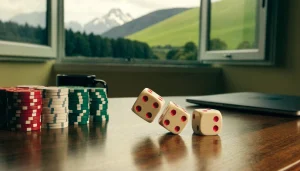
Think about how you want a session to feel. A game with more frequent small wins may feel livelier, though those wins do not guarantee that your balance will hold steady. A higher-volatility game may feel quiet for longer, with the possibility of a larger payout. The important word is “possibility”: volatility describes a broad pattern, not what the next spin will do.
I used to treat a big jackpot figure as a reason to keep playing. It isn’t. The jackpot is one part of the game, not a forecast for your session.
Check what the progressive feature means in that game
Progressive pokies can differ in how their jackpot is presented and funded, so take a moment to read the game information rather than assuming every title works the same way. The jackpot feature does not remove the ordinary uncertainty of each spin. A progressive prize may attract attention, but it cannot tell you when a win will happen.
It is also worth keeping the base game in view. Part of each bet on a progressive jackpot pokie goes towards the jackpot, so its base-game RTP is lower for that reason. RTP is a long-run measure, not a promise about a short session; it cannot tell you whether a particular game will suit your tolerance for quiet patches. Check the game’s own information panel rather than relying on details for a different version.
Decide before you start
Set a session budget and a maximum loss before you begin, then treat both as fixed. Don’t raise them because the jackpot seems close: the display is not evidence that a win is due. If you find yourself playing mainly to recover losses or to chase the prize, step away. That is a sign to stop, not a reason to give the game another spin.
There is no universal “best” progressive jackpot pokie for every player in New Zealand. A better choice is one whose volatility, rules and overall pace you understand and can live with. If those details do not suit you, move on. The jackpot can wait.
Are online pokies legal in New Zealand?
Yes, you can play at offshore online casinos as a New Zealander. Operating an online casino from within New Zealand is not allowed, and offshore sites are not overseen by the Department of Internal Affairs.
Are the pokies fair?
Online pokies use random number generators, and each spin is independent of previous results. RTP describes a game's theoretical long-term return, not a guarantee of what you will win in a session.
How do casino game mechanics work?
A random number generator determines the result of each spin, and previous spins do not affect the next one. In a progressive pokie, contributions from spins across casinos add to a shared jackpot, while part of each bet goes toward that prize.
Casino Games in New Zealand: Slots and Table Games
Content created by the «casinotips-nz.com» team