
Choose a roulette table by its rules, not a hunch
 Available in US
European, French and American wheels differ in pockets and zero rules, while bet choice and table conditions shape how roulette plays.
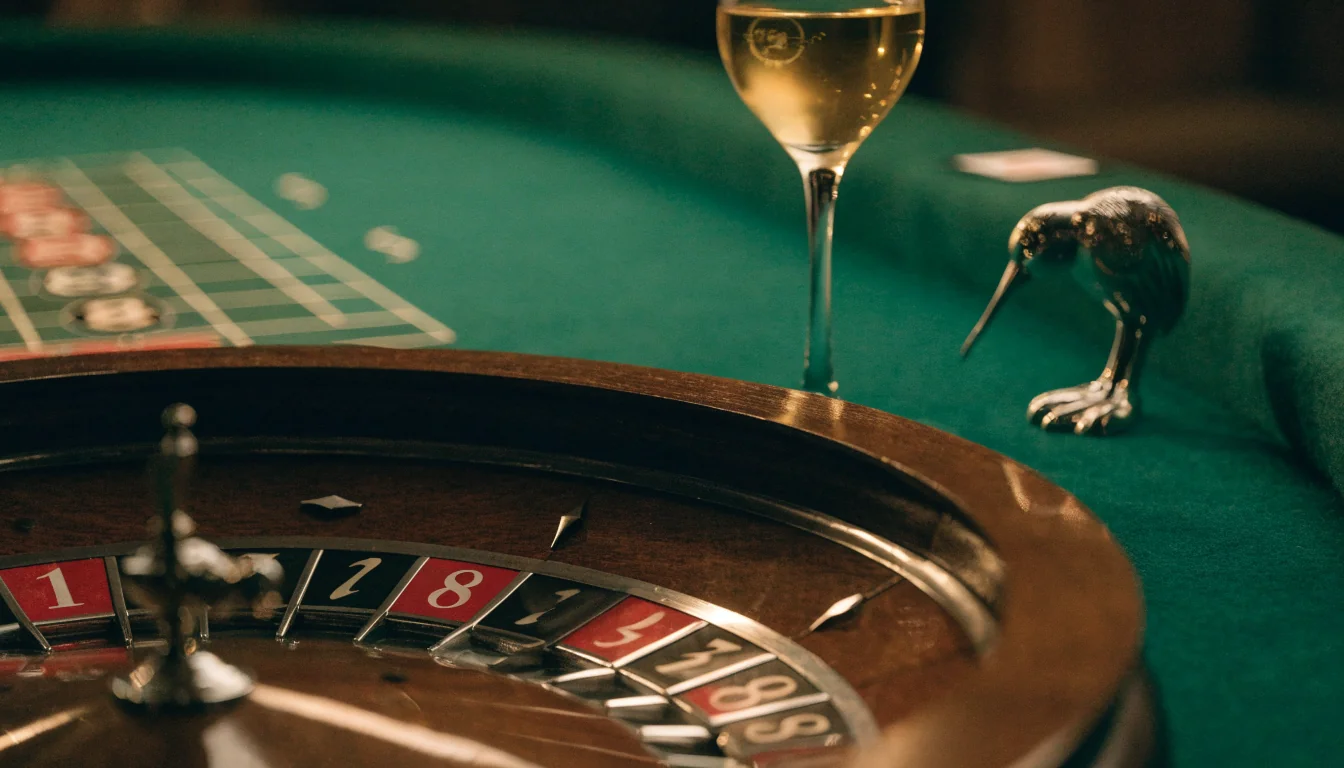
Start with the wheel: European, French or American
Before you choose a table, look at the wheel. European Roulette has 37 pockets: numbers from 1 to 36 and a single zero. American Roulette adds a double zero, giving it 38 pockets. That extra pocket changes the game’s cost: the stated house edge is 2.70% on European Roulette and 5.26% on American Roulette.
French Roulette uses the same single-zero layout as European, but its rules can soften the effect of zero on certain bets. La Partage returns half your stake when zero lands on an eligible even-money outside bet; the other half is lost. En Prison instead holds that bet for the next spin. If it wins, your original stake comes back without extra winnings; if it loses, the stake is collected.
Those rules apply only to even-money outside bets, not every bet on the table. They also make French Roulette distinct from a single-zero wheel with standard rules. Check the table rules rather than relying on the game name alone.
So which is the best roulette game? If you want a single-zero wheel, European and French Roulette share the same pocket layout. French rules add a useful safeguard for eligible bets when zero appears; American Roulette’s double zero makes its layout less forgiving. The best choice depends on the rules attached to the table and the kind of bet you intend to make.
I’d start by checking for a single zero, then confirm whether La Partage or En Prison is actually offered. That is a practical way to choose a table, not a way to predict a result. The wheel still decides.
Which roulette bets give you the better odds?
The best odds in roulette depend first on the rules attached to the game, not on a particular number or betting pattern. The house edge is the casino’s mathematical advantage over time: a lower figure means less of each stake is expected to be lost on average over many spins. It does not predict what will happen in a short session.

For single-zero European Roulette, the house edge is 2.70%. American Roulette has a higher edge of 5.26%. That difference is reflected in payout percentages: a specialist review reports 97.30% for European Roulette and 94.70% for American Roulette. These figures describe the mathematical return built into each game, not a promise that you will receive that share of your money back during a particular visit.
A higher payout percentage does not mean every bet pays more when it wins. It describes the theoretical relationship between stakes and returns over repeated play. The practical point is simpler: when two games offer the same type of bet, the version with the lower house edge is less costly in mathematical terms.
French Roulette can improve the picture for a specific kind of bet. Its La Partage and En Prison rules apply to even-money outside bets when zero appears. Under La Partage, half your stake is returned and the other half is taken. Under En Prison, the stake is held for the next spin: a win returns the original stake without extra winnings, while a loss means the stake is collected.
Those rules reduce the house edge on eligible even-money bets to 1.35%. That makes French Roulette the strongest choice for those bets when the table clearly offers La Partage or En Prison. The advantage is tied to the rule and the bet; it does not apply to every wager on the table.
It is worth checking the wording before you play. A game labelled French Roulette is not enough on its own to tell you how a zero will be handled. Look for the stated rule and confirm that it covers your chosen bet. If the special rule is absent, do not assume the lower edge applies.
The payout percentage and house edge are two ways of expressing the same broad comparison: one describes expected return, the other the casino’s expected share. For European Roulette, a 97.30% payout corresponds to a 2.70% edge. For American Roulette, the reported 94.70% payout corresponds to a 5.26% edge. French Roulette’s lower edge on eligible bets comes from how zero is treated, not from a different ordinary win payout.
European Roulette
37 pockets with a single zero and a house edge of 2.70%.
American Roulette
38 pockets with a double zero and a house edge of 5.26%.
French Roulette
Single-zero layout with rules like La Partage or En Prison that can reduce the house edge on even-money bets to 1.35%.
So, what are the best odds when playing roulette? For even-money bets, choose a French table that explicitly applies La Partage or En Prison. If those rules are not available, single-zero European Roulette has a lower edge than American Roulette. The difference matters mathematically, but it cannot remove the risk on any individual spin. A favourable figure is not a lucky charm.
How to place bets without chasing a magic number
Start by deciding what kind of bet you want to make, rather than picking a number because it feels due. Roulette bets are placed on the table layout, but some cover broad groups of outcomes and others target specific numbers or clusters. The layout helps you place a bet; it does not tell you what the wheel is likely to do.
Outside bets sit around the edge of the layout. They include red or black, odd or even, and low or high. They cover large groups of numbers, so a winning bet returns a smaller amount relative to the stake than a bet on a narrower selection. Zero is not red or black, odd or even, or part of either low or high group. If it lands, those even-money bets do not win under the ordinary rules.
Inside bets are placed on the numbered part of the layout. A straight-up bet selects one number; a split covers two neighbouring numbers on the table, while other inside bets cover larger table groupings. These bets are more selective: fewer outcomes satisfy the bet, and the return for a win is correspondingly larger. That larger return is not a sign that the bet is more likely to win. It is simply how the payout is structured.

If you are unsure where a chip belongs, pause before the spin and check the table’s layout or ask the dealer. Online tables generally let you place chips directly on the betting area, but the same basic distinction applies: outside bets cover broad categories, while inside bets mark numbers or groups on the layout. Take a moment to confirm the selected bet before the betting window closes. A chip one spot away can be a different bet entirely.
Wheel calls are not table patterns
Called bets can be confusing because their groupings refer to where numbers sit around the wheel, not where they appear on the felt. A cluster that looks adjacent on the table may not be adjacent on the wheel, and the reverse can also be true. If a call is unfamiliar, ask what it covers before placing it. Do not assume that a name means a neat row or block on the layout.
This matters most when you are using a digital table or following a dealer’s call. Look for the selection on the betting interface and check which numbers it includes. If you cannot see the coverage clearly, stick with a bet you can verify. Guessing at a called bet is an easy way to stake on something other than what you intended.
There is no special number that turns an ordinary bet into a safer choice. If you want a simple way to play, choose a bet you understand, set a stake you are comfortable losing, and place it deliberately. A broad outside bet may feel easier to follow because it covers a group, but that does not make it a reliable route to a win. A single-number bet may be more exciting when it lands, but a bigger payout does not make the number more likely.
Do
- Choose bets you understand
- Set a stake you are comfortable losing
- Confirm chip placement before the window closes
Don't
- Pick numbers because they feel "due"
- Assume called bets are simple rows on the layout
- Rely on a bigger payout as a sign of higher probability
Check the rule attached to the bet
The table’s rules can change what happens when zero lands. La Partage and En Prison apply only to even-money outside bets, and only when zero appears. Under La Partage, half of the stake is returned and the rest is collected. Under En Prison, the bet carries forward: if it wins on the next spin, your original stake comes back without extra winnings; if it loses, the stake is collected.
That is a practical reason to check the rules before choosing an even-money bet. A French table offering La Partage can reduce the effective house edge on eligible bets when zero lands. Neither rule changes how you place the chip, and neither makes other bet types eligible. Read the table’s stated rules rather than assuming that a familiar-looking layout includes them.
You may see offers alongside a roulette table, but a deposit bonus is separate from the bet itself. Before accepting one, read its conditions and consider whether they fit the way you intend to play. Bonus terms do not change the number of pockets covered by your chip or make a particular selection more likely to win.
For a first session, I keep it plain: choose a table, understand the bet, check the zero rule, and confirm the chip placement. If you want to try a called bet, learn its wheel grouping first rather than relying on the table pattern. No bet type is a shortcut to beating the table. The useful skill is knowing exactly what you have placed—and being comfortable with the possibility that it loses.

Roulette systems: what they can and can’t change
A roulette system changes how you arrange your stakes, not how the wheel works. It may tell you to raise a bet after a loss, lower it after a win, or follow a set sequence. None of those instructions can make a pocket more likely to appear. A spin has no memory: the result before it does not alter the chances on the next turn.
That is the limit behind every so-called winning system. A staking plan can shape the size and timing of your bets, but it cannot remove the casino’s mathematical advantage. European Roulette has 37 pockets and a 2.70% house edge; American Roulette has 38 pockets and a 5.26% edge. Changing your pattern does not change those figures.
What a progression actually does
The Martingale is the familiar example: after a losing bet, increase the next stake in an attempt to recover what was lost when a win arrives. It can feel tidy on paper because the plan gives each loss an apparent next step. In practice, a losing run can make the required stakes grow quickly, while table limits or the money you have set aside can stop the sequence before that recovery bet is made.
Other progressions reverse the logic, increasing stakes after wins or following a numbered sequence. They still operate on the same wheel. A system might produce a run of small wins, then give some or all of them back in a losing spell. That does not make it useless as a way to organise play; it does make it a poor reason to assume you have found an edge.
The same goes for systems presented as the best way to bet online. The screen changes the way you place a stake, not the independence of the spins. A pattern in recent results can look persuasive, especially when it matches the system’s next instruction. It remains a pattern in past results, not a signal about what the wheel will do.
Keep the plan modest
If you use a system, treat it as a record-keeping or pacing tool. Decide in advance what pattern you intend to follow and when you will stop; do not treat the next spin as a debt the wheel owes you. Once losses start prompting larger stakes, the system is no longer controlling your play. It is controlling your next decision.
A betting plan also cannot make a risk-free run of real-money wagers. Every bet can lose, and a sequence that begins well can still turn against you. I would judge a system by whether it helps me stick to a boundary, not by whether it claims to predict a result. The wheel is indifferent.
Do not risk more than you can afford to lose. If a system only seems workable when you keep increasing stakes, that is the warning, not the solution.

A roulette strategy built around the rules, not hunches
A sensible roulette strategy starts before the ball is released. First, check the variant and the rules attached to the table; then decide whether the bet you have in mind is covered by those rules. I would not choose a bet first and assume every version of roulette treats it the same way.
La Partage and En Prison matter when you place an even-money outside bet: a bet on red or black, odd or even, or high or low. They apply only if zero lands. They do not change the treatment of other bet types, so the table rules are relevant to your choice of bet, not just the name of the game.
With La Partage, zero means half your stake is returned and the other half is collected. En Prison handles that moment differently: the even-money bet is carried over to the next spin. If it wins on that spin, your original stake comes back, but you receive no extra winnings; if it loses, the stake is collected. The practical distinction is simple: one rule returns part of the stake straight away, while the other leaves it in play for another spin.
That makes French Roulette worth considering if you plan to make even-money outside bets and the table explicitly offers either rule. When La Partage or En Prison applies, French Roulette’s house edge falls to 1.35%. But do not assume that seeing “French Roulette” in a game title settles the matter. Check the displayed rules and confirm what happens to your bet on zero before you start.

I’d make the decision in this order: choose a variant whose rules you understand, check whether the zero rule applies to your intended bet, then decide whether that bet suits your play. If you want La Partage or En Prison, an even-money outside bet is the relevant choice. If you prefer another type of bet, those rules will not protect it. No clever arrangement of bets can make a rule apply where it does not.
Keep the stake comfortable, too. These rules affect how an eligible bet is handled when zero lands; they do not promise a return or make a spin predictable. I treat them as a reason to choose deliberately, not as permission to play longer or stake more. The useful decision is made before the spin, when you can still read the table terms without a result tempting you to change your plan.
Small print matters.
Playing roulette on your phone: check the game, not a lucky streak
An iPhone, iPad or Android phone changes how you reach a roulette table, not how the game works. The useful checks are the game’s rules and whether you understand what is being offered. A polished screen cannot make a spin more predictable.

I keep one point in view when playing on a small screen: each spin stands on its own. Previous results do not change the probability of what happens next. A run of red, a gap since a number last appeared or a sequence that looks orderly can feel meaningful, but none of it tells you what the next spin will be.
That matters whether you are using a free roulette game for practice or staking real money. A free version can let you get used to the layout without risking cash, but it is not evidence that the next real-money result will follow a pattern. And if a game shows a recent-results panel, treat it as a record of what has happened, not a forecast.
Check the table before you tap
Before placing a bet, confirm which roulette variant is open and what its rules are. European Roulette, for instance, has 37 pockets, including a single zero, and a house edge of 2.70%. The same name should mean the same underlying game whichever device you use, but do not rely on the screen design to tell you the rules. Read the game information.
On a phone, it is easy to tap the wrong area or overlook a detail while trying to play quickly. Take a moment to check the selected bet and stake before confirming it. I prefer a clear, deliberate tap over a hurried one. The screen is small; the consequences are not imaginary.
Some readers want a roulette app for an iPhone, others want one for an iPad or Android device, and some are looking for a free option. Those are different ways of accessing a game, not different ways of changing roulette’s probabilities. Choose based on whether the rules are visible and understandable, rather than on claims about streaks, signals or “hot” results.
If an offer is attached, read its conditions before accepting. Bonus money must be wagered 50X within 30 days, and winnings from free spins must be wagered 50 times within 7 days. A withdrawal request voids all active or pending bonuses. Those terms can matter more than the design of the app.
Most importantly, do not risk more than you can afford to lose. A quick session on a phone is still real-money gambling if you have placed real-money bets, and every such bet can lose. No app can turn yesterday’s results into a reliable guide to the next spin.
Roulette tips for playing from New Zealand
Choosing roulette online in New Zealand is easier when you focus on the details that matter to you. Use this list as a starting point for reviewing each option.
-
Lamabet
- Payout speed
- 1-3 business days
Lamabet lists a payout speed of 1–3 business days. Consider whether that timeframe suits you.
-
Ricky Casino
- License
- Tobique Gaming Commission, licence no. 0000002
Ricky Casino lists a licence from the Tobique Gaming Commission, number 0000002. This gives you a specific licensing detail to consider.
-
7Bit Casino
- License
- Tobique Gaming Commission, licence no. 0000091
7Bit Casino lists a licence from the Tobique Gaming Commission, number 0000091. You can use this detail when reviewing the casino.
-
BitStarz
- License
- Curaçao Gaming Authority, licence no. OGL/2024/165/0185
BitStarz lists a Curaçao Gaming Authority licence, number OGL/2024/165/0185. This provides a specific licensing detail for your consideration.
-
Zotabet
- License
- 07017519840
- Payout speed
- 1-3 business days
Zotabet lists licence number 07017519840 and a payout speed of 1–3 business days. These details may help you assess whether it fits your preferences.
-
Neospin
- License
- Tobique Gaming Commission, licence no. 0000064
Neospin lists a licence from the Tobique Gaming Commission, number 0000064. You can take this licensing information into account.
-
Play Grand
- License
- Malta Gaming Authority, licence no. MGA/B2C/370/2017
Play Grand lists a Malta Gaming Authority licence, number MGA/B2C/370/2017. This gives you a specific licensing detail to review.
-
Wintino
- Payout speed
- 1-3 business days
Wintino lists a payout speed of 1–3 business days. Check whether that timeframe works for you.
-
N1 Casino
- License
- Malta Gaming Authority, licence no. MGA/B2C/394/2017
N1 Casino lists a Malta Gaming Authority licence, number MGA/B2C/394/2017. You can consider this detail as you review the option.
A sensible starting point is to decide what you can afford to lose before opening a roulette game. Treat that amount as spent, not as money you can win back by staying longer. A run of losses can make another spin feel like a sensible fix; it isn’t. Every real-money bet can lose, and no staking pattern turns roulette into a reliable way to make money.
Take the same care with a bonus offer. Before accepting it, read the terms that apply to your account, not just the headline. New Zealand operators may set eligibility rules, wagering requirements, expiry dates, game-contribution terms and withdrawal restrictions. Those details can determine whether a bonus is useful to you or simply adds conditions to your play.
Some key conditions are easy to miss. Bonus money must be wagered 50X within 30 days. Winnings from free spins must be wagered 50 times within 7 days. A withdrawal request voids any active or pending bonuses. If those requirements do not suit the way you plan to play, declining the offer is a straightforward choice. Free money with strings attached is still strings attached.
Keep your own record of what you deposit and spend, and stop when you reach the amount you set. Don’t increase it because a session has gone badly, and don’t treat a bonus balance as a reason to keep playing. If the terms are unclear, pause rather than guessing what a condition means.
For a New Zealand player, the practical “best tips” are not clever calls at the table. They are small checks made before money is at stake: understand the offer, know what happens if you request a withdrawal, and decide your spending limit while you are still thinking clearly. Then stick to it. No comeback plan.

Is there a best number in roulette?
A number can feel special after it has appeared a few times, or overdue after a long absence. Neither impression gives it an advantage on the next spin. Roulette spins are independent: the result that just landed does not change the chance of any number appearing next.
That is the plain answer to whether there is a best number in roulette. You can choose a number because it means something to you, or because you like its position on the layout, but the choice does not make it more likely to win. The wheel has no memory.
A results board can make patterns look persuasive. You might see a number highlighted as “hot” or notice that another has not appeared recently. Those labels describe past results; they do not forecast the next one. A run can happen by chance, and a quiet spell does not create a debt the wheel has to repay.
I used to give recent results more weight than they deserved. It felt like reading a clue. It wasn’t.
The same goes for asking which are the best numbers in roulette. There is no set of numbers made more likely by a streak, a gap, a birthday or a previous win. If you pick a number, be clear with yourself that it is a preference, not an edge.
Keep the decision separate from the evidence. Past spins can tell you what happened, but they cannot tell you what the next spin will be. A number appearing repeatedly does not become “due” to stop, and one that has been absent does not become “due” to arrive.
So choose a number if that makes the game more personal, but don’t treat the choice as a prediction. The next result remains uncertain.
Roulette tactics that keep the risk in view
A useful roulette tactic is one that helps you stay in control of your decisions, not one that claims to predict the wheel. Every real-money bet can lose. A run of results may feel as if it is building towards something, but spins are independent: what happened before does not change the probability of what happens next.
That puts a firm limit on any plan. You can decide how you want to play, but you cannot make a result due, turn a hunch into evidence or guarantee a win. Even a careful approach leaves the outcome to chance. Dry, but important.
Before you start, decide what you can afford to lose and treat that as the cost of playing, not money you expect to get back. Keep your planned stake within that amount. If you find yourself raising it because a spin went against you, pause rather than trying to repair the session with a bigger bet.
A few practical checks can help:
- Set your spending limit before opening the game, and stop when you reach it.
- Do not increase a stake to recover losses or because you believe a win is overdue.
- Take a break if frustration, excitement or fatigue is changing your decisions.
- Keep gambling money separate from money needed for everyday costs.
These are not ways to improve the wheel’s behaviour. They are boundaries for your own play. A tactic that depends on staying calm can stop being useful when you are chasing losses, so stepping away is often the clearest move.
If you are looking for the best roulette tactics, judge them by whether they keep the risk visible and your choices deliberate. No tactic can promise a profit, and a string of wins is no proof that the next bet is safer. Play only with money you can afford to lose; if that condition no longer holds, stop.
Choosing an online roulette casino without overlooking the rules
A roulette page can look straightforward until you check what it is actually offering: which game you are opening, what its rules say, and whether the site is operating under New Zealand’s changing licensing framework. I would check those things before looking at a welcome offer or deciding that an app is the best place to play.
Check the game and its rules
Start with the game’s full name and information panel. “Roulette” alone does not tell you which version is on the table. Look for the stated wheel variant and the rules that apply to it, including what happens when zero lands. If the page offers several tables or versions, check each one separately; rules shown for one game should not be assumed to apply to another.
A named variant is not a guarantee of a particular set of rules. Read the game information rather than relying on a thumbnail, a promotional label or the layout of the betting screen. If a rule is unclear, do not assume the interpretation that is most favourable to you. It is a small check that can prevent a larger misunderstanding.
The same goes for free-play versions. A free online roulette game can let you see how its interface is arranged, but it does not establish that real-money play uses identical terms, nor does it forecast what will happen on a later spin. Treat it as a way to inspect the game, not as evidence that a particular combination of bets is best.
Read the offer before accepting it
A roulette bonus is not simply extra money to withdraw. Its terms can set who is eligible, how much wagering is required, when the offer expires, which games count towards wagering, and what happens when you request a withdrawal. Check the conditions on the offer itself, not just the short headline beside the sign-up button.
For offers covered by these terms, bonus money must be wagered 50X within 30 days. Winnings from free spins must be wagered 50X within 7 days. A withdrawal request voids any active or pending bonus. Those conditions can change what an offer is worth to you, especially if you do not intend to keep playing. If the requirements are not clear before you accept, leaving the offer alone is a perfectly sensible choice.
The phrase “no wagering” also deserves a careful look. Do not take a short label as proof that every part of the offer is free of conditions. Check the full terms for eligibility, expiry, game contribution and withdrawal restrictions. If you cannot tell what happens to bonus funds or winnings when you cash out, you do not yet know what you are agreeing to.
Understand New Zealand’s licensing transition
New Zealand’s position has changed. The Online Casino Gambling Act 2026 established the country’s first domestic licensing system for online casino gambling and took effect on 1 May 2026. The transition runs from that date to 1 December 2026. During that period, providers that were already serving people in New Zealand before the Act took effect may continue operating, subject to the transitional rules.
That does not mean every site has a New Zealand licence. Before the new Act, offshore online casino gambling was not licensed or supervised by a New Zealand regulator, and customers using those sites had no domestic government recourse. The Gambling Act 2003 also does not permit online casinos to be based in New Zealand. The new framework changes the licensing position; it does not make every website carrying a roulette game a locally licensed casino.
The Department of Internal Affairs is New Zealand’s primary gambling regulator and oversees the online casino licensing framework. The Gambling Commission hears casino licensing applications, decides them and issues online casino licences; it also approves changes to licence conditions. The full licensed regime is expected to be operating in 2027. Providers that have not applied for a licence must stop providing online casino gambling in New Zealand by 1 December 2026, and unlicensed operation is expected to become an offence around mid-2027. Operators without a licence may face enforcement action and fines of up to NZ$5 million.
During the transition, advertising online casino gambling to people in New Zealand is prohibited. Once licensed operators are active under the new framework, stricter age and identity checks apply. So a polished website, a mobile-friendly page or a large bonus banner is not a substitute for checking the provider’s position under the rules in force.
If you are comparing a site, keep the checks practical: identify the roulette variant, read its own rules, inspect the full bonus terms, and understand whether the provider is permitted to operate at this stage of the transition. Do not treat an app store listing or a familiar-looking interface as proof of licensing. The details matter.
Casino Games in New Zealand: Slots and Table Games
Content created by the «casinotips-nz.com» team