
Make sense of each Keno draw before you play
 Available in US
A practical guide to entering a line, understanding odds and RTP, checking results, and setting a stake across online Keno formats.
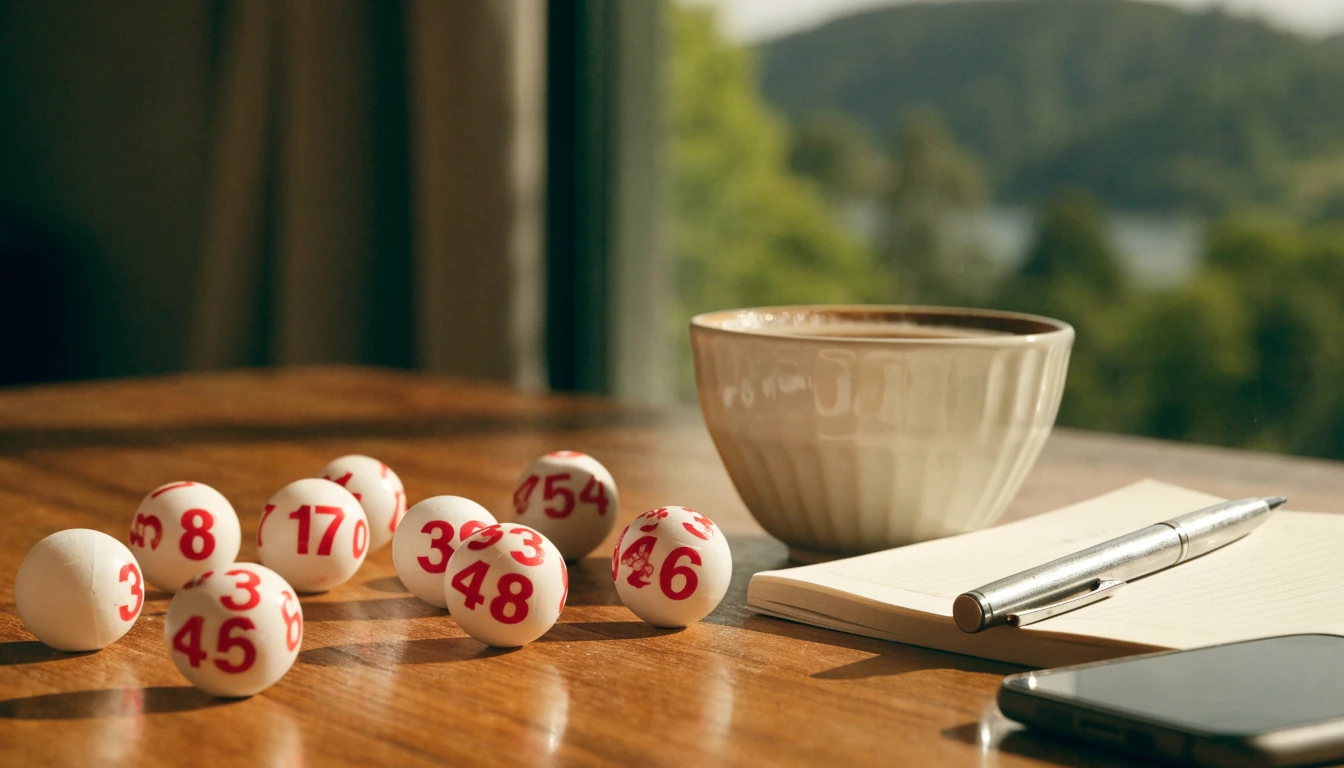
Keno’s Draws, Numbers and Pace in New Zealand
Online keno has a simple rhythm: a draw takes place, the winning spots are announced, and you can enter again for a later draw. In New Zealand, each draw selects 20 winning numbers from a pool running from 1 to 80. That is the basic frame whether you access the game through a casino website or another online platform offering keno.
The four daily draw times are 10AM, 1PM, 3PM and 6PM. Those set points give you a clearer sense of the game than a continuous stream of results would. You can decide whether to join a particular draw or wait for the next one; there is no need to follow every result as it appears.
Entry remains open until the draw takes place. If you miss that cut-off, you can enter the next draw straight away. So the practical boundary is the draw itself, rather than a separate waiting period between rounds. Check the game screen before confirming, though: it should make clear which draw your entry is for. A tap made at the wrong moment can put you into the next round instead of the one you had in mind.
If you’re looking for online keno in New Zealand in 2026, this list gives you a starting point for checking the available operator details. Review the information that matters to you before choosing.
-
Lamabet
- Payout speed
- 1-3 business days
The stated payout speed is 1–3 business days. You can use that detail when considering Lamabet.
-
Ricky Casino
- License
- Tobique Gaming Commission, licence no. 0000002
Ricky Casino lists a licence from the Tobique Gaming Commission, licence no. 0000002. This is the licensing detail provided for your review.
-
7Bit Casino
- License
- Tobique Gaming Commission, licence no. 0000091
7Bit Casino lists a licence from the Tobique Gaming Commission, licence no. 0000091. You can take this listed licence information into account.
-
BitStarz
- License
- Curaçao Gaming Authority, licence no. OGL/2024/165/0185
BitStarz lists a Curaçao Gaming Authority licence, no. OGL/2024/165/0185. This gives you a specific licensing detail to check.
-
Zotabet
- License
- 07017519840
- Payout speed
- 1-3 business days
Zotabet lists licence no. 07017519840 and a stated payout speed of 1–3 business days. You can consider both details when reviewing the operator.
-
Neospin
- License
- Tobique Gaming Commission, licence no. 0000064
Neospin lists a Tobique Gaming Commission licence, licence no. 0000064. This is the operator-specific information available here.
-
Play Grand
- License
- Malta Gaming Authority, licence no. MGA/B2C/370/2017
Play Grand lists a Malta Gaming Authority licence, no. MGA/B2C/370/2017. You can use this licensing information as part of your review.
-
Wintino
- Payout speed
- 1-3 business days
Wintino’s stated payout speed is 1–3 business days. You can use this as a practical detail when considering the operator.
-
N1 Casino
- License
- Malta Gaming Authority, licence no. MGA/B2C/394/2017
N1 Casino lists a Malta Gaming Authority licence, no. MGA/B2C/394/2017. This is the licensing detail provided for you to review.
That timing also means online keno can feel brisk without being continuous. There are set daily draws, and you can choose when to take part. If you prefer to play at a particular time, the schedule helps you plan around it; if you are not ready, another draw is available later. I find it easier to treat each draw as a separate event than to let the schedule turn into a reason to keep coming back automatically.
The number pool stays the same in broad outline: 1 to 80, with 20 winning numbers selected for each draw. The draw result is the set of winning numbers for that round. The numbers shown on your entry are compared with that result, but the detailed choices on a line—and how matches translate into a return—are a separate part of the game. For now, the useful point is that every draw has a defined pool and a defined result, rather than an ongoing sequence of numbers being added to a board.
Prizes are fixed according to the number of spots played and the stake. New Zealand online keno does not have a rolling jackpot that grows as players enter successive draws. That makes the prize structure different from a jackpot game: the outcome is tied to the game’s stated prize table, not to a pool that accumulates from round to round.

The schedule is also worth keeping in view if you are comparing casino keno online with games that let you act at any moment. Here, the next draw time gives each entry a natural stopping point. You can watch for the scheduled round, decide whether to enter, and then leave it there. No need to turn a fixed timetable into an all-day occupation.
Before you confirm an entry, take a moment to check the displayed draw time. That small habit helps avoid confusion about whether you are joining the current round or the next one. The schedule is straightforward; the screen still deserves a glance.
How to Play a Keno Line
A keno line is the set of spots you choose before checking it against the draw. To play, open the game, read its rules and paytable, then mark your chosen spots on the card. The pool runs from 1 to 80, and a player can select as many as 20 spots. The exact choices available on one line depend on the game: some let you pick from 1 to 10, while others offer selections of up to 15 or 20.
I’d start by checking how many spots the game allows, rather than tapping numbers straight away. Choosing more spots changes which row of the paytable applies, so the same match count does not necessarily mean the same return across different line sizes. There is no one standard card layout or payout table to assume; the rules shown in the game are the ones to use.
How to Play
-
1
Check the rules
Read the game's rules and paytable to see how many spots you are allowed to select.
-
2
Mark your spots
Choose your numbers from the pool of 1 to 80 and mark them on the card.
-
3
Set your wager
Choose the stake for the line and review your card before confirming the entry.
-
4
Compare results
Once the draw is complete, count your matches and use the paytable to determine your payout based on your wager.
Once you have marked your spots, set the wager for that line and review the card before confirming it. The stake matters because the payout is tied to the amount wagered as well as the number of matches and the game’s paytable. A larger stake can change the amount paid for a winning result, but it does not change which spots the draw selects. Keep the stake at a level you have decided in advance.
When the result appears, compare the drawn numbers with the spots on your line. Count the matches, then find the row for your selected number of spots and the match count in the paytable. Check the corresponding payout for your wager. That is the practical way to read a result: the match count alone is not enough to tell you what the line pays.
For instance, a result with several matches might fall into a paying row on one game’s table but not have the same value on another. The table may also distinguish between match counts that look close to each other. Read the exact row and column rather than relying on a general idea of what “a good hit” should pay. Small print, it turns out, does a job.
Before confirming a line, make sure you have not left extra spots selected or changed the stake by mistake. If the game offers several spot counts, consider how each one maps to its own paytable before choosing. The number of spots is a choice about the structure of your line, not a way to control the draw.

The basic rules are straightforward: choose spots within the game’s allowed range, place a wager, and compare your selections with the result using the paytable. But details can differ between games, so check the rules and payout table on the card you are actually playing. Do not carry a paytable from one keno game over to another; the numbers on the screen matter more than what you remember from a different version.
If you are playing for money, take a moment to confirm the selected spots and stake before submitting the line. A hurried tap can make the card different from the one you intended. Read it once, then play it.
Keno Odds, House Edge and RTP
House edge and Return to Player (RTP) describe the game’s long-run maths from opposite sides. RTP is the share of wagers a game is designed to return over a very large number of plays; the house edge is the share it retains. Neither figure tells you what will happen to your money in one draw or one session.
The published figures for New Zealand online keno do not agree. One set puts the house edge at 25% to 40%, while another gives a range of 4% to 35%. RTP figures also differ: one range is 90% to 96% for most online keno games, while another places classic 80-ball keno at 92% to 95%. Those ranges are not interchangeable claims about every game. They may describe different games or use different bases, so check the specific game’s paytable and stated RTP rather than treating a broad market range as a promise.
As a rough illustration of the relationship, an RTP of 90% corresponds to a 10% house edge over the same long-run basis. But the figures above are broad, conflicting ranges, not a single confirmed rate that applies to every game. I would not take the most favourable number and assume it belongs to the keno game on screen.
Even when a game publishes its RTP, that is a theoretical average across extensive play, not a schedule of returns. Your results can sit well above or below it, and the figure does not say when a payout will occur or how large any individual win will be. A high RTP does not make a particular line likely to pay; a lower one does not mean every session must lose.
For online keno for money, the useful comparison is the stated RTP for the exact game, alongside its rules and paytable. If that information is unclear, the broad figures cannot fill the gap. Keep the distinction simple: RTP and house edge describe long-run expectations, not a forecast for your next bet. Long run means a lot of play.
What Past Keno Results Can—and Can’t—Tell You
A results page can show which spots came up in earlier draws. It cannot tell you which spots are due next. In New Zealand, online keno uses a Random Number Generator (RNG) to determine the winning numbers, and each draw is random and independent of those before it.
That independence is the point people often lose sight of when they study a results list. A spot that appeared often in recent draws has no special claim on the next one. Nor does a spot become more likely simply because it has been absent for a while. The history records what happened; it does not steer what happens next.
I find it useful to treat past results as a log, not a guide. You can look back to check a draw or satisfy your curiosity about how results have varied. But turning a frequency chart into a prediction is a different matter. A run of appearances can look meaningful after the fact, just as a quiet spell can look like a promise. Neither is evidence that the next draw will follow suit.
This matters when a system sounds convincing. “Hot” and “cold” spots, repeating patterns and number-picking routines may give you a way to organise a card, but the draw does not favour them because you chose them. No pattern in previous results gives you a proven method for selecting future winners. Online keno gambling does not become predictable through closer tracking.
A results history can also tempt you to keep changing your picks in response to every new draw. That turns a random sequence into a story, with you trying to read the next chapter. It is still random. If you enjoy choosing spots by preference or using a personal routine, that is your choice; just don’t mistake the routine for an edge.
When playing keno online, separate what the record can confirm from what it cannot. It can show the outcome of a completed draw. It cannot explain why those numbers appeared, reveal a hidden cycle or promise a repeat. I’d rather keep that distinction clear than let a tidy chart do the thinking for me.
The practical takeaway is simple: use results to review the past, not to forecast the next draw. Past frequencies do not influence future outcomes. A neat pattern is still just a pattern.
Free Keno, Demo Play and Multiple Cards
A free demo can be a sensible first stop if you have not used a particular keno game before. Where a demo is available, it lets you look around the game and try its controls without staking cash. The balance shown is play money, not a credit you can withdraw: demo results cannot become real-money winnings.
That distinction is easy to lose when the screen looks much like a cash game. Treat the demo as a way to learn the interface, not as a source of income or a promise of what a later session will feel like. Free play has a use. It also has a clear limit.
What demo play is good for
Use a demo to get comfortable with the parts of the game you will actually need to read. Find the rules, spot choices, stake controls and paytable. Check what happens when you confirm a card and how the game shows its result. If the layout is confusing, you can take your time rather than trying to work it out while money is at stake.
It can also help you compare how different games present information. One may make the paytable easy to find; another may put it behind a menu. That is a practical difference, even though a polished screen does not tell you anything about whether the game suits you. I’d rather know where the rules are before a bet is involved.

A demo is not a shortcut to learning a winning system. The results you see in free play do not predict what will happen in a cash game, and a run of favourable or poor demo outcomes gives you no reliable guide to the next result. The play-money balance also removes the financial consequences of a decision. That changes the experience in a fairly important way.
So, when you test a game, pay attention to the controls and the information available—not to whether the demo balance rises or falls. If you move from free play to cash later, make that a fresh decision. Do not treat a successful demo session as evidence that you are due similar results with real money.
Free play is not a bonus balance
People sometimes use “free keno” to mean different things: a demo with fake money, promotional play, or a cash game that happens to be connected to an offer. Those are not interchangeable. A demo cannot pay out real winnings. A bonus, where an operator offers one, has its own conditions and may not apply to keno at all.
Do not assume that a button marked free means you have cashable funds, or that a bonus balance can be used on every game. Read the offer’s terms on the operator’s current site before relying on it. In particular, check which games are eligible and whether keno play counts towards clearing the offer. The label is not the rules.
Do
- Use demos to learn the interface and controls
- Read offer terms to check keno eligibility
- Verify if keno counts toward bonus clearance
Don't
- Mistake demo play-money for real winnings
- Assume a "free" label means cashable funds
- Rely on demo results to predict cash game outcomes
This matters if you are looking for free online keno with a bonus. A demo is simply practice with fake money; a bonus is governed by its offer conditions. If you cannot tell which one the screen is presenting, pause and check. There is no prize for guessing correctly after you have already started.
Keno may appear alongside slot-style games in a casino’s menu, but a “free” version should still be understood by what it actually offers: play-money rounds, if it is a demo, or promotional funds subject to terms, if it is an offer. Neither label changes the underlying game into a reliable way to make money.
What changes with multiple cards
Some games let you run several keno cards at the same time, with spots selected across those cards. That is the basic idea behind multi-card play: more than one card is active in a round. A free demo can help you see how a particular game displays them and whether you can keep track of each card without rushing.
More cards do not make the game easier to predict. They give you more selections to follow, not a method for controlling the draw. It can be tempting to think that adding cards must improve your chances in a useful way, but that overlooks the stake attached to each active card and the fact that each result remains uncertain. There is no clever arrangement that turns a random game into a sure thing.

The practical challenge is attention. With several cards on screen, you need to be able to tell which spots belong to which card, what stake is attached to each one, and how the paytable applies. If you have to squint or keep switching views to understand your choices, fewer cards—or a single card—may be easier to manage. More is not automatically better.
A demo can be useful here because you can test the layout without putting money behind each selection. Try the controls, check how the game separates cards, and see whether the result display remains clear. Do not use free play to convince yourself that you should open as many cards as the interface allows. The point is to understand the setup, not to fill every available space.
If you later play several cards for cash, keep the total commitment in view rather than thinking only about the stake on one card. The separate cards may look like separate small decisions, but they are part of the same session. Set a limit you can stick to, avoid big wagers, and do not place too many bets in a fast game. Never increase your stake size after a losing run.
Choosing between one card and several
There is no rule that says you must use multiple cards. Starting with one can make it easier to follow the game’s controls and read the result. If you prefer several, make sure you can still see each card’s selections and stake clearly before confirming. Read the rules and paytable rather than assuming all cards use identical settings.
- Confirm the selections on every active card
- Verify the stake attached to each card
- Check that the layout is clear on your screen
- Calculate the total commitment across all cards
The useful question is not how many cards you can activate, but whether you can keep the choices and total stake clear in your head. If the game’s display makes that difficult, simplify the setup. If you find yourself clicking quickly just to keep up, stop and take a break. Keno should not become a race against the screen.
For anyone searching for a four-card or twenty-card free game, the number of cards a demo supports depends on the game being offered. Do not assume every operator or title provides the same options. Check the game itself, and use its demo only if you understand that the balance is fictitious and cannot be withdrawn.
I use free play for orientation, not forecasting. It can show you where the rules are and whether multiple cards are manageable on your screen. It cannot tell you what a real-money session will return, and it cannot turn a cluster of cards into a strategy. Keep those boundaries plain, and the demo does its job.
Playing Keno for Real Money
A cash game differs from the demo in one important respect: the stake comes from your balance, and any prize is paid as real money. Demo keno uses fake money and cannot produce a cash win. It can show you how a game works, but it does not reproduce the feeling of watching a real stake go through a draw.

The amount you can wager depends on the game and its available stake settings. One affiliate review has cited NZ$0.10 per draw as a possible starting wager for online keno in New Zealand. Treat that as a figure reported by that review, not a guaranteed or standard minimum: the amount on offer can differ between games and operators. Check the stake shown on the actual card before you confirm a cash entry.
I would also separate a small stake from a small overall cost. Each draw may look inexpensive, but repeated entries still come out of your balance. Decide what you are comfortable spending before you start, keep to that amount, and never increase stake size after a losing run. If the game lets you enter several cards, remember that each card can add to the total wager. More cards do not turn a cash game into a better-value one.
A real-money result is not the same as income you can count on. Keno prizes depend on the result and the game’s rules; a session can end with less in your balance than it began with. Do not treat a possible payout as money set aside for bills or other commitments.
For New Zealand tax purposes, casual recreational gambling winnings, including online keno prizes, are non-taxable. That applies to recreational winnings; it is not a reason to treat gambling as a reliable source of income. Keep your spending within your limits.
Before you play, make sure the game is using cash rather than demo credits, and check the stake displayed for the entry you are about to submit. The distinction can be easy to miss when switching between modes. I make that check before confirming, not after the draw. A quiet moment of attention is cheaper than a mistaken bet.
Casino Offers and the Checks Worth Making
A casino bonus can look like extra money for a keno session, but the headline offer is only the start. Before you accept it, find out whether keno is eligible at all, what wagering requirements apply, and whether keno bets count towards clearing the bonus. If the terms do not answer those points plainly, do not treat the bonus balance as money you can use freely or withdraw.
A specialist affiliate review has reported that casino cash bonuses may sometimes be used for online keno. That is a possibility to verify against the operator’s current offer terms, not a rule you can assume applies across casinos. Offers change, and the relevant conditions belong to the particular bonus you are considering.
Read the terms before opting in
Look for the sections that define eligible games and bonus clearance. An offer might list keno as an eligible game, but that does not by itself tell you how much your keno play contributes to meeting the wagering requirement. Check for any separate contribution rate or exclusion that applies to keno. If the terms say only that selected casino games qualify, do not assume keno is included.
Also check what happens if you play an excluded game while a bonus is active. The terms may explain whether that affects the bonus balance or its clearance. When wording is unclear, ask the operator for an answer before opting in and keep a copy of the terms you relied on. A banner or cashier message is not a substitute for the conditions attached to the offer.

Pay attention to whether the bonus requires a deposit, and whether a deposit is needed before you can withdraw. A free-bonus label does not mean you can skip conditions attached to cashing out. Nor can you assume a new free offer follows an earlier one: no several consecutive free bonuses are allowed. Read bonus, banking and withdrawal terms on the operator’s current site.
It is worth separating a cash bonus from a bonus that is restricted to particular games. The word “cash” does not tell you which games count for clearance, and it does not remove wagering requirements. Likewise, an offer that mentions casino games broadly may still have exceptions. The detail matters more than the label.
The New Zealand licensing transition
The legal setting is changing, so the date and the operator’s status matter. The Online Casino Gambling Act 2026 took effect on 1 May 2026 and created New Zealand’s first domestic licensing framework for online casino gambling. During the transitional period, providers that were already serving New Zealand customers before that date may continue operating until 1 December 2026, subject to the Act’s transitional provisions. The full licensed regime is not expected to be operational until 2027.
That transition does not mean every offshore casino already holds a New Zealand licence. Before the Act, online casino services supplied from offshore were not licensed or supervised by a New Zealand regulator. If you used such a site, there was no domestic government recourse. The Act changes the framework, but the transition should not be mistaken for a blanket endorsement of every operator available to New Zealand players.
A specialist market review describes New Zealand’s online casino licensing process as underway. Treat that as a time-sensitive description, not proof that a particular casino has a local licence. The Department of Internal Affairs is the relevant regulator; check current official information rather than relying on a badge or a promotional claim. Do not confuse an overseas licence with a New Zealand licence, and do not read an operator’s continued availability during the transition as evidence that it has completed domestic licensing.
Make the offer fit the game
If you want to use a bonus for keno, check the offer first, then decide whether its conditions suit the way you intend to play. Keno may be excluded, may contribute differently to clearance, or may be covered only under specific terms. Those details can determine whether the promotion is useful at all.
I would not take an offer just because its advertised amount looks generous. A bonus with unclear game eligibility or demanding clearance conditions can be a poor fit for a player who only wants to play keno. Keep your own stake within your limits, and do not increase it to chase bonus progress. The bonus is optional; understanding the terms is not.
Four-Card Keno on Your Phone
On an iPhone, you can open keno in a mobile browser or use an app provided by the operator, where one is available. I’d treat the app as another way to reach the game, not as a shortcut to better results or extra protection. It does neither.
Before starting, check that the operator supports your device and account location. If you install an app, use the operator’s official link and review the permissions it asks for. A familiar-looking icon is not a safety check.
Four cards can make a small screen busy. Open the game and make sure you can clearly read each card’s grid, the stake attached to it and the paytable before placing anything. If the cards are cramped or the figures are hard to distinguish, switch to the browser view, rotate the phone if the interface allows it, or play fewer cards. Guessing at a stake is a poor use of a touchscreen.

When you play several cards, check each one separately before confirming. It is easy to overlook a selected spot or apply the wrong stake to a card when the controls sit close together. Read the game rules and any account limits as well. Keep a secure connection and use the limits available on your account; a phone app is not independently certified just because it came from an operator.
If you want to open a game without creating an account, availability depends on the operator and the game. Check what the site actually permits before entering details or assuming instant access means you can play without signing up. And remember: adding cards changes how many selections you place, not the underlying odds. More taps, same randomness.
Choosing a Stake Before You Bet
Before you bet keno online, check the minimum line stake shown in the game itself. Don’t assume either applies to every game; the amount on the card you are about to play is the practical one.
Then decide what you can afford to spend before selecting a stake. Keep each draw within that limit, and don’t raise the amount because a previous result was disappointing. A run of misses does not make a bigger bet more likely to pay off.
I’d also keep the stake simple to track. If you are playing more than one card, consider the total cost across all of them, not just the amount shown for a single line. Small amounts can add up when you enter repeated draws or run several cards together.
Read the stake limits and game rules before confirming your entry. If the available minimum is already more than you are comfortable losing, choose another game or leave it there. Keno should fit your budget, not dictate it.
How do you play Keno in New Zealand?
Choose the number of spots allowed by the game, mark your numbers from 1 to 80, set your wager and check the entry before confirming. After the draw, compare your numbers with the 20 drawn and use that game’s paytable to check any return.
What are the most drawn numbers in Keno NZ?
No numbers have an advantage in future draws: each draw is random and independent, so past frequencies do not affect what is drawn next.
How many numbers should I pick to maximise Keno value?
There is no number of spots that guarantees the best value. Different spot counts use different paytable rows, so compare the paytable for the game you’re playing before choosing.
Does an app make Keno safer or improve the odds?
No. An app does not make Keno safer or improve your odds; winning numbers are determined randomly.
Can this generator improve my odds?
No. A number generator cannot improve your odds because each draw is random and independent.
Why is there no jackpot history for Keno?
New Zealand online Keno has no rolling jackpot: prizes are fixed according to the number of spots played and the stake, rather than accumulating across draws.
Casino Games in New Zealand: Slots and Table Games
Content created by the «casinotips-nz.com» team