
Learn the Table Before You Place a Craps Bet
 Available in US
A guide to reading the digital layout, following each round and understanding how common wagers relate to the dice.
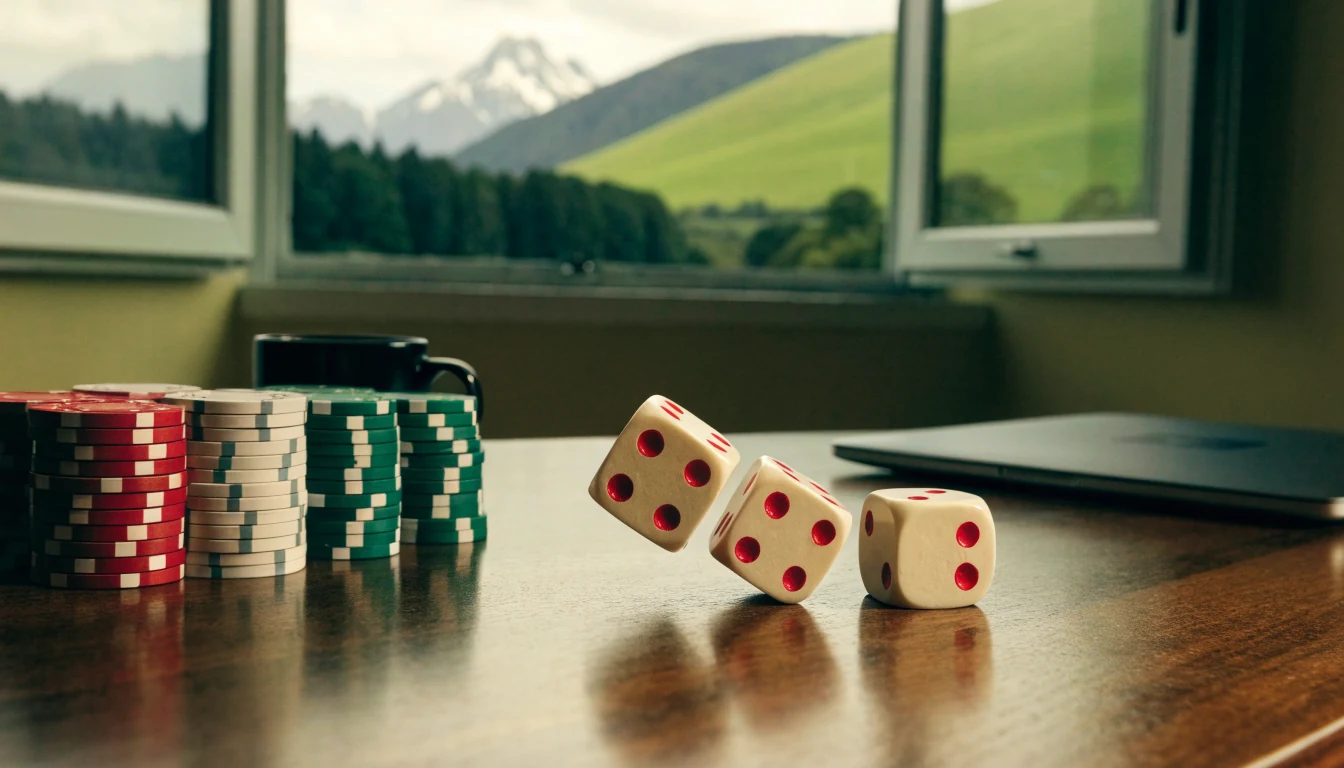
What an Online Craps Table Actually Gives You
Craps is a dice game: players bet on the outcome of rolls made with two dice. Online, that familiar idea is presented through a digital table rather than a physical layout. You choose a wager from the options shown, follow the roll, and watch the table update as the round develops. The screen can look busy at first, but the game underneath is still about two dice and the bets attached to their results.
The first thing to notice is the table layout. It is not just decoration. The marked areas represent different bets, and the labels tell you what each wager concerns. A craps table can show several choices at once, so resist the urge to click simply because a button is prominent. Read the wording on the table and any help panel before you commit. If the layout feels unfamiliar, take a moment to work out which parts refer to the dice and which parts are places to bet.
That distinction makes the game easier to follow. The dice roll produces a result; your wager is a prediction tied to that result or to what happens over the round. You do not need to memorise every available bet to understand what is happening. Start with the basic picture: two dice are rolled, and the table’s betting options define what different players are backing. The rules for individual wagers are worth learning separately, rather than trying to absorb them all while the table is moving.
If you’re looking at online craps options in New Zealand in 2026, use this list as a starting point for checking which details matter to you. Review the available operator information before deciding where to play.
-
Lamabet
- Payout speed
- 1-3 business days
You can note Lamabet’s stated payout speed of 1–3 business days when considering how quickly you want withdrawals processed.
-
Ricky Casino
- License
- Tobique Gaming Commission, licence no. 0000002
You can take note that Ricky Casino lists a Tobique Gaming Commission licence, number 0000002.
-
7Bit Casino
- License
- Tobique Gaming Commission, licence no. 0000091
You can take note that 7Bit Casino lists a Tobique Gaming Commission licence, number 0000091.
-
BitStarz
- License
- Curaçao Gaming Authority, licence no. OGL/2024/165/0185
You can take note that BitStarz lists a Curaçao Gaming Authority licence, number OGL/2024/165/0185.
-
Zotabet
- License
- 07017519840
- Payout speed
- 1-3 business days
You can note Zotabet’s stated payout speed of 1–3 business days and its listed licence identifier, 07017519840.
-
Neospin
- License
- Tobique Gaming Commission, licence no. 0000064
You can take note that Neospin lists a Tobique Gaming Commission licence, number 0000064.
-
Play Grand
- License
- Malta Gaming Authority, licence no. MGA/B2C/370/2017
You can take note that Play Grand lists a Malta Gaming Authority licence, number MGA/B2C/370/2017.
-
Wintino
- Payout speed
- 1-3 business days
You can note Wintino’s stated payout speed of 1–3 business days when considering withdrawal timing.
-
N1 Casino
- License
- Malta Gaming Authority, licence no. MGA/B2C/394/2017
You can take note that N1 Casino lists a Malta Gaming Authority licence, number MGA/B2C/394/2017.
A casino craps game online may present the action in a compact interface, especially on a smaller screen. Look for the current state of the round, the dice result, the betting areas and any instructions displayed by the game. Those are the useful landmarks. Decorative animation can make the table feel lively, but it is the labels and the state indicators that tell you what you need to know. If you cannot tell what a control does, pause and check the game information rather than guessing.
You may also see a choice between playing with money and trying a free version. Free online craps can be useful for getting used to the layout and seeing how the table presents a round, without making a cash wager. Treat it as a way to learn the interface, not as proof that you understand every bet. The game may let you explore its controls, but you still need to read what each wager means before using it in a real-money session. A free table is a practice space, not a shortcut through the rules.
When people ask how to play craps at online casinos, the shortest useful answer is: understand the table, choose a bet only when you know what it covers, then follow the dice and the game’s prompts. That is deliberately less dramatic than the animations. You are not trying to predict every roll; you are trying to know what your selected wager is waiting for. Once you have that clear, the activity on screen is much easier to read.
The experience can differ from one online table to another. Some interfaces explain bets directly on the layout; others put fuller descriptions in a help menu. Controls may be arranged differently, and the amount of information visible at once can vary. I would check the rules panel before starting, particularly if a bet name is new to you. A familiar-looking table is not a substitute for understanding its wording.

There is no single “best” online craps table for everyone. A useful one is the table whose rules and controls you can follow without having to guess. If you are comparing options, focus first on whether the game explains its bets clearly and whether the presentation suits the way you want to play. A live table and a digital table can look different, but the basic idea remains the same: bets concern the outcome of two-dice rolls. The details of how each format runs are a separate consideration.
Craps can seem more complicated than it is because the layout puts many possibilities in front of you at once. You can ignore most of them while learning. Keep your attention on the dice, the wording beside the wager you are considering, and the game’s indication of what is happening in the round. That gives you a steady way into online craps without turning the first visit to the table into a memory test.
The useful starting point is modest: two dice, a set of betting choices and a round whose progress the table displays. Learn the parts you are using before adding more. The table will still be there.

The New Zealand Rules That Matter Before You Play
If you’re looking for online craps in New Zealand in 2026, the key thing to understand is that the rules are changing in stages. The Online Casino Gambling Act 2026 created a domestic licensing system for online casinos, and the Department of Internal Affairs (DIA) is responsible for administering it. That does not mean every site becomes licensed as soon as the law takes effect.
The transition began on 1 May 2026 and is scheduled to end on 1 December 2026. Operators that were already serving New Zealand customers before the transition began may continue during this window, subject to the Act’s transitional provisions. After the cutoff, an operator without the required licence cannot continue serving players here. That date matters more than a banner saying “available in New Zealand”: access and permission to operate are not the same thing.
The licensed market is expected to start around 1 December 2026, but the full system is not expected to be operating at scale until 2027. The first licensed sites are expected to appear during that year. So, in practice, 2026 is a changeover period, not a year in which every online casino you encounter is already part of the new system. The timing can feel untidy. It is.

The Act allows for as many as 15 online casino licences. The DIA’s role is to administer that regime; a site’s own claim about its status is not a substitute for the regulator’s process. If you are considering a casino craps online, pay attention to whether the operator is entitled to serve New Zealand players at that point in the transition. A site that was operating before May 2026 may fall under transitional arrangements, while an operator that arrives later cannot assume it has the same position.
There is a distinction between the operator’s obligations and yours. New Zealanders do not commit an offence simply by gambling with an unlicensed online operator. The new regime is directed at regulating providers, not making the customer liable for choosing a site. That does not turn an unlicensed service into a locally supervised one: before this licensing system, offshore online casinos were not licensed or overseen by a New Zealand regulator, and customers had no domestic government recourse against them. Legal exposure for the player and practical protection from the service are different questions.
Once the licensed market is running, New Zealand online casino operators may offer casino-style games, including pokies, blackjack, roulette, baccarat and poker. Sports and racing betting are outside that online casino licence. For someone searching for live craps online, the relevant issue is whether the casino offering the game is permitted to operate here under the rules in force, not whether a particular table looks local or has a live dealer.
I’d treat 2026 as a period to check dates and status rather than assume the old arrangement or the new one applies everywhere. The transition has a defined end, but the launch of licensed sites is expected to follow into 2027. If a provider has not secured the right to operate after the transition, it must stop serving New Zealand players once the cutoff arrives. For players, that means online craps in NZ may be accessible during the changeover, while the regulatory position of the site can still differ. Don’t confuse a working login with a licence.
Try a Free Craps Game by Learning the Come-Out Roll
A free craps game is useful when you give yourself one small job: watch the come-out roll and decide what it means for a Pass Line bet. You are not trying to learn every wager at once. You are learning to read the opening moment without money riding on your decision.
If the table offers a free-play mode, use it to follow the same sequence you would see at a paid table. Find the Pass Line area, place a practice bet there, then watch the dice result. The display may show the total, highlight the winning or losing bet, or settle the chips automatically. Take a moment before the screen updates and work out the result yourself. That pause is the useful part.
For a Pass Line bet on the come-out roll, 7 or 11 wins. A roll of 2, 3 or 12 loses. Those are the outcomes to learn first. If one of the other totals appears, don’t guess that the bet has won or lost; simply notice that this opening roll has not settled it. For now, keep your attention on those clear wins and losses.

I find it easier to remember the rule by grouping the outcomes rather than trying to memorise a string of numbers. Seven and eleven are the Pass Line wins. Two, three and twelve are the losses. Read the result, name the group, then check what happened to the practice bet. A few deliberate repetitions make the screen feel less busy.
The main trap is watching the dice animation and missing the bet result. Online tables can display several things at once: the dice, the layout, chip movements and other players’ activity. In a free game, you can slow your attention down. Look at the Pass Line first, follow the roll, and then confirm whether the bet was paid or removed. The animation is theatre; the result is the lesson.
Try a simple routine:
- Before the roll, identify your Pass Line practice bet.
- When the dice land, read the total rather than guessing from the motion.
- Say “win” for 7 or 11, and “loss” for 2, 3 or 12.
- Check that the table’s result matches your call.
If you get it wrong, reset your focus and try again. There is no need to add more bets to make the exercise feel realistic. More chips on the layout mean more information to track, not a better grasp of the come-out roll. Keep the screen uncluttered until you can read this part comfortably.
Free play is also a good way to notice how a table presents a result. One game may make the total prominent; another may emphasise the chip movement. The rules do not change just because the display does. Anchor yourself to the roll and the Pass Line outcome, not to colours or celebratory effects.
A free online craps game is not the same as playing for money: practice chips do not put your funds at risk, and a result in the simulator does not become a real-money win. Treat it as a place to rehearse recognition, not as a way to judge what you would win or lose at a paid table. If the free mode is available, use it for the narrow task it handles well: learning which come-out totals settle a Pass Line bet.
Come-Out Practice
-
1
Identify Bet
Find the Pass Line area and place a practice bet.
-
2
Observe Result
Watch the dice total and identify if it is 7, 11, 2, 3, or 12.
-
3
Determine Outcome
Mark the bet as a win for 7 or 11, and a loss for 2, 3, or 12.
Once you can identify those outcomes without hunting around the layout, you have learned what this exercise is meant to teach. Keep it simple. One roll, one bet, one clear result.
How to Join a Round and Establish the Point
To become the shooter in a craps round, you first need a wager on either the Pass Line or the Don’t Pass Line. That choice comes before the dice are rolled; watching a round without a bet does not make you its shooter. On an online table, find the line marked for your choice and place your stake there before the come-out roll begins.
Take a moment to make sure the bet is sitting on the line you intended. Pass and Don’t Pass are neighbouring choices, but they back opposite sides of the opening wager. I’ve found that a quick glance at the table is worth more than rushing to follow the dice. Once the wager is set, the shooter can make the come-out roll.
The practical aim here is simply to recognise whether that roll establishes a point. If the dice show 4, 5, 6, 8, 9 or 10, the number becomes the point for the round. It is not a new bet or a second shooter; it is the target number the table will now track.
That change is easy to miss when you are learning craps online. Before the point is established, the table is waiting on the come-out roll. After one of those six numbers appears, the round has a number to return to. Look for the point indicator or the table’s display to make clear which number has been set. The exact presentation can differ between games, so follow the number shown rather than relying on where it appears on screen.
For a new player, it helps to keep the sequence plain:
- Choose Pass Line or Don’t Pass.
- Place that wager before the come-out roll.
- Watch for 4, 5, 6, 8, 9 or 10.
- If one appears, note it as the point.
That is the moment you have joined the round as its shooter and the point is established. The dice do not need to show a special combination beyond one of those numbers for this step. You are just identifying what number the table will follow next.
The point also changes what you should pay attention to. Rather than treating every roll as a fresh start, keep the established number in view. Play continues until either that point or a 7 is rolled. For now, you do not need to work out every later bet or outcome; just notice the point and stay with the round.
A free table can be useful for practising this sequence without putting money at stake. Set a Pass or Don’t Pass wager in the game, then watch how the interface marks the point when one of the qualifying numbers appears. You can repeat the process until the distinction between placing the opening bet and recognising the point feels natural. It is a small step, but it stops the table from looking like a blur of dice and labels.
- Place a wager on Pass Line or Don't Pass Line
- Confirm the bet is on the intended line
- Watch the come-out roll for 4, 5, 6, 8, 9, or 10
- Identify the resulting number as the point
When you play craps online with other people, the same sequence applies: your opening line bet is what puts you in as shooter, and a qualifying come-out roll sets the point. The screen may add chat or other players’ activity, but neither changes that basic order. Keep your eye on your wager and the point display. Simple, and easy to follow.
Follow the Point: Pass, Don’t Pass and Come Bets
Once the point has been set, the round moves into a longer phase: the shooter keeps rolling, and the Pass Line and Don’t Pass bets are waiting on different outcomes. You do not need to memorise a string of rules. Keep the point number in view and watch whether it or a 7 appears first.
A Pass Line bet is still live after the point is established. If the shooter rolls that point again before a 7, the bet wins. If a 7 arrives first, it loses. The rolls in between do not settle the bet; they simply keep the round going. On an online craps table, the point is normally marked on screen, which makes it easier to follow than trying to hold the number in your head while watching the dice.
Don’t Pass works the other way around. After the point is set, it wins if a 7 comes before the point number. If the point appears first, the Don’t Pass bet loses. The two line bets are therefore watching the same sequence but waiting for opposite results. That contrast is the bit worth keeping straight.

Adding Come and Don’t Come bets
After a point has been established, you can place a Come bet. It is a separate wager from the original Pass Line bet, and it is resolved by its own target: it wins if its point number is rolled before a 7. This gives you another bet to follow while the main round continues. If you are playing craps online, check which bet the table has accepted before the next roll; the labels can be small, but the distinction matters.
A Don’t Come bet is the opposite-side version. It follows the same general idea as Don’t Pass, but you can make it during the round at a time other than the come-out roll. Once placed, it is looking for a 7 before its point number; if that number comes first, the bet loses. In other words, Don’t Pass is tied to the opening wager, while Don’t Come gives you a similar choice later in the round.
It helps to separate the bets by when you place them and what they are tracking. Pass and Don’t Pass are the line bets already in play. Come and Don’t Come are additional bets available after the point has been established, with each following its own outcome. On a craps game online, several bets can be active at once, so glance at the felt or bet panel after each roll rather than assuming every chip is tied to the original line.
I used to watch only the dice and miss which wager was waiting on which number. Better to track the bet and its target together: Pass needs its point before 7; Don’t Pass needs 7 first. Come and Don’t Come add their own versions to the round. That is the whole rhythm.
Do
- Track the point number in view
- Contrast Pass and Don't Pass results
- Check the bet panel after each roll
Don't
- Watch only the dice
- Assume every chip is tied to the original line
- Ignore the distinction between Pass and Come bets
Free Craps Practice: Pay Attention to the Don’t Pass Roll
A free craps table is useful when you give yourself one small job instead of trying to follow every bet at once. For this practice run, watch the Don’t Pass bet on the come-out roll. The point is to recognise its result, not to predict the dice or turn a short session into a strategy.
Keep your attention on the Don’t Pass line as the shooter makes the come-out roll. If the dice show 2 or 3, the bet wins. If they show 12, it ties. Those are the outcomes to learn here. The tie is easy to overlook if you are watching for a win or loss, so pause on it: a 12 does not settle the bet as either one.
In a free online craps practice session, try naming the result before you look at the table’s display. After the roll, check whether the game marks the Don’t Pass bet as a win or a tie. That simple check helps you connect the dice total with the bet’s outcome, rather than relying on a flash of colour or a message on screen. If you get it wrong, reset your attention and try again. No need to rush.
Keep the exercise narrow. You do not need to study every wager while doing this, and you do not need to place several bets just to make the screen look busy. I find it clearer to follow one line and let the game show what happened. Free play is a practice space, not a test of how quickly you can react.

Once you can spot the 2, 3 and 12 outcomes without hesitation, you have learned the specific detail this exercise is for. Don’t read more into it: recognising a result does not tell you what the next roll will be. Dice remain dice.
This focused approach also makes online free craps easier to follow if the table is unfamiliar. Ignore distractions, locate the Don’t Pass bet, and compare the come-out roll with the displayed result. The useful habit is checking the rule against what happened, not assuming every bet resolves the same way. A quiet practice session can make that distinction stick. Short lesson, well spent.
Read the Bet Terms Before You Choose a Table
A craps table can make several bets look equally straightforward: choose a line, put down chips and wait for the dice. The cost behind each choice is not the same, though. Before settling on a table, I look at the house edge and any commission attached to the bet. Those terms tell you more than the layout does.
The Pass Line bet has a house edge of 1.41%. In plain terms, the edge describes the casino’s mathematical advantage over repeated play, not a prediction of what will happen in one round. You can win a particular bet; the figure does not say otherwise. It helps compare the built-in cost of the wager, provided you are comparing like with like.
That is why I would not treat a lively-looking digital table as the best online craps game simply because its buttons are clear or the dice animation is polished. Check the bet rules first. A neat interface cannot change the maths attached to a wager.
Pass Line
A wager with a house edge of 1.41%.
Odds Bet
An extra bet with no house edge that pays true odds.
Buy Bets
Wagers that require a 5% commission.
Odds and commission are different costs
An Odds bet is unusual because it has no house edge and pays according to true odds. That does not make the whole table free of an advantage for the casino, nor does it mean every bet on the layout has the same terms. Keep the Odds bet separate in your mind from the Pass Line bet it is associated with; otherwise, “no house edge” can sound broader than it is.
Buy bets have a different detail to watch: they require a 5% commission. Read how the table presents that charge before placing the bet, so you know when it applies and how it affects the amount you receive. The commission is part of the price of the wager, not a decorative note in the rules.
I’ve found it easier to compare tables by reading the paytable and rules than by judging the game from its name. If you are browsing free craps games, use the practice screen to find where those terms are shown; a free round can teach you the layout, but it cannot make a commission disappear. The same check matters if you are looking for low-deposit online craps: a small starting amount does not tell you whether a particular bet carries an edge or a fee.
Keep the distinction simple: the Pass Line has a stated house edge, Odds pays at true odds without a house edge, and Buy bets carry commission. Then check the table’s own wording before you play. Clear terms beat guesswork.

Use Odds Bets Carefully When You Practise
Taking Odds is an extra bet you can place only after making a Pass Line or Come bet. It is not a standalone wager, and you cannot add it before the underlying bet exists. That timing is the first thing I’d practise: make the qualifying bet, wait until the game allows Odds, then decide whether to add them.
The amount is capped in relation to your initial bet. The cap is a multiple of that first stake, but the available maximum can vary by table. Don’t assume that a large balance means you can add any amount you like. Check the limit shown at the table and keep your Odds bet within it.
A free table is a useful place to learn the sequence without putting money at risk. Follow one Pass or Come bet through the round, and notice when the Odds option becomes available. If you add it, watch how the game shows it separately from the original bet. That distinction matters: the initial bet is still there, and the extra wager does not replace it.
For online craps practice, try the same sequence more than once, but change only one thing at a time. You might first leave Odds untouched and observe the round; next, add an amount within the displayed cap and compare the bet layout. The aim is not to chase a particular result. It is to know what you have placed and when you placed it.
Keep the practice simple. If the table’s controls make it unclear whether you’re selecting the original Pass or Come bet or adding Odds, pause before confirming. A quick check beats discovering after the roll that you placed something different from what you intended. No drama; just better habits.
I treat Odds as an optional extra to test, not a button that has to be pressed whenever it appears. Practising that choice helps you get comfortable with the interface while keeping the initial bet and its attached Odds clear in your mind. When you move from a free game to play for money, the same distinction is worth checking carefully.
Digital Dice or a Live Dealer: What the Simulator Changes
When you open an online craps table, the first difference to notice is how the dice are produced. On a digital table, a random number generator determines the result. In a live game, real dealers run the table. Both are ways to play craps online, but they feel different because one is software-led and the other is dealer-led.
A digital table is a craps online simulator in the straightforward sense: the game runs through software, and the result appears on screen. You interact with the table interface rather than a person. The presentation may make the dice and betting area easy to follow, but the underlying distinction is simple: an RNG generates the digital result. There is no live dealer rolling physical dice at that table.

That setup can suit you if you want a self-contained screen and a pace set by the game interface. I find it useful to treat the display as a way to watch what is happening, not as a reason to assume the game is being run by a person behind the scenes. Digital means digital.
A live table puts real dealers at the centre of the experience. Instead of software presenting every part of the game, you see a dealer-run table. That can make the session feel more like a casino table, while still being played online. The difference is not a new version of craps; it is how the table is operated and shown to you.
Neither format changes the basic identity of the game. You are still looking at craps, with outcomes determined either by an RNG on a digital table or by the real-world dice in a live game. The table style changes the atmosphere and the way you follow the action, not the name of the game.

When choosing between them, consider what you want from the screen. If you prefer a software interface, a digital table is the natural fit. If you would rather have real dealers running the table, look for a live game. Check the table description before joining: the format should be clear. No mystery there.
Playing for Money: Check Craps’ Wagering Contribution
When you play craps for money with a bonus, the table’s wagering contribution can matter as much as the bet itself. A contribution rate determines how much of your qualifying stake counts towards meeting the bonus wagering requirement. A bet can be accepted at the table without counting in full towards that requirement.
A specialist casino review reports that craps bets may contribute less than pokies bets. Treat that as a report, not a rule across New Zealand casinos: the terms attached to a particular offer and casino set the conditions. The same kind of review says some New Zealand casinos may count certain craps wagers only partially, with Pass and Don’t Pass bets among the lower-risk examples it mentions.
Before you opt in, find the offer’s game-contribution terms and check whether craps is included, whether different bet types are treated differently, and whether the contribution is partial. If the wording is unclear, ask the operator before wagering. Don’t assume that every stake at a craps table moves the requirement by the same amount.
This matters if you are choosing between playing for fun and playing for money. Free play lets you get familiar with the table without putting a bonus requirement into the picture. With real-money play, the offer’s terms add another condition to keep track of; a game you enjoy may not be the most useful one for clearing a bonus.
I’d read the terms before depositing, not after the first round. Bonus conditions can shape what counts, and a familiar-looking bet is no guarantee it qualifies in the way you expect. Check the exact offer, then decide whether its conditions suit the way you want to play. No guesswork.
Which craps strategy should you choose?
A Pass Line bet is a straightforward place to start and has a 1.41% house edge. You can add an Odds bet after placing a Pass Line bet; it has no house edge, though the casino may cap its size.
Are online casinos legal in New Zealand?
Yes. New Zealand’s online casino licensing regime came into force on 1 May 2026, with the licensed market expected to begin around 1 December 2026. The first licensed sites are expected to go live during 2027.
Is it legal for New Zealand players to gamble at offshore online casinos?
You do not commit an offence by gambling with an unlicensed operator. However, after the transition period ends in December 2026, unlicensed operators cannot serve New Zealand players.
What is online craps?
Online craps is a dice game where you bet on the outcomes of rolls made with two dice. Digital tables use random number generators, while live games use real dealers.
Can I play for free?
Yes. Free online craps lets you explore the table and its controls without placing a cash wager.
Can I use bonuses on craps?
Sometimes. Some New Zealand casinos count craps bets partly toward wagering requirements, particularly lower-risk bets such as Pass or Don’t Pass; check the casino’s bonus terms for how your bets count.
Casino Games in New Zealand: Slots and Table Games
Content created by the «casinotips-nz.com» team