
Check the rules before taking a seat
 Available in US
Table rules can vary, so compare the deck count, dealer actions and available options before choosing a game.
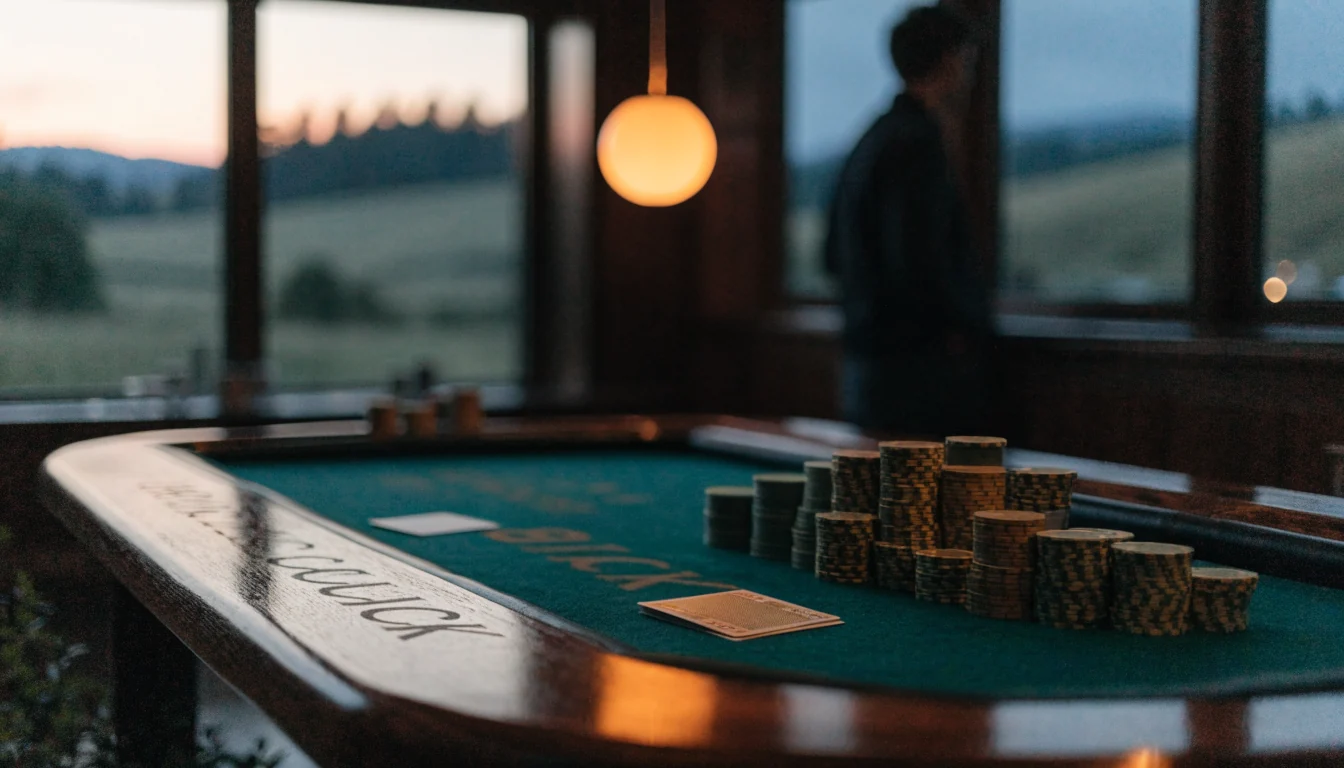
How to Compare Blackjack Tables Before You Play
When I compare online blackjack tables, I start with the rules shown for the individual game, not the casino’s headline or table name. Two games can both be called blackjack and still give you different conditions. The useful question is not which one looks most impressive, but what its rules actually say.
I check the rule panel before joining. If it is difficult to find, or the wording leaves an important point unclear, I would rather pause than guess. A table label alone does not tell you how many decks are in use, what the dealer does with a soft seventeen, whether surrender is available, or what a natural blackjack pays. Those details can differ from one game to another.
Start with the rules that change the comparison
Deck count. Look for the number of decks used in the game. Do not assume that a familiar-looking table has the same setup as another one. If the game information does not state the deck count clearly, treat that as something to resolve before playing rather than filling the gap with an assumption.
The dealer’s soft-seventeen rule. Check whether the dealer draws on a soft seventeen or stands. The distinction matters because it changes the dealer’s play, even though it may be easy to miss when you are focused on your own hand. Read the table’s wording carefully; do not infer the rule from the game’s title or appearance.
Surrender. Some tables allow you to surrender, while others do not. If it is offered, find out how the option is described in that game’s rules. Its presence is not a sign that one table is automatically better for everyone, but it is part of the conditions you are comparing.
Natural blackjack payout. A specialist review reports that a natural blackjack may pay 3:2 at some tables and 6:5 at others. That is a report about particular tables, not a rule you should assume applies across online blackjack. Check the payout printed in the rules for the game you are considering. A familiar game name does not settle the question.
- Check the number of decks in use
- Establish the dealer's soft-seventeen rule
- Confirm if surrender is available
- Verify the natural blackjack payout
I would keep those details together rather than judging each in isolation. A table with one feature you like may have another rule you have not checked. The comparison only helps if you know what each game actually offers.
Read the table information, not just the label
Game titles and short descriptions are useful for finding a table, but they are not a substitute for its rules. Before you sit down, open the information panel and look for the details above. If rules are split across several screens, take the time to read them; a quick glance at the lobby can leave you comparing names rather than conditions.
For a straightforward comparison, jot down the rule details for the tables you are considering:
| What to check | What to establish |
|---|---|
| Decks | How many decks the game uses |
| Soft seventeen | Whether the dealer hits or stands |
| Surrender | Whether the option is available |
| Natural blackjack | The payout stated for that table |
This is not a scoring system. It is a way to spot differences before they become relevant during a hand. If one game’s information is clear and another’s is not, that difference itself is worth noticing.
What if you are worried a game is rigged?
A table’s rules can tell you how it is meant to work; they cannot, by themselves, prove how a game is operated. I would not treat a run of wins or losses as proof either way. The practical step is to read the game information, check that the rules are internally clear, and avoid proceeding when you cannot understand what is being offered. That is a sensible check, not a guarantee about the game.
When people look for the best online blackjack casino, they can end up comparing the operator rather than the table. For blackjack, the rules give you a more useful starting point. The same applies when you are comparing online tables in New Zealand or looking at a live table: establish the conditions first, then decide whether that particular game suits you. No ranking can do that reading for you.
I also avoid treating one rule as a complete verdict. Deck count, dealer behaviour, surrender and payout are separate details, and the combination is what you need to understand. If a table’s description uses broad language but the rule panel spells things out, rely on the panel. If neither explains a point you care about, choose a game whose terms are clearer.
A short check before joining saves confusion later. Find the rules, compare the same details across tables, and do not let a familiar title stand in for information. That is enough to make a more informed choice without pretending any table name tells the whole story.
Blackjack in New Zealand: What the 2026 Licensing Changes Mean
When choosing an online blackjack option in New Zealand for 2026, it helps to check the specific details available for each operator. Use these short verdicts as a starting point for your own review.
-
Lamabet
- Payout speed
- 1-3 business days
Lamabet lists a payout speed of 1–3 business days, a detail you can consider when reviewing your options.
-
Ricky Casino
- License
- Tobique Gaming Commission, licence no. 0000002
Ricky Casino lists a licence from the Tobique Gaming Commission, licence no. 0000002. You can use that licensing detail as one point in your review.
-
7Bit Casino
- License
- Tobique Gaming Commission, licence no. 0000091
7Bit Casino lists a licence from the Tobique Gaming Commission, licence no. 0000091. This gives you a specific licensing detail to check.
-
BitStarz
- License
- Curaçao Gaming Authority, licence no. OGL/2024/165/0185
BitStarz lists a Curaçao Gaming Authority licence, no. OGL/2024/165/0185. You can consider this stated licence information as part of your review.
-
Zotabet
- License
- 07017519840
- Payout speed
- 1-3 business days
Zotabet lists licence number 07017519840 and a payout speed of 1–3 business days. These are the available details to weigh when considering it.
-
Neospin
- License
- Tobique Gaming Commission, licence no. 0000064
Neospin lists a Tobique Gaming Commission licence, no. 0000064. You can check this licensing detail as you assess the operator.
-
Play Grand
- License
- Malta Gaming Authority, licence no. MGA/B2C/370/2017
Play Grand lists a Malta Gaming Authority licence, no. MGA/B2C/370/2017. This provides a specific licensing detail for your consideration.
-
Wintino
- Payout speed
- 1-3 business days
Wintino lists a payout speed of 1–3 business days. You can take this stated timing into account when reviewing the operator.
-
N1 Casino
- License
- Malta Gaming Authority, licence no. MGA/B2C/394/2017
N1 Casino lists a Malta Gaming Authority licence, no. MGA/B2C/394/2017. You can use that information as one part of your assessment.
For years, people in New Zealand could reach online blackjack sites based overseas, but those sites were not licensed or supervised by a New Zealand gambling regulator. The Gambling Act 2003 did not permit online casinos to be based here, and if something went wrong with an offshore service, customers had no domestic government recourse. That history matters: access to a website and protection under a local licensing system are not the same thing.
The Online Casino Gambling Act 2026 creates New Zealand’s first domestic licensing framework for online casino gambling. It took effect on 1 May 2026, beginning a transition rather than switching the market to a fully licensed system overnight. Providers that were already serving New Zealand customers before that date can continue during the transition, subject to the Act’s conditions. The full licensing regime is not expected to be operating in full until 2027.
The transition has a firm end point. Existing providers may continue until 1 December 2026, but a provider that has not applied for a licence by then must stop offering online casino gambling in New Zealand. If an application is declined, the provider must leave the market and cease its online casino operations here. Unlicensed operation is expected to become an offence around mid-2027, and operators without a licence may face enforcement action and fines of up to NZ$5 million.
That is a change for operators, not a new criminal liability for players. New Zealand residents are not fined or prosecuted simply for using an offshore casino without a local licence. Offshore sites may remain accessible, but accessibility alone does not mean they are covered by the new domestic oversight. During the transition, licensed operators are also prohibited from advertising to people in New Zealand. The distinction is worth keeping straight.
Who does what
The Department of Internal Affairs is New Zealand’s primary gambling regulator and oversees the online casino licensing framework. The Gambling Commission has the licensing role: it hears and determines applications, issues online casino licences, and approves changes to licence conditions. Put simply, the Department oversees the framework, while the Commission makes decisions on individual applications and licence conditions.
A licence is therefore more than a label an operator can add to a page. The new system gives New Zealand authorities a domestic process for deciding who may operate and for setting conditions on that permission. Licensed providers must also use stricter age and identity checks. Advertising is allowed only within tight rules, and sponsorships are prohibited.
For someone looking at online blackjack in New Zealand in 2026, the practical point is that the market is between systems. Some providers may be operating under the transition while the country builds out its first licensing regime; the fully operational framework is still expected later. A site being available to you does not, by itself, show that it has a New Zealand licence or that it is within the new system.
I would treat claims about local licensing as something to verify carefully, rather than assume from a New Zealand-facing page or familiar-looking branding. The transition dates apply to providers and their ability to operate here; they do not turn every offshore casino into a locally licensed service. It is a distinction that can get lost in a tidy banner.
The Aim of the Game, the Cards and Your First Decisions
Blackjack is a contest between you and the dealer, not a competition to collect as many cards as possible. Your aim is to finish with a hand closer to 21 than the dealer’s, without going over 21 yourself. A total above that limit is a bust, and the hand is lost. If your total is below it, you still need to see how the dealer’s hand compares.
That gives the game its simple tension: a hand can look modest and still be worth keeping, while adding another card can turn a promising total into a bust. It is not enough to ask whether your cards add up to a large number. You also need to understand how each card contributes to the total.
Card values at a glance
Number cards count at face value. A card marked with a six adds six; a card marked with a nine adds nine. Jacks, queens and kings each count as 10. The ace is the flexible card: it can count as either 1 or 11, depending on which value helps the hand without taking it over 21.

For example, an ace with a seven can be counted as 8 or 18. The useful total is 18, since it stays within the limit. Add a high-value card to that hand, though, and the ace can count as 1 instead, keeping the total from busting. That flexibility is why an ace can change the way a hand is understood as new cards arrive.
You may hear hands described as soft or hard. A soft hand contains an ace being counted as 11; it can often be revalued as 1 if another card would otherwise push the total too high. A hard hand has no ace, or its ace already has to count as 1. The distinction is a shorthand for whether the hand has that flexibility, not a separate scoring system.
Read the total, then the situation
When you look at an online blackjack game, start by adding your cards rather than treating each one as a separate clue. A low total is not automatically bad: it leaves room for another card. A total near 21 is strong, but there is less room to add without busting. And even a respectable total does not settle the hand until you know what the dealer has.
That last point is easy to miss when you are new. You are not trying to reach 21 at any cost. You are trying to beat the dealer while staying within the limit. If the dealer goes over 21, a hand that has not busted can win without reaching 21 itself. If neither hand goes over, the higher total decides the result; an equal total is generally a tie, though the table’s rules determine the settlement.
An opening hand is simply the starting point for that comparison. Take a moment to total it, notice whether an ace is working as 1 or 11, and keep the dealer’s hand in view. The same cards can feel very different depending on those details. No mystery. Just arithmetic with a little pressure.
Some players arrive at an online blackjack game thinking first about a betting system such as the martingale. That does not change the card values or the aim of the hand: the game is still decided by the totals and the dealer. Learn to read those before worrying about systems. On a small screen, the layout may make the cards look compact, but the calculation is the same as on a larger display.
Playing Blackjack for Real Money: Payouts and a Sensible Budget
When you move from practice to real-money blackjack, the important change is not the cards; it is that every decision has a financial consequence. A winning hand does not make the next one safer, and a run of losses does not mean a win is due. I treat the money set aside for a session as spent before I sit down. That keeps a bad stretch from turning into an excuse to keep playing.
The payout attached to a natural blackjack is worth checking before you stake anything. A specialist review describes one payout as 3:2, while noting that some tables offer 6:5 instead. Those ratios do not return the same amount for the same stake: the lower ratio pays less when you make a natural. Do not assume the figure you have seen applies to every game. Read the table information and confirm the payout shown for that specific game.
Set the limit before you start
Choose a budget you can afford to lose without affecting bills, food, savings or other commitments. Keep that money separate from funds you need for everyday life. Once the budget is gone, stop; do not reload because you feel close to recovering it. Blackjack can produce a short winning run, but it cannot promise one, and no system can turn a losing session into a sure thing.
Do
- Set a budget you can afford to lose
- Treat session money as spent in advance
- Establish a firm stopping point
Don't
- Use funds needed for everyday life
- Reload your budget to recover losses
- Chase losses when tired or frustrated
It also helps to decide when you will finish before the first hand. If you are tired, distracted or frustrated, take that as a reason to leave rather than a reason to make one more bet. I find a firm stopping point more useful than trying to judge my mood while the balance is moving. Chasing losses is still chasing losses, even when the next hand feels like the obvious one to play.
Read the cost of any offer
If a bonus is involved, check the fine print and bonus conditions on trustworthy sites and casinos before playing with real money. Blackjack may count differently toward wagering requirements, and maximum bet rules can apply while you are wagering. Those details can change how much play an offer requires and what you may do during it. If the conditions are unclear, do not treat the advertised bonus as cash you already have.
The same care applies if you are considering online blackjack for money through a different payment method, including cryptocurrency. A payment method does not change the game’s payout or make a win more likely. Focus on what the table pays, what the offer requires, and whether the amount at stake fits the budget you chose. Keep records of deposits and withdrawals so that your own spending stays visible.
Real-money play can be entertaining, but it is gambling: you can lose the full amount you bring to the table. A free game can help you get used to the pace without risking a stake; it cannot show you what it feels like to lose money you meant to keep. Decide that boundary in advance. No dramatic recovery plan.
Free Blackjack and RNG Games: A Way to Get Familiar with the Pace
Free online blackjack can be useful when you want to get comfortable with the screen before putting money at risk. It lets you see how a digital table presents a hand, where the controls sit and how quickly the game moves. Treat it as a low-pressure introduction, not as a preview of what you will win or lose for real.
The distinction matters. In an online RNG game, software shuffles the cards, and play can move faster than at a live-dealer table. You are not waiting for a person to deal or for a streamed table to respond. That brisk rhythm can be handy for getting used to the interface, but it can also make decisions feel more automatic. A few quick rounds can pass before you have properly noticed the pace.
What free play can teach you
A free version is best used as a rehearsal for the digital setting. You can learn how the table displays your hand and the dealer’s, how the game communicates the result, and where to look for its rules. If the layout feels unfamiliar, take a moment to inspect it rather than clicking through on instinct. A clear interface is useful; it does not tell you whether the game suits you.
Free play can also help you notice your own habits. Do you rush when the screen updates quickly? Do you lose track of what you meant to do after a hand changes? Do you keep playing simply because another round starts straight away? These are practical things to learn before real money is involved. The lesson is about your comfort and attention, not about finding a winning pattern.
A simulator or practice mode may be useful for the same reason, provided it gives you a chance to interact with the game. The label matters less than what you can actually do: explore the interface, follow a few hands and stop when you have learned what you came for. Some free versions may be limited or presented differently from paid play, so do not assume every detail will carry over.
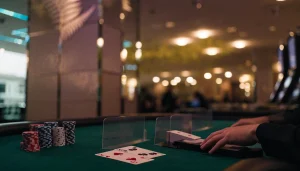
I would keep the session purposeful. Look around, play at a pace you can follow, and notice whether the table makes important information easy to find. If the game offers rules or help, read them. Free play is a convenient place to do that without the distraction of a real-money balance. It is not a reason to trust a site automatically, and it is not a promise that a paid version will feel identical.
A faster rhythm is still a different experience
RNG blackjack has no live dealer handling the cards on screen. The software shuffles, then the next hand can begin without the delays that come with a streamed table. That makes it possible to play more quickly, but speed is not the same as better practice. If you are still learning the layout, slow yourself down where you can and make sure you understand what the game is showing before moving on.
The pace can change how a session feels. A live table has pauses while cards are dealt and the stream catches up; an RNG game may move from one result to the next much sooner. If you are trying free online blackjack games for the first time, give yourself room to observe rather than treating a rapid sequence of hands as a test. Familiarity comes from understanding the screen, not from accumulating rounds.
This is also why free play should not be treated as a rehearsal for every kind of blackjack. It can help with the software interface and the quicker rhythm of RNG play. It cannot reproduce the presence of a dealer or the timing of a live stream. If those differences matter to you, a software game will only show one side of the experience.
Fairness, rigging and RTP
People often ask whether online blackjack is fair or rigged. The fact that a game uses software shuffles tells you how the cards are handled; by itself, that label does not prove how a particular game is tested, operated or presented. Nor does a free session establish that a paid game behaves properly. Keep those questions separate: a smooth demonstration is not evidence about every part of a service.
RTP is another term you may see when reading about a game. It describes a return measure, not a forecast of what will happen in your own session. A displayed figure is only useful if you know which game and rules it refers to, and it should not be read as a promise that you will receive that return. Free play cannot show you a personal outcome in advance.
If you are checking an online blackjack site, look for the game’s own rules and information rather than relying on an attractive free mode. Read the relevant terms before choosing to play for money, including any bonus conditions that apply. A free table can help you decide whether you understand the interface; it cannot certify the operator or settle questions about the game’s integrity.
There is no need to turn a practice session into a system. Online blackjack tips that claim a free run can reveal a dependable sequence to follow are asking more of the session than it can provide. Use it to get oriented, not to infer that the next hands will repeat what you just saw. A shuffle is not a lesson in prediction.
For blackjack online for fun, the sensible test is simple: are you comfortable with the speed and do you understand what the screen is asking you to do? If not, pause or leave the table. Free online blackjack is most useful when it helps you make that choice without pressure. The fast pace is part of the format. It is not a reason to hurry.
Card Counting Online: What the Rules Allow—and What They Don’t Promise
Card counting sounds more dramatic than it is. At its simplest, you keep a mental tally of cards that have appeared and use it to form a view of what may remain. No device, marked cards or accomplice is involved. In New Zealand, using mental calculation alone to count cards is not illegal.
That answers the legal question, not the practical one. Being allowed to count does not mean an online blackjack game gives you a useful count, or that keeping one will improve your results. I would separate those two ideas before putting any weight on a counting system.
In a software-shuffled game, cards are generated and shuffled by the game rather than dealt from a physical shoe that you can observe. A tally from cards already shown may not tell you anything dependable about what comes next. The software may shuffle the cards, so treating earlier hands as a reliable guide to later ones is a leap. Counting does not turn chance into certainty.
This matters if you have read about card counting in a casino and assume the same approach transfers neatly to online play. The setting is different. In a physical game, the cards dealt can affect the composition of what remains in the shoe. In an RNG game, software shuffles are part of the process. A mental count may still be something you can do, but its usefulness depends on how the game handles cards—and legality does not settle that question.
I would also be wary of anyone selling online blackjack card counting as a dependable shortcut. A system can sound precise while resting on assumptions you cannot verify from the screen. It cannot guarantee a winning hand, erase the house edge or make a losing run due for a reversal. That last idea is a costly one.
If you want to try counting, keep it as an exercise in attention rather than a reason to raise your stakes. Notice what you are tracking, and be honest about whether the game’s format gives that information any bearing on future cards. If it is an RNG game, do not assume the count carries forward in a meaningful way. A legal technique is not automatically a useful one.
For someone playing blackjack online in New Zealand, the sensible takeaway is narrow: mental card counting is not prohibited by New Zealand law, but that is no promise of an advantage. The game format still matters, and online play can leave little room for the assumptions that make counting seem attractive elsewhere. Keep expectations modest. No magic here.
Your Choices at the Table: Hit, Stand, Double or Split
Once your hand is in play, the controls are simple; the decision is where the game asks you to pay attention. In an online blackjack game, you’ll generally see the available actions as buttons. Take a moment to read them before clicking, especially if you’re still learning blackjack online. A quick tap can commit you to a move.
Hit asks for another card. You might choose it when you want to improve your hand, but another card can also take you past the point you’re aiming for. The choice is yours, and the screen will update as the hand continues.
Stand means you’re done taking cards for that hand. You’re leaving your total as it is and waiting for the dealer’s turn. I find it helps to pause before choosing: are you content to stop, or are you reacting to nerves about what might happen next? The button won’t answer that for you.
Double down lets you increase your wager while taking a further card, then end your turn. It’s a more committed choice than hitting, so check the prompt and the amount shown before confirming. If you’re playing online blackjack for the first time, it’s worth understanding what the button does before using it rather than discovering its effect mid-hand.
Split becomes available when your opening cards form a pair. It separates them into two hands, which you then play separately. That means more decisions, and it can also mean more money committed to the hand. Don’t treat the split button as an automatic instruction just because it appears.
The exact options can depend on the table, so read what the game displays. With an online dealer, the interface may present the action choices clearly, but the responsibility for selecting one is still yours. In a multiplayer setting, other people’s choices don’t make yours for you: follow your own hand and the buttons available to you.
A useful way to learn is to name the choice to yourself before pressing it: take a card, stop, double, or split. That small pause makes the flow easier to follow and helps prevent accidental clicks. No clever system required. Just pay attention.
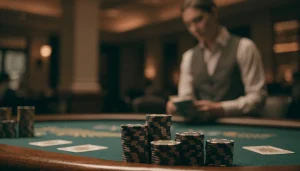
Strategy Starts with the Rules—and Insurance Is Usually a Poor Bet
A blackjack strategy is not a script that works unchanged at every table. Variants can differ in their rules, and those differences can affect both the decisions available to you and the house edge. So before following a chart or advice you have found elsewhere, check that it matches the game in front of you. A small rule change can make a familiar recommendation the wrong one.
That is the useful part of advanced online blackjack strategy: not memorising a complicated system, but noticing what the table permits and adjusting accordingly. If surrender is available, it gives you another option to consider when a hand looks unfavourable. It is not offered everywhere, and its presence does not make every difficult hand a surrender. Check the table rules first, then use guidance designed for that variant rather than treating one chart as universal.
Insurance deserves more caution. It is an additional wager offered in a specific situation, not protection for your overall session. For most players, taking it is a poor default: it adds another decision and another way to put money at risk. I would leave it alone unless you understand the relevant rules and have a clear reason for choosing it. A confident-sounding strategy is not evidence that the bet is worthwhile.
If you are playing with a bonus, read the terms before making decisions around it. Blackjack may count differently toward wagering requirements, and maximum bet rules can apply while you are wagering. Those conditions matter more than trying to force a particular betting pattern.
Keep the aim modest: understand the variant, use advice that fits its rules, and accept that no strategy guarantees a win. When the rules are unclear, pause and check them. Better than guessing.
Live-Dealer Blackjack: Real Cards, a Stream and a Different Pace
Live-dealer blackjack puts actual cards on the table and sends the game to you by video stream. That makes it feel closer to sitting at a casino table than playing a software-shuffled game. The cards are real; the connection is not quite the same as being in the room.
The stream changes the rhythm. With an RNG game, software shuffles the cards and play can move faster. In a live game, the action depends on what is happening at the table and what reaches your screen. Streaming may introduce delays, so a pause does not necessarily mean the game has stopped. It can simply be part of the format.
That difference matters if you prefer a quick run of hands. Live play asks you to wait for the streamed table, while the faster alternative keeps the action moving through software. Neither pace is automatically better; it depends on whether you want to watch real cards being dealt or get through a game more quickly. A stream is part of the experience, not just decoration.
Check the table’s terms before joining, especially the minimum bet. Live-dealer games may require higher bets than you expect, which can make them a poor fit for the budget you had in mind. Don’t treat the live format as a reason to stretch that budget. If the table’s entry point does not suit you, leave it there.
My practical distinction is simple: choose live play for the real-card, streamed-table feel, and accept that the pace may be slower. Choose software play when speed matters more. Real cards, with a loading pause.
Does blackjack always pay 3:2?
No. Some tables pay 3:2 for a natural blackjack, while others pay 6:5. Check the payout in the rules for the specific table.
Is card counting illegal?
No. Using mental calculation to count cards is not illegal under New Zealand law.
When will New Zealand launch online casino licenses?
New Zealand’s online casino licensing framework took effect on 1 May 2026. The full licensing regime is expected to be operating in 2027.
Casinos in New Zealand: Games, Apps and Guides
Content created by the «casinotips-nz.com» team