
Know What to Expect at a Live Blackjack Table
 Available in US
Physical cards, a human dealer and a video stream change the pace and feel of online blackjack, while table rules still shape each decision.

What the Live Table Changes
With live dealer blackjack, the cards are physical cards handled at a real table, rather than images generated by a game of software. You watch the dealer and the table through a video stream while the game takes place. That is the central difference: the screen is showing a real card game, not simply animating one.
For someone used to online games that move at the pace of a click, that change is easy to underestimate. A live table has a human dealer, actual cards and a stream connecting the table to your device. The game cannot move entirely at software speed. There can be a pause while the dealer handles the cards, and the stream itself may delay what you see. A live table can feel closer to sitting in a casino, but it does not necessarily feel as quick or immediate as playing in person.
That distinction matters when you are choosing how to spend a session. If you want a table that moves without much waiting, the live format may ask for more patience. If you value seeing a dealer and real cards, that pause may be part of what you came for. Neither preference is wrong; they are simply different expectations to bring to the screen.
Choosing a live dealer blackjack site in New Zealand means checking the available operator information before you decide where to play. Use these short verdicts as a reference, not as a substitute for checking current terms and availability.
-
Lamabet
- Payout speed
- 1-3 business days
Lamabet lists a payout speed of 1–3 business days, a useful detail for you to consider when reviewing its payment information.
-
Ricky Casino
- License
- Tobique Gaming Commission, licence no. 0000002
Ricky Casino lists a licence from the Tobique Gaming Commission, licence no. 0000002.
-
7Bit Casino
- License
- Tobique Gaming Commission, licence no. 0000091
7Bit Casino lists a licence from the Tobique Gaming Commission, licence no. 0000091.
-
BitStarz
- License
- Curaçao Gaming Authority, licence no. OGL/2024/165/0185
BitStarz lists a Curaçao Gaming Authority licence, no. OGL/2024/165/0185.
-
Zotabet
- License
- 07017519840
- Payout speed
- 1-3 business days
Zotabet lists licence no. 07017519840 and a payout speed of 1–3 business days.
-
Neospin
- License
- Tobique Gaming Commission, licence no. 0000064
Neospin lists a licence from the Tobique Gaming Commission, licence no. 0000064.
-
Play Grand
- License
- Malta Gaming Authority, licence no. MGA/B2C/370/2017
Play Grand lists a Malta Gaming Authority licence, no. MGA/B2C/370/2017.
-
Wintino
- Payout speed
- 1-3 business days
Wintino lists a payout speed of 1–3 business days, which you can factor into your review of its payment information.
-
N1 Casino
- License
- Malta Gaming Authority, licence no. MGA/B2C/394/2017
N1 Casino lists a Malta Gaming Authority licence, no. MGA/B2C/394/2017.
Streaming also means that what you see depends on a video connection. The dealer is at the table, but you are watching remotely, and the picture may not update at precisely the same moment as events at the table. A delay is not the same thing as a change to the cards. It is a feature of receiving a live stream, and it can affect how responsive the game feels from your side.
I would treat that as a practical difference, not a dramatic one. A brief lag can make a table feel less fluid, especially if you expect every action to register instantly. The sensible adjustment is to follow the game on screen and allow for the rhythm of a broadcast. Trying to hurry a live table along does not make the stream catch up.
The other difference can be the price of entry. Some live tables may require higher bets than a player expects from other online blackjack options. That is not a promise that every live table costs more, nor a fixed feature of the format. It is a possibility to check before joining. The live production involves a real table and a streamed game, and the available stake may not match what you have seen elsewhere.
That matters because “online” can make different versions of blackjack sound interchangeable. They are not. A live dealer table brings the physical dealing and the stream; a software game does not give you the same view of a person handling cards at a table. The live experience can therefore feel more tangible, while also being slower or requiring a larger stake than you had in mind. That trade-off is easy to miss if you focus only on the word “blackjack.”

For live dealer blackjack in New Zealand in 2026, the useful question is not whether the table looks like a casino. It does show a real dealer and actual cards. The more practical question is whether the pace and entry stake suit the way you want to play. A polished stream cannot remove the time it takes to run a physical table, and a live label does not tell you what a particular table will require.
I also find it helpful to separate the picture from the pace. A crisp video can make the table feel immediate, but it is still a broadcast of a game happening elsewhere. If the stream pauses or lags, the experience can feel out of step with your expectations. That is a reason to be comfortable with a slower rhythm before settling in, not a reason to assume that every table will have the same delay.
The live format is best understood as a different setting for blackjack, rather than a faster or more authentic version by default. You see real cards dealt by a real person, which is the point for many players. In exchange, you accept that streaming can introduce delays and that a table may set higher bets than you want. Check those practical details first; the camera angle can wait.
There is a small but useful mental shift here: you are joining a table through a screen, not controlling a game that runs at your own pace. Once you account for that, the format is easier to judge on its own terms. It may suit you if the live dealing is worth waiting for. If speed is the main attraction, the pauses may be the whole story.
Live means physical cards, not instant play.
The Rules and Decisions at the Table
Blackjack is a contest against the dealer, not a competition with the other players. Your aim is to finish closer to 21 than the dealer without going over. That gives every decision a simple shape: improve your hand, keep what you have, or change how you are playing it.
The card values are easy to learn. Number cards count at face value, while a jack, queen or king is worth 10. An ace can count as either 1 or 11, whichever value helps your hand without taking it over 21. That flexibility is useful, but it also means the total can depend on which value the ace needs to take.
Once you have a hand, the main choice is whether to hit or stand. Hitting means taking another card; standing means keeping your current total and ending your turn. You weigh the chance of improving against the risk of passing 21. There is no decision that works automatically for every hand: the total you hold matters, and so does what you are trying to beat.
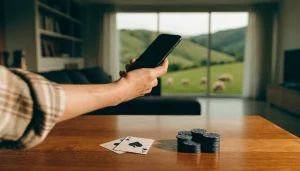
Two other actions can change the hand’s shape. Doubling down lets you increase your stake and take a further card under the table’s rules. It is a more committed choice than simply hitting, because you are putting more behind the hand. Splitting lets you separate a pair into two hands, each played on its own. Whether that option is available, and what happens after you split, depends on the rules at the table.
Those choices are the core of blackjack, whether you play online or sit at a physical table. A live dealer does not change what the cards are worth or the aim of the hand. It changes the setting, not the arithmetic. If you are learning, concentrate first on the total in front of you and the action you are about to take. The interface can wait.
It helps to think of each move as a trade-off rather than a prediction. A hit gives you another chance to improve, but it can also push the total beyond 21. Standing protects the total you already have, but leaves the dealer to finish their hand. Doubling down makes a hand more consequential, while splitting turns one hand into two decisions. That is plenty to keep track of at first.
I would not try to memorise a clever-sounding rule before you understand those basics. Learn the values, know what each button does, and take a moment before choosing. Blackjack moves one decision at a time. No mystery there.
How to Read a Live Blackjack Table
At a live blackjack table, you are playing against the dealer, not trying to beat the other people seated there. Your aim is to finish closer to 21 than the dealer without going over. Other players’ cards and decisions may be visible, but each hand is judged against the dealer’s result.
The table screen can show several things at once: the dealer’s position, your own hand, other seats, and the controls available for your decision. Take a moment to identify which cards belong to you before acting. If you are watching a busy table, it is easy to follow another player’s hand by mistake. The controls should relate to your current hand, not to the choices made by someone in another seat.
Read the available actions, not just the layout
Buttons can include Hit, Stand, Double Down, and Split. Some tables may also offer Surrender. Which choices appear depends on that table’s rules and on the situation in your hand. A control that is absent is not a hidden option; check the table information rather than assuming every game works the same way.
The labels tell you what the game will do, but they do not make the decision for you. Before selecting one, check that the screen is showing your hand and that you understand which action you are confirming. If two cards are displayed as a pair, for instance, the interface may make Split available; its presence is a table option, not a prompt that you must use it. Likewise, Double Down may appear only when the table’s rules and the hand allow it.
Pay attention to any on-screen prompt indicating that it is your turn. At a shared table, decisions happen seat by seat, so the dealer may be waiting on another player while your hand is already settled. Do not read a pause as a change to your cards or as a signal that you should click again. A clear look at your seat and hand usually resolves the confusion.

What the dealer does—and does not tell you
The dealer is your opponent for the hand, while the interface records your choices and displays the cards. A live dealer may speak or respond to the table, but that does not mean you need to give instructions aloud. If you are wondering whether live blackjack dealers can hear you, check the game’s own audio and chat controls: do not assume that a microphone is active merely because a dealer is on screen.
I treat the rules panel as part of the table, not as decoration. It is where you can confirm which actions are offered before you rely on them. Two live tables can look much alike while allowing different choices. That small check saves confusion at the decision point.
Choosing a Live Blackjack Site: Check the Details
A polished live table and a mobile-friendly lobby tell you little about an operator’s standing in New Zealand. The licensing position matters more, and it has changed. I would start by checking when the site began serving New Zealand players and what its status is under the current transition—not by assuming that a foreign licence is the same as a New Zealand one.
The Online Casino Gambling Act 2026 came into force on 1 May 2026 and created New Zealand’s first domestic licensing regime for online casino gambling. Until then, online casinos operating from overseas were not licensed or supervised by a New Zealand regulator. If you played with one, you had no domestic government recourse if something went wrong. That history is worth keeping in mind when you assess claims about oversight.
The Act sets a transition from 1 May to 1 December 2026. Providers that were already serving people in New Zealand before the transition began may continue during that period, subject to the Act’s transitional provisions. That does not mean every site is already operating under a full New Zealand licence: the complete licensing regime is not expected to be in place until 2027. So read “available to play” and “locally licensed” as different claims.
There is a clear division of responsibilities. The Department of Internal Affairs is New Zealand’s primary gambling regulator and oversees the online casino licensing framework. The Gambling Commission hears and decides casino licence applications, issues online casino licences, and approves changes to licence conditions. If an operator makes a claim about its New Zealand status, check that claim against official information from the relevant bodies rather than relying on a badge or a line in the site footer.
The wider legal picture matters too. The Gambling Act 2003 does not allow online casinos to be based in New Zealand, and domestic online casinos are prohibited. The 2026 Act introduces a route to licensing online casino providers; it does not turn every overseas site into a locally licensed one overnight. A foreign licence may tell you something about the provider’s position elsewhere, but it is not proof of New Zealand approval.
During the transition, providers are not permitted to advertise online casino gambling to people in New Zealand. That makes a loud promotion for a live table or a no-deposit bonus a poor substitute for checking the underlying status. Treat promotional language cautiously, and do not read visibility as regulatory endorsement. The same goes whether you are browsing on a phone, looking for low-stakes play, or simply trying to get to a live dealer.

For the transition period, timing is the detail many players can miss: only operators already serving New Zealand before 1 May 2026 can continue under the transitional provisions, and that permission runs only to 1 December 2026. The fully licensed system is expected later, in 2027. If the site’s explanation is vague about its history or its current position, pause before you make an account. A slick stream is not a licence.
Real-Money Play: Rules, Limits and a Budget
Before you open a live table for real money, decide what you are comfortable spending and treat that amount as a firm budget, not a target to use up. I find it helps to make that decision before the stream is running; once hands are moving, it is easy to mistake a losing run for a reason to keep going. When your budget is gone, stop. Do not add more to recover losses.
Read the table information before you sit down. The number of decks, the dealer’s soft-17 rule, surrender availability and blackjack payouts can differ between games. A specialist review of a particular table may describe those details, but the live table’s own rules are what matter when you play. Check the information attached to the game rather than assuming that another table with a similar name works the same way.
Also check the betting range shown at the table and whether it fits your budget. A live game may have a minimum stake that makes it unsuitable for what you planned to spend. If the available stakes do not suit you, leave the table; stretching your budget to get a seat defeats the point of setting one.
- Set a firm spending budget
- Verify the number of decks and blackjack payouts
- Check the dealer's soft-17 rule
- Confirm the minimum stake fits your budget
- Review the operator's deposit and withdrawal terms
For online blackjack with live dealers, the operator’s general terms are part of the decision too. Read the rules for deposits, withdrawals and account use, and check how the site handles disputes. In New Zealand, the online casino framework is changing, so be clear about whether a provider is operating under transitional arrangements or a future licensing regime. A familiar-looking table is not a substitute for understanding who is taking your wager and what recourse is available.
If you are considering a promotion, read its conditions before accepting it. Check whether blackjack contributes differently to wagering requirements and whether maximum bet rules apply while you are wagering. These conditions can affect how you are allowed to play and whether the offer suits you. If anything is unclear, do not assume the most favourable interpretation.
Set a time boundary as well as a spending limit. Live play can feel unhurried, but that does not make an extended session harmless. Take a break when you planned to, and do not let a win persuade you that your budget no longer applies. A budget is there to limit what you risk, not to tell you what you should win.
Treat real-money play as entertainment with a cost, not as a way to make income. If the session stops feeling manageable, close the table and step away. Chasing losses is still chasing losses, even when the dealer is on camera.
Blackjack Payouts and Table Rules
When comparing real-money blackjack with live dealers, start with the natural-blackjack payout. A specialist review describes tables offering either 3:2 or 6:5 for a natural. For the same stake, the 3:2 payout returns more than 6:5, so the difference matters even if the rest of the table looks familiar. Check the payout shown for that specific game rather than assuming every live table follows the same terms.
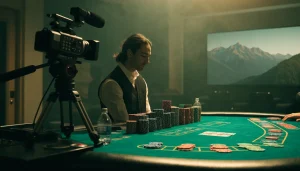
The ratios can be easy to skim past in a lobby. Don’t. If you plan to play a real-money live-dealer game, find the table’s rules before joining and confirm how it pays a natural. A similar name or layout does not tell you that the payout is the same.
The details can reach beyond the payout. A specialist review also notes that games may differ in deck count, whether the dealer hits or stands on soft 17, surrender availability, and blackjack payouts. Treat those as table-specific settings, not universal features of live blackjack. The review is a pointer, not a substitute for the rules displayed at the table.
Deck count is worth checking because the game can use a different number of decks from another table. The fact that both are live games does not make their rules identical. If the information is tucked into a help panel or rules screen, take a moment to open it before staking money. Small print has a talent for being small.
Soft 17 is another rule to look for. The table may specify whether the dealer must take another card on that hand or stand. That choice can change the conditions under which the dealer plays, so don’t assume the rule from a previous game carries over. The wording on the table screen is the useful part.
Surrender is not guaranteed either. Some tables may offer it, while others do not. If you expect to use that option, confirm it is available and check what the rule says before relying on it. The available choices are set by the game, not by what you remember from a different table.
Natural Payout
Check if the table offers 3:2 or 6:5, as 3:2 returns more for the same stake.
Soft 17 Rule
Verify whether the dealer must hit or stand on a soft 17 total.
Surrender Option
Confirm if the table allows you to surrender your hand before the dealer reveals their cards.
Deck Count
Check how many decks are in play, as this varies between different live tables.
For live dealer blackjack strategy, these checks come before deciding how a particular hand feels. A payout that looks less favourable, a dealer rule you did not expect, or an unavailable surrender option can change how you approach the table. There is no single set of table conditions to carry from game to game.
I read the rules panel before I settle in, especially when the payout is the reason a table caught my eye. Compare the natural payout, deck information, soft-17 rule and surrender terms as a group. Then you know what the live table actually offers, rather than what its title led you to expect.
Free Play Versus a Live Table
“Free blackjack” can mean different things, so check what is actually being offered. A software blackjack game may let you try the format without staking money, while a live-dealer table uses actual cards and a streamed game. That distinction matters: a free-play option for a software game does not mean the live table is also available to play for free.
With RNG blackjack, software shuffles the cards, and play can move faster because you are not waiting for a dealer or a stream. That makes it easier to get a quick feel for the pace of a digital game. A live table is closer to sitting at a casino table, but the stream can introduce delays, and some tables may require higher bets. Free access, where offered, should not be assumed to match the conditions of a live game played for money.
If you want to try a live table without staking, read the table information rather than relying on a “free” label. It may refer to a demo of a software game, a promotional offer, or something else. The wording alone does not tell you whether you will see a live dealer and actual cards. No need to guess.

People also wonder whether live-dealer blackjack is rigged. The format uses physical cards dealt at a table, rather than a software shuffle generating each hand. That tells you what is happening in the game; it does not, by itself, establish how an operator is supervised or settle every concern about a particular service. Keep those questions separate. A stream can show the cards and dealer, but it is not a substitute for checking the operator’s information.
I would treat free play as a way to understand the feel of a format, not as evidence that a real-money table will run the same way. Software play is quicker; live play depends on the streamed table and its conditions. If you are comparing the two, first confirm whether you are looking at a live dealer or a computer-generated game, then check whether any free option actually applies to that format. A label is not the table.
Variants, Side Bets and Bonus Fine Print
The best live-dealer blackjack game for you is not necessarily the one with the most options on screen. A variant can change the rules enough to affect both your decisions and the house edge, so check what makes it different before joining. A familiar name does not guarantee familiar conditions.
Side bets deserve the same pause. They are separate wagers alongside the main hand, and their presence does not make the main game more favourable. Insurance is another optional bet; I would not treat it as a routine move. If a table offers extra choices, read how each one works rather than clicking through because the layout looks familiar.
Do
- Read full bonus terms before accepting
- Check blackjack's contribution to wagering
- Verify maximum bet rules during wagering
Don't
- Assume every live table counts equally for bonuses
- Rely on flashy labels instead of plain terms
- Accept unclear offers without confirmation
A free-bet offer can sound simple while its conditions are not. Before accepting one, read the full bonus terms and check how blackjack contributes towards wagering requirements. The contribution may differ from that of other games, and maximum bet rules can apply while you are wagering. Those details can determine whether an offer fits the way you play at all.
The same care applies when you see a live-dealer free bet advertised. Check which games qualify, whether the promotion applies to a particular variant, and what happens to winnings under the stated terms. Do not assume that every live blackjack table counts equally. If a condition is unclear, leave the offer alone until you can confirm it with the operator.
For live-dealer blackjack games, compare the actual table rules, not just the title or the size of a promotion. A variant’s rules can change strategy and house edge; a bonus adds another layer of conditions, not a shortcut around those rules. I keep the two checks separate: first decide whether I understand the game, then decide whether the offer’s terms are worth dealing with.
Plain terms matter. A flashy label doesn’t.
Counting Cards: What Online Play Allows
Card counting is often discussed as if it were a secret switch: keep track of what has appeared, make a larger bet when the remaining cards look favourable, and expect the edge to turn. That is too neat. Mental card counting is not illegal under New Zealand law, but legality is not the same as effectiveness, and it does not make a win certain.
The basic idea is to remember information about cards already dealt and use it to estimate what may remain. In a live game, actual cards are dealt, so the sequence matters to someone attempting to keep a count. But a count is only an estimate, not a promise about the next hand. The cards do not owe you a favourable run, and a short stretch of results can still go the other way.
I would separate three questions that often get bundled together: whether counting is illegal, whether it can provide useful information in a particular game, and whether using it will make money. The first has a clear answer for mental calculation in New Zealand: it is not illegal. The second depends on how the game is run. The third has no guaranteed answer.
Live cards and software shuffles
A live-dealer table and an RNG blackjack game are not interchangeable for card counting. Live dealer blackjack uses physical cards. A person who is counting may try to track what has been dealt during the game and form an estimate about the cards still in play. That does not mean the stream supplies a dependable advantage: the count can be wrong, the game can move on, and the estimate cannot tell you what the next card will be.
RNG blackjack works differently. The game uses software shuffles, and play can move faster than at a live table. With software shuffling, claims that a player can count cards in the same way as in a live game are not appropriate. A sequence on screen is not a reliable window into a persistent physical shoe. Treating it as one risks confusing a pattern you have noticed with information that can actually guide the next decision.
This is why the phrase “online blackjack card counting” needs a little care. Online describes where you are playing, not how the cards are generated. If it is a live table, physical cards are involved; if it is RNG blackjack, software handles the shuffle. The format changes what the visible sequence means.
Card Counting by Format
Live dealer blackjack uses physical cards, allowing players to track sequences to estimate remaining cards. In contrast, RNG blackjack uses software shuffles, meaning past card sequences are not reliable indicators of future results.
What a count cannot tell you
Even in live dealer play, counting is not a forecast. It does not identify the next card, remove chance, or turn a losing stretch into a win. It can also demand sustained attention while the game continues. If you lose track, your estimate may no longer reflect the cards that have actually appeared. Acting as though a rough count were certain information is an easy way to overstate what you know.
I would be wary of anyone selling a simple system as a guaranteed route to profit. A betting pattern cannot make uncertain cards predictable. Nor does a confident explanation prove that the method suits the table you are watching. If the pitch rests on promises rather than a clear account of the game format and its limits, leave it there.
That applies to claims about a dealer being caught cheating, too. A disputed hand or an unexpected result is not, on its own, proof of cheating. Counting cards and alleging misconduct are separate matters: one concerns a player’s attempt to track cards; the other is a serious claim that needs evidence. A live stream may let you watch a deal, but watching is not the same as establishing what happened behind every decision.
Keep the legal point in proportion
For a New Zealand player, the legal point is narrow: mental card counting itself is not illegal. That should not be stretched into a claim that counting guarantees a return, that every online format supports it, or that every operator must welcome it. Those are different questions. The useful distinction is between what the law says about mental calculation and what the game’s mechanics allow you to infer.
If you are considering a live table, first identify whether it is genuinely dealing physical cards or running an RNG game. Then be honest about what you can and cannot track. If the game is software-shuffled, do not treat past cards as a dependable guide to future ones. If it is live, remember that a count remains an estimate and not a promise of profit.
I keep the point simple: mental card counting is lawful in New Zealand, but lawful does not mean reliable. Live cards give a counter something to observe; software shuffles do not support the same claims. Neither format turns a guess about what remains into certainty.
Playing with a Live Dealer, One Hand at a Time
A hand is easier to follow when you deal with the decision in front of you, not the one you hope will come next. In blackjack with a live dealer, you can keep your attention on your own total and choose an action when it is your turn. There is no need to rush just because the table is moving.
The familiar choices are hit or stand. Hitting takes another card; standing means you keep your current hand. If the table allows it, you may also double down, split a pair, or surrender. Those options are not guaranteed at every table, so check what is available before you rely on one. Surrender, in particular, is a rule to verify, not an action to assume you can take.
I try to make the decision from the hand as it stands. If you are unsure what an option means, pause and read the table’s rules rather than clicking through and hoping the choice was right. A live dealer does not change the basic point: you are playing against the dealer, and a move that suits one hand may not suit another.
That small pause helps. It keeps a quick impulse from becoming the decision, especially when the next hand is already waiting. You do not have to use every action just because it appears on screen, and you should not treat a single result as proof that a choice was right or wrong. Make the call, let the hand finish, then start fresh with the next one. One hand at a time.
Casinos in New Zealand: Games, Apps and Guides
Content created by the «casinotips-nz.com» team