
Know the rules before joining a bingo room
 Available in US
A practical guide to ticket formats, winning conditions, bonus terms and payment considerations for New Zealand players.
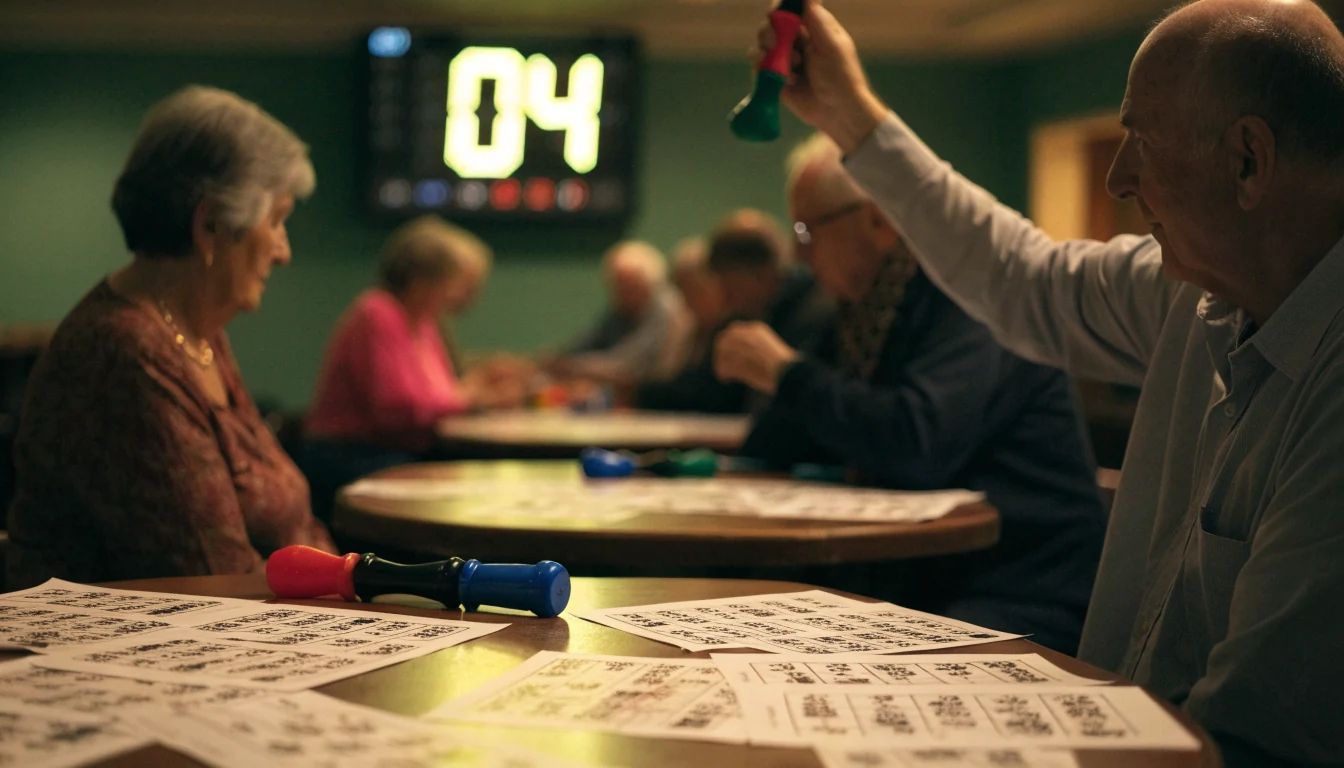
How Online Bingo Works for NZ Players
Online bingo is available to New Zealand players through offshore-licensed rooms. The games share a simple idea: numbers are called, you match them against a ticket, and the prize depends on the format’s winning condition. What changes from room to room is the ticket layout, how quickly numbers appear and whether you are aiming for a line, a pattern or a full house.
That distinction matters more than the word “bingo” on a lobby tile. A slower game with several prize stages feels different from a short speed round where only one result matters. Before you join a game, check the ticket shown on screen and the prize condition attached to that round. The name of a format gives you a useful starting point, but the displayed rules tell you what counts.
The familiar 90-ball format
In 90-ball bingo, each ticket has a grid of three rows and nine columns, with fifteen numbers printed across it. Numbers are called during the round, and you mark off those that appear. The prize stages are one completed line, two completed lines and a full house, which means completing the ticket.
This format gives you more than one point at which a ticket may win. A player who completes a line can be in contention before the full-house stage, while the round continues for the later prize. A specialist review describes 90-ball games as lasting three to seven minutes and lists ticket prices of NZ$0.10–NZ$0.50 in standard rooms. Treat those details as a snapshot from that type of source, not a promise about every room or game. The room’s own game screen is the place to check what is on offer now.
The three-row ticket also makes the action easy to follow: you can see the lines taking shape as numbers are called. Still, the prize condition is not just “mark a lot of numbers”. The game rules specify how a line or full house is counted. Small detail, real difference.

75-ball: patterns on a square card
North American 75-ball bingo uses a five-by-five card. Instead of relying only on a completed row, games can award prizes for a particular pattern. That might be a letter, a shape or a blackout, where every square on the card is marked.
The pattern is part of the challenge. You need to look at the target shown for that round, because matching numbers alone does not tell you whether your card has completed the required shape. A letter pattern can spread across the card differently from a simple line, and a blackout asks for a much broader set of matches. The possible win shapes give this format a different feel from the staged line prizes in 90-ball.
If you are new to it, take a moment to identify the target before the calls begin. Some rounds may display the pattern clearly on the game screen; do not assume that the same pattern applies to every game in the room.
80-ball: another grid, another target
The 80-ball format uses sixteen numbers on a ticket and supports a different range of patterns from 75-ball bingo. That is enough to make it its own style rather than a smaller version of the square-card game. The pattern determines what you are trying to complete, so read the round’s stated target instead of carrying assumptions across from another format.
Rooms can present several bingo types side by side, but their names are not interchangeable. A ticket layout tells you where numbers sit; the win condition tells you what you need to match. Keep those two parts separate when you compare games.
Speed bingo: short rounds, one main result
Speed bingo is built for a quicker round. A 30-ball version uses a three-by-three card and awards a single full-house prize rather than stepping through line stages. A specialist review puts this version’s rounds at 60–90 seconds; that is a source-specific description, not a guarantee that every speed game runs to the same timing.
With fewer squares and a single stated prize, the format is easy to grasp, but the pace leaves less time to study the ticket while calls are underway. If automatic marking is available, it can track matching numbers and eligible results for you. You should still know what the round is asking for before it starts.
Picking a format to try
Think first about the kind of round you want. The 90-ball structure offers line stages before a full house. Pattern-based 75-ball and 80-ball games ask you to follow a target shape. Speed bingo compresses the action into a short round with one full-house result.
You may also see free online bingo games alongside real-money play. Free games can help you learn how a ticket and a pattern work without buying into a round, while real-money games involve tickets offered for a price. The exact options depend on the room and the game; read the details shown before joining rather than assuming that a familiar format works identically everywhere.
Once you know the layout, pace and win condition, the lobby becomes easier to read. Start with the format you can follow comfortably. No need to chase the fastest screen in the room.
Choosing a Bingo Room Without a Top-Rooms List
The best fit is not necessarily the room with the longest game menu. I would start with the games you actually want to play, then check whether the room explains how those games work and what information it publishes about returns. A polished home page tells you very little on its own.

Start with the format
Check which bingo formats are available and whether the room describes them clearly. A room offering several formats may give you more choice, but variety is useful only if you can tell what you are joining. Look for the ticket layout, the pace of play and the kind of result that earns a prize. Those details help you compare like with like rather than treating every game labelled “bingo” as interchangeable.
Pay attention to how the room presents each game before you buy a ticket. Can you find the rules without hunting through unrelated pages? Does the game information make clear which format you have selected? If the rules are hard to locate or the description leaves you unsure what counts as a result, pause there. A simple game should not require guesswork.
I would also distinguish between information about the game and claims about the room. A broad statement that a site has “great bingo” is not a useful comparison point. A clear description of formats is.
Read RTP figures in context
Some rooms publish return-to-player information, or RTP, for bingo. Treat it as a game-level figure, not a promise about what you will receive in a particular session. It describes a theoretical return over play, not the outcome of an individual round.
A specialist review reports published RTP figures for online bingo supplied by Pragmatic Play, Playtech and Microgaming-associated rooms in a range from 85% to 92%. That range is a reported snapshot, not a guarantee that every game from those providers has the same return, or that a room’s current selection still matches it. Check whether the room publishes figures for the specific game you are considering and whether the information is easy to find.
If a room gives no RTP information, that does not by itself tell you what the return is. It does mean you have less published information to compare. Do not fill that gap with a figure taken from a different game, provider or review. And do not read a higher RTP as a way to predict a winning session. It cannot do that.
Check what you can verify
Before deciding, see whether the room’s own pages explain its games and provide the relevant terms in plain language. Compare the details that are actually stated, not an impression created by design, promotional wording or a long list of game names. If two rooms describe the same format differently, look for the underlying rules rather than assuming the labels mean identical things.
There is a limit to what a reader can establish from public pages. A published claim is not independent confirmation that every detail is current or that a particular game will behave as you expect. I would treat vague wording as a reason to seek clarification, not as evidence in either direction. If the room cannot explain a basic point clearly, that is a practical mark against it.
You can also note whether the information is consistent across the game description and the rules. A mismatch makes comparison harder. Keep your own notes if you are looking at several rooms; otherwise, it is easy to remember a headline claim and forget which game it applied to.
There is no need to turn this into a hunt for a universal winner. Decide which format suits you, compare the information each room publishes for that format, and be honest about what remains unverified. The clearest room is not automatically the right one for everyone, but clarity gives you a better basis for choosing. No guesswork.

Bingo Patterns, Lines and Full-House Rules
A bingo result is not just a matter of seeing several numbers marked on a card. The room’s rules define what counts as a win: a completed line, a named pattern, or a full house. I always check the stated win condition before a round starts. It saves the awkward moment of celebrating a shape that was never part of the game.
In five-line bingo, the card has five rows and five columns, with 25 numbered squares and no free centre. Numbers are drawn from 1 to 75. Prize stages build in sequence: first one line, then two, three and four, with five completed lines known as a full house. Each stage has its own condition, so a ticket that reaches an early stage may still be in contention for a later one.
The key detail is that the required lines must be completed on the same ticket. If you hold more than one card, you cannot add a line from one to a line from another and call the combined result a two-line win. Each ticket is assessed on its own. That rule is easy to miss when you have several cards on screen, especially if their marked numbers look like one larger grid.
“Line” can also depend on the room’s counting method. In a game that counts horizontal rows, a row qualifies when its required numbers are marked. Two completed rows count as two lines, even if a different row has three marked numbers but is not complete. Partial progress is not a completed line. The display may make a ticket look busy; the rulebook decides whether it has crossed the prize threshold.
Patterns work differently. Instead of requiring complete rows, a pattern-based game names a shape or arrangement that must be marked on the ticket. In a North American 75-ball game, that may be a letter, a shape or a blackout, where the required pattern covers the card. The pattern is the target, not a count of how many marked squares you have in total. A card can have plenty of marks and still fail to match the specified arrangement.
Read the pattern diagram as carefully as the written label. A letter-shaped target, for instance, depends on which squares form that letter, not on whether your marks happen to resemble it loosely. If a room offers more than one pattern or changes the target between rounds, rely on the active round’s displayed rules rather than memory from an earlier game. Small differences matter.

Prize stages need a separate check. A ticket may qualify for more than one stage when the room’s rules allow it; reaching an earlier prize does not automatically tell you whether the same ticket remains eligible for a later one. The rules should say how stage progression works and whether a ticket can receive multiple awards. They should also explain what happens if several eligible tickets reach the same prize stage: multiple winners may share the prize.
That is why I treat the ticket, not the player’s whole screen, as the unit to check. For each result, ask what pattern or line is required, whether it is complete on one ticket, and which prize stage is active. Automatic marking can help track matches, but it does not change the game’s definition of a win. Read the result against the stated condition.
The same care applies to full house. In five-line bingo, it means all five lines on one ticket, not simply a card with many marked squares. In a pattern game, the corresponding final prize may have a different named target. “Full house” is not a universal shortcut for every bingo format; follow the room’s wording. Clear rules, fewer surprises.
Bingo Bonuses: Read the Wagering Terms First
A bingo promotion can look generous at the top and restrictive in the small print. Before accepting one, I’d work out what you must do to turn the bonus into withdrawable cash. The key phrase is *wagering requirement*: it sets how much qualifying play must be recorded before the bonus, and sometimes associated winnings, can be withdrawn.
How wagering requirements are calculated
If the multiplier applies to the bonus alone, the requirement is based on that amount. If it includes the deposit, the combined figure serves as the starting point for the calculation.
A specialist review describes bingo bonus requirements ranging from 3x to 10x the bonus amount. Treat that as a reported range, not a promise about any particular room or an industry-wide rule. The offer’s own terms are what matter. Check whether the multiplier applies to the bonus alone or to the bonus and your deposit together; those bases can produce very different totals.
For instance, if a promotion says the bonus must be wagered, the requirement is calculated against that bonus amount. If it says the deposit and bonus are both included, the combined figure is the starting point instead. Don’t infer the calculation from a banner. Find the precise wording in the terms and confirm the amount that must be played through before withdrawal is allowed.
Check how bingo play counts
A bonus may not count every ticket purchase equally. Read which bingo rooms or games are eligible, and whether different types of play contribute at different rates. If the terms do not make that clear, ask support before opting in. A game that appears within the same site may still be excluded or treated differently under the promotion rules.
Also check whether the requirement is attached to the bonus balance, winnings from bonus play, or both. Some promotions place conditions on the winnings as well as the bonus itself. That distinction matters: meeting a playthrough figure does not necessarily settle every condition for withdrawing. Look for any separate cash-out rules and the point at which the bonus becomes available to withdraw.

A welcome offer is not automatically a better deal than a smaller promotion. An affiliate review describes a welcome deal for Kiwi players as a 100% first-deposit match, capped at roughly NZ$300 in equivalent value. That is a reported offer description, not a standing promise from any room. The actual amount, currency conversion, eligibility and terms can change, so rely on the offer displayed to you and its full conditions.
The clauses worth slowing down for
Check the expiry period and whether it starts when you claim the promotion or when the bonus is credited. Find out what happens if the deadline passes before you complete the requirement: the remaining bonus may be removed, and the terms should explain whether related winnings are affected too. Don’t treat an expiry date as a minor detail if you would have to play more than you comfortably want to.
Look for a maximum stake while the bonus is active. A promotion can restrict how much you may spend on an individual ticket or game; exceeding that limit may breach its terms and put the bonus or winnings at risk. The same goes for any rule about withdrawing before completion. In some offers, requesting a withdrawal ends the promotion and forfeits the remaining bonus.
Finally, check whether the offer is opt-in, whether you must enter a code, and whether it can be combined with another promotion. Keep a copy of the terms as they appeared when you accepted. If the wording leaves a central point unclear, get an answer from support first rather than assuming the most favourable interpretation.
A no-deposit bingo promotion deserves the same scrutiny as a deposit match. “No deposit” describes how the bonus is accessed; it does not tell you whether winnings can be withdrawn freely. Check the wagering requirement, eligible games, expiry, stake cap and withdrawal conditions before claiming it. Free to claim is not the same as free of conditions.
What a Bingo Casino Means in Practice
A “bingo casino” is best understood as an online casino that includes bingo, rather than a separate kind of venue. You may arrive looking for bingo and find it alongside other casino products. The label describes the mix of entertainment on offer; it does not, by itself, tell you how the operator is licensed.
That distinction matters because bingo is a game category, not a standalone licensing island. Bingo products sit under the same licensing umbrella as other casino verticals. In practical terms, the licence framework for an online casino can cover its bingo offering as part of the wider operation, rather than treating bingo as an entirely separate business with an unrelated regulatory status.
So when you see “bingo casinos”, read it as a description of a casino service that has bingo available. It does not mean that every site using the phrase is a bingo-only room, nor that bingo has its own independent regulatory status. The wording can be useful when you are trying to find a particular kind of game, but it is not proof of a licence or endorsement.
I find it helpful to separate three things: the game, the operator’s wider casino service, and the licensing framework that applies to that service. Bingo is the game. The operator may offer it as one part of a broader casino product. The applicable licence sits at the service or operator level, with bingo included within the same umbrella as other casino verticals.
That also explains why a page or menu can group bingo with casino products without implying that the games work alike. The category tells you where bingo sits in the wider offering, not what rules apply to a particular round. For those, the game’s own instructions matter. Keep the labels in their lane.
For New Zealand readers, the phrase alone cannot settle whether a particular operator holds a New Zealand licence. A site can describe itself as a casino with bingo, but that wording is not a regulatory credential. Nor does the presence of bingo tell you whether the operator offers other products, what terms apply, or what protections are available. Those are separate matters to check against the relevant information for the service.
In short, “bingo casino” is a convenient description of a wider online casino offering that includes bingo. The important practical point is the shared licensing umbrella: bingo belongs within the casino service’s broader regulatory framework, rather than automatically carrying a separate licence of its own. Don’t mistake the shelf label for the paperwork.
How to Play for Money Without Losing Track
Before you buy anything, decide what one round means for your budget: the tickets you intend to enter, the price shown for each, and the total you are willing to spend. The total matters more than the ticket price on its own. A small per-ticket cost can add up when you select several tickets or join another round without pausing.
Buying bingo tickets
-
1
Select your game
Choose a bingo room and specific game, then check the displayed ticket price.
-
2
Determine ticket count
Select the number of tickets you want for the round.
-
3
Confirm total cost
Review the order to ensure the ticket count and total charge match your budget before confirming.
The basic sequence is straightforward. Choose a bingo room and a game, check the displayed ticket price, then select the number of tickets you want for that round. Review the order before confirming it: make sure the ticket count and total charge match your plan. Once the round begins, keep the ticket view open so you can follow its progress. Do not assume that selecting more tickets changes what you can afford; it changes the round cost directly.
A specialist review gives a hypothetical calculation at NZ$0.40 per ticket: three tickets would cost NZ$1.20 for one round, and repeating that same selection for ten rounds would total NZ$12. Treat that as arithmetic for the stated example, not as a standard price or a promise about what a room charges. Your actual total depends on the price and ticket count displayed before purchase. Check those details each time.
I find it useful to keep a simple running note: round, ticket count, cost, and result. You do not need a complicated spreadsheet. A line in a phone note is enough to show whether you have stayed within the amount set aside. Record the purchase before play rather than trying to reconstruct it afterwards; repeated rounds blur together quickly. If the room displays a balance, compare it with your own note instead of relying on memory.
Where automatic marking is available, the system tracks matching numbers and eligible results on the tickets. That can take the manual checking off your hands, but it does not track your spending decisions. Confirm which tickets are active, watch the round status, then check the displayed result when play ends. If you are marking manually, keep the relevant ticket visible and mark numbers as they are called. The point is to know which tickets are in play, not to keep buying more because the screen is busy.
Set a stopping point before the first purchase and stick to it. When the planned rounds are finished, pause and check your note before deciding whether to continue. That small pause makes the cost visible while you can still act on it. No guesswork.
What Changes for Bingo Players in New Zealand in 2026
When you’re looking for casinos with bingo in New Zealand in 2026, check the details that matter to you before choosing a site. This list gives you a concise reference to the information available for each option.
-
Lamabet
- Payout speed
- 1-3 business days
You’re given a stated payout speed of 1–3 business days, which may help you assess whether the timing suits you.
-
Ricky Casino
- License
- Tobique Gaming Commission, licence no. 0000002
You can note the stated licence: Tobique Gaming Commission, licence no. 0000002.
-
7Bit Casino
- License
- Tobique Gaming Commission, licence no. 0000091
You can note the stated licence: Tobique Gaming Commission, licence no. 0000091.
-
BitStarz
- License
- Curaçao Gaming Authority, licence no. OGL/2024/165/0185
You can note the stated licence: Curaçao Gaming Authority, licence no. OGL/2024/165/0185.
-
Zotabet
- License
- 07017519840
- Payout speed
- 1-3 business days
You’re given a stated licence number, 07017519840, and a payout speed of 1–3 business days to consider.
-
Neospin
- License
- Tobique Gaming Commission, licence no. 0000064
You can note the stated licence: Tobique Gaming Commission, licence no. 0000064.
-
Play Grand
- License
- Malta Gaming Authority, licence no. MGA/B2C/370/2017
You can note the stated licence: Malta Gaming Authority, licence no. MGA/B2C/370/2017.
-
Wintino
- Payout speed
- 1-3 business days
You’re given a stated payout speed of 1–3 business days, which may help you assess whether the timing suits you.
-
N1 Casino
- License
- Malta Gaming Authority, licence no. MGA/B2C/394/2017
You can note the stated licence: Malta Gaming Authority, licence no. MGA/B2C/394/2017.
The important change is that online casino gambling now has a domestic licensing framework. The Online Casino Gambling Act 2026 came into force on 1 May 2026, establishing New Zealand’s first system for licensing online casino providers. Bingo is part of that wider casino framework; it does not have a separate licensing track.
The Department of Internal Affairs oversees gambling regulation in New Zealand. It says the new system is being introduced in stages, with full operation expected in 2027. That date matters: the framework is in place, but the completed licensing regime is not yet operating.
There is also a transition period. Providers that were already serving New Zealand customers before the Act took effect may continue during the transition, which runs from 1 May to 1 December 2026. That permission is temporary, not proof that a room already holds a New Zealand licence. Providers that have not applied for a licence must stop offering online casino gambling in New Zealand by the end of the transition period.

A specialist industry review has described the bill as providing for up to 15 online casino licences. The practical point for a bingo player is not to treat that figure as a list of approved rooms: a proposed or stated licence capacity does not establish that any particular operator has been granted a licence.
Before this regime, online casino services supplied from outside New Zealand were not licensed or supervised by a New Zealand regulator, and customers had no domestic government recourse. The new framework changes that landscape, but it does not turn every offshore bingo room into a locally licensed service overnight. The transition has boundaries.### Sources:
- Department of Internal Affairs information on the staged introduction of the licensing regime and expected operational timing.
- Online Casino Gambling Act 2026 and its transitional provisions.
- Specialist industry review discussing the proposed licence capacity.
Bingo Casino Sites: Payments and Banking in NZ
The payment screen is worth checking before you make an account: options can differ between offshore bingo rooms, and a method you recognise may not appear at every cashier. A specialist review reports that POLi, the bank-direct service long used for casino deposits in New Zealand, was discontinued in 2024. If you remember it as the straightforward bank-payment route, it is no longer an option.
The same specialist review describes the alternatives now used by New Zealand players: Worldline and Blink, direct bank transfers from ASB, ANZ, BNZ and Westpac, Visa or Mastercard debit cards, and e-wallets including Skrill, Neteller and MuchBetter. Treat that as a picture of available methods, not a promise that every one will be offered by a particular site. The cashier is the place to confirm what is actually enabled.
Check the route, not just the logo
I’d look at the deposit and withdrawal instructions separately. A method shown for adding funds is not necessarily available for taking them out, and the name on the cashier button may not tell you the full process. Read the payment terms and check whether the account holder’s details need to match the payment account. Keep your own record of the amount and method used, so you can compare it with the transaction history later.
Do
- Check if the method is available for both deposits and cash-outs
- Verify that account holder details match the payment account
- Keep your own record of amounts and methods used
Don't
- Assume one site's payment instructions apply to all rooms
- Test the cashier with a deposit if a method is unclear
- Rely solely on payment branding for reassurance
With a bank transfer, card or e-wallet, check the provider’s own terms too. Fees, processing steps and any restrictions can depend on the payment service and the individual room; don’t assume that one site’s instructions apply elsewhere. If a method is missing or unclear, ask the operator before sending money rather than testing the cashier with a deposit.
A sensible comparison is plain: which methods can you use, which are supported for cash-outs, and what does the room say about processing and verification? Payment branding can look reassuring. The details matter more.
Bingo Plus Casino: Keep Play in Perspective
Bingo can feel low-key because tickets are bought in small amounts and rounds move along quickly. That can make it easy to lose track of the total. I’d set a loss limit before opening a bingo or casino session, then stop when you reach it. A limit only helps if you do not raise it mid-play.
- Set a loss limit before opening the session
- Locate the room's mandatory self-exclusion tools
- Find and save the New Zealand Gambling Helpline contact details
- Establish a fixed time limit for the session
Use a time-out when you need a break from gambling, and make sure the room offers mandatory self-exclusion for a longer stop. These are practical safeguards, not signs that you have failed. If you find yourself chasing losses, borrowing to continue or hiding how much you play, step away and seek support rather than trying to win it back.
Before using a bingo-plus-casino service, locate its safer-gambling controls and check that the New Zealand Gambling Helpline contact details are clearly visible on the site. You should not have to dig through account menus to find help. Save those details somewhere you can reach without logging in, especially if you are taking a break from the platform.
A useful routine is simple: decide your spending and time limits before you start, keep them fixed for that session, and stop when either limit is reached. Do not treat a win as permission to extend the session or a loss as a reason to keep going. That’s the point.
If you need help, contact the New Zealand Gambling Helpline or the New Zealand Problem Gambling Foundation. Support is available outside the casino itself, so you do not have to rely on an operator’s tools alone. If you are concerned about someone close to you, you can seek support for yourself as well.
A bingo room may sit beside slots and other casino games, but the same boundaries matter across all of them. Keep limits visible, take time-outs when needed, and use mandatory self-exclusion if you want access stopped. If those options are hard to find, treat that as a reason to pause before playing.
Casino Bingo in NZ: What Players Should Know About Access
For an adult in New Zealand, the basic access position is straightforward: residents are not prohibited from playing at offshore online bingo rooms under the Gambling Act 2003. The stated minimum age is 18. That answers whether a New Zealand resident may take part; it does not tell you whether a particular site will accept your registration or what protections apply there.
The important distinction is between an offshore licence and a New Zealand licence. A room may be authorised by a regulator overseas, but that does not make it locally licensed. New Zealand’s domestic online casino framework is separate, and an offshore licence should not be described as approval from the Department of Internal Affairs. Keep those labels clear when you read a site’s terms or its licensing page.

I would treat “accessible” as a narrow statement about the player’s position, not as a recommendation. It does not mean every offshore room is suitable, that every claim on its website has been independently checked, or that New Zealand authorities supervise its bingo offering. A logo or licence number on a site is not the same thing as a New Zealand licence.
Age matters before anything else. If you are under 18, do not register or play. If you are an adult, being legally able to access an offshore bingo room still leaves you responsible for understanding the operator’s own rules and the limits of its oversight. Check that the room clearly identifies the regulator it relies on, and do not mistake a foreign authorisation for local status.
That is the market boundary in plain terms: adult New Zealand residents may play at offshore bingo sites, but access does not turn those sites into New Zealand-licensed services. Keep the difference in mind before you deposit or create an account.
Are online casinos licensed in New Zealand in 2026?
New Zealand’s online-casino licensing regime is being introduced in stages and is expected to be fully operational in 2027. NZ players can access offshore-licensed bingo rooms.
Can I play online bingo for real money in NZ?
Yes. You can buy tickets at offshore-licensed bingo rooms; listed examples range from NZ$0.10–NZ$0.50 for 90-ball games and NZ$0.25–NZ$1.00 for speed bingo.
Is online bingo legal for players in New Zealand?
Yes. Adults aged 18 or over may play at offshore online bingo sites from New Zealand.
How do I deposit at an NZ bingo site after POLi closed?
POLi was discontinued in 2024. You can use options such as Worldline, Blink, direct bank transfer, Visa or Mastercard debit, or e-wallets including Skrill, Neteller and MuchBetter.
What RTP should I expect from online bingo games?
Published RTPs for online bingo games from Pragmatic Play, Playtech and Microgaming-supplied rooms generally range from 85% to 92%.
Casinos in New Zealand: Games, Apps and Guides
Content created by the «casinotips-nz.com» team