
Make Each Blackjack Decision More Deliberate
 Available in US
A practical guide to reading your hand, using strategy charts, checking table rules and weighing bet size in blackjack.
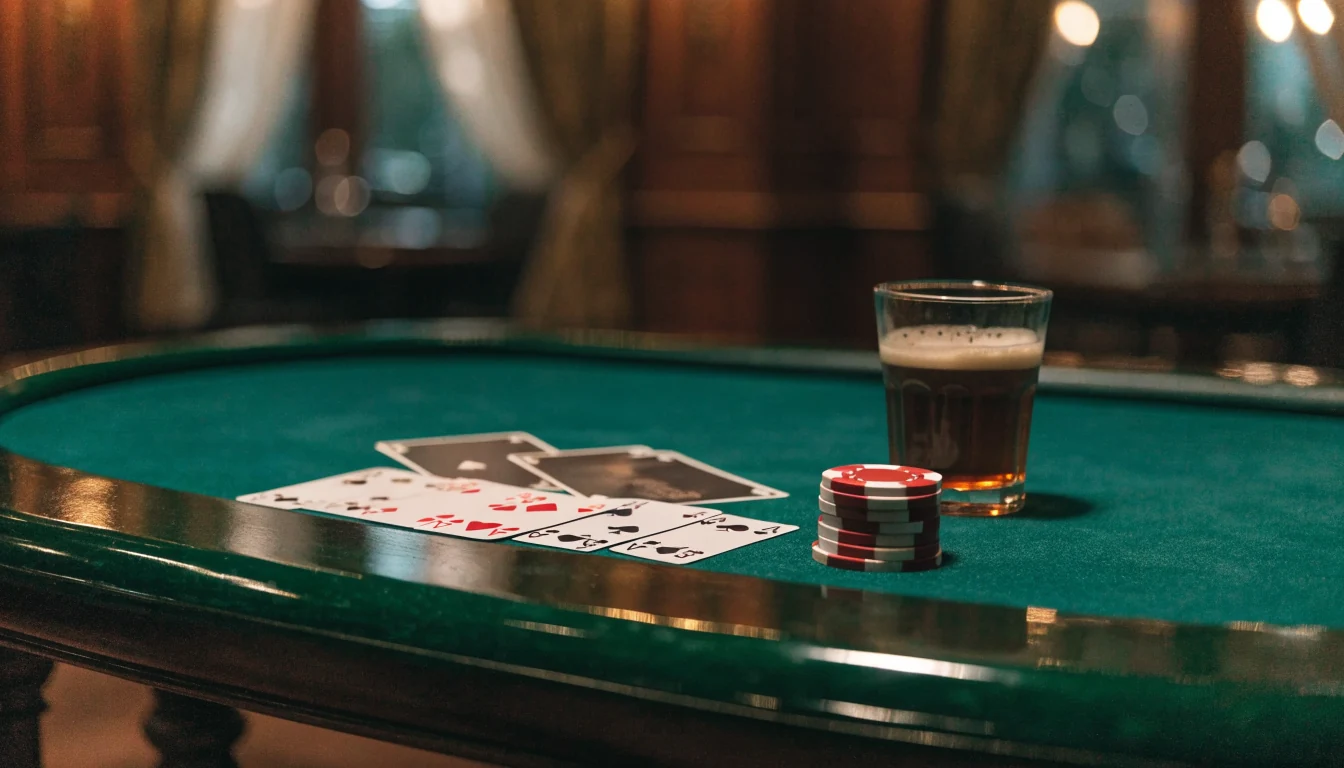
Start with the Hand, Not a Hunch
Blackjack is a contest against the dealer, not a race to reach twenty-one at any cost. Your aim is to finish closer to twenty-one than the dealer without going over. That last part matters: a hand that passes twenty-one is bust, and being closer no longer helps. I keep that in mind before thinking about any move. The target is not simply “get as high as possible”; it is “get closer without busting”.
The card values are straightforward. Number cards count as their face values, while jacks, queens and kings each count as ten. An ace can count as either one or eleven. The ace is the card that makes a hand less fixed than it first appears, because its value can shift to keep the total workable.
Take a hand with an ace and a six. It can count as seventeen if the ace is valued at eleven, or seven if the ace counts as one. That flexible total is called a soft hand. It is “soft” because the hand can take a card without immediately busting on the strength of that ace: if the new card would push the total past twenty-one, the ace can instead count as one. A hand without an ace that can still count as eleven is hard. It has no such cushion.
A blackjack strategy is only part of choosing where to play: it also helps to check the limited operator details available before deciding where to play. Use these verdicts as a brief reference while considering your options.
-
Lamabet
- Payout speed
- 1-3 business days
Lamabet lists a payout speed of 1–3 business days, a practical detail to consider when you assess your options.
-
Ricky Casino
- License
- Tobique Gaming Commission, licence no. 0000002
Ricky Casino lists a licence from the Tobique Gaming Commission, licence no. 0000002. You can use this information as a starting point when checking its licensing details.
-
7Bit Casino
- License
- Tobique Gaming Commission, licence no. 0000091
7Bit Casino lists a licence from the Tobique Gaming Commission, licence no. 0000091. You can use this information as a starting point when checking its licensing details.
-
BitStarz
- License
- Curaçao Gaming Authority, licence no. OGL/2024/165/0185
BitStarz lists a Curaçao Gaming Authority licence, no. OGL/2024/165/0185. You can use this information as a starting point when checking its licensing details.
-
Zotabet
- License
- 07017519840
- Payout speed
- 1-3 business days
Zotabet lists licence no. 07017519840 and a payout speed of 1–3 business days. These are useful details to consider when reviewing the operator.
-
Neospin
- License
- Tobique Gaming Commission, licence no. 0000064
Neospin lists a licence from the Tobique Gaming Commission, licence no. 0000064. You can use this information as a starting point when checking its licensing details.
-
Play Grand
- License
- Malta Gaming Authority, licence no. MGA/B2C/370/2017
Play Grand lists a Malta Gaming Authority licence, no. MGA/B2C/370/2017. You can use this information as a starting point when checking its licensing details.
-
Wintino
- Payout speed
- 1-3 business days
Wintino lists a payout speed of 1–3 business days, a practical detail to consider when you assess your options.
-
N1 Casino
- License
- Malta Gaming Authority, licence no. MGA/B2C/394/2017
N1 Casino lists a Malta Gaming Authority licence, no. MGA/B2C/394/2017. You can use this information as a starting point when checking its licensing details.
That distinction is useful even before you know what to do with a particular hand. A hard total is more fixed; a soft total can change shape. For instance, a ten and a seven make hard seventeen. There is no ace to adjust, so the total stays seventeen unless you take another card. An ace and a six, by contrast, can be seventeen or seven, depending on how the ace is counted and what happens next. Same displayed high total, different hand.
A pair also deserves a separate glance. Two cards of the same rank form a pair, but the fact that they look alike does not change their combined value. Two eights add to sixteen; two face cards add to twenty. In blackjack, players may split a pair, turning it into separate hands, but whether that is sensible depends on the situation and the game’s rules. For now, the basic point is simply to recognise the pair and know its total before deciding anything.
The total is not the whole picture, though. Blackjack decisions are made with the dealer in view. You are not trying to build the prettiest hand at the table or beat another player’s total. You are comparing your eventual result with the dealer’s, while staying within twenty-one. That means a hand can feel disappointing and still be part of a sound decision, while a hand that looks strong can still be at risk. The cards tell you what you currently hold; they do not promise what comes next.
At the table, the main choices are to hit, stand, double down or split. Hitting means taking another card. Standing means keeping the total as it is. Doubling down means increasing the bet and taking a further card under the game’s conditions. Splitting separates a pair into two hands, each played on its own. The exact options available can depend on the table, so it is worth understanding the rules before you are in the middle of a hand.

It is tempting to pick a move by feel: the total looks low, so take a card; it looks respectable, so stay put. I have found that instinct can be loudest when the hand is uncomfortable, which is not the same as being useful. Start with the arithmetic instead. Work out whether the hand is hard or soft, notice whether it is a pair, and remember that the dealer is your opponent. Those basics give you a clear description of the position before you choose an action.
This is the foundation of casino blackjack strategy, not a complete system for every table. A total has meaning in context, and the same number can behave differently depending on whether it is hard or soft and what the available rules allow. Learning the values first makes later decisions easier to understand; it does not turn the next card into a certainty. Blackjack still has chance in it. No hunch changes that.
Card Counting: What It Can and Can’t Tell You
Card counting is a way of keeping a running mental estimate of which kinds of cards have already appeared. It does not mean memorising every card in order. In a common approach, you treat low cards as one group and high cards as another, then adjust a running count as cards are dealt. The aim is to judge whether the cards still to come seem more favourable to the player or the dealer.
That estimate is only useful in a game where dealt cards affect what remains available. If many low cards have appeared, the undealt portion may contain a greater share of high cards; if many high cards have appeared, the balance may lean the other way. A count is not a view of the next card, though. It describes a changing possibility, not a prediction.
That distinction matters. A positive count does not promise a win on the next hand, and a negative one does not tell you exactly what will happen. The count can be wrong in practice, particularly if you lose track of the sequence. Even when it is kept correctly, it says something about the overall mix of remaining cards, not the precise order in which they will arrive.

Live play and RNG play are different
At a live-dealer table, actual cards are dealt, so the cards already seen can inform a running count—provided those cards remain out of play until the next shuffle. The practical value depends on the game’s dealing and shuffle process. If the cards are reshuffled, the count no longer describes the newly mixed pack. A mental count also asks you to stay attentive while following the action, which is easier said than done when the table is moving.
Online RNG blackjack works differently. The game software shuffles the cards, and play can move faster than at a live table. A count from earlier hands does not give you a dependable picture of the cards in a later hand when the software is shuffling between rounds. Treating a string of previous outcomes as if it predicts the next one is not card counting; it is pattern-spotting after the fact.
I would not carry a live-table counting idea over to an RNG game simply because both appear on the same screen. The mechanism matters more than the graphics. A dealer shown on video is handling cards; an RNG game is generating results through software.
What a count can—and cannot—change
A count may help a player assess whether the remaining cards seem more favourable, but it cannot remove the game’s uncertainty or turn a losing run into proof that a win is due. It is also not a replacement for knowing the rules of the particular game. A blackjack counting strategy is a separate layer of information, not a universal instruction for every hand.
People sometimes look for a blackjack strategy calculator or a printable strategy card when what they really want is certainty. Those tools answer different questions: a reference card supports decisions about a hand, while counting estimates the balance of cards still available. Neither tells you what the next card will be. Nor does a “scratch and win” approach, a profit accumulator, or a string of remembered results make the outcome predictable. Be wary of any blackjack strategy to win that promises otherwise.
In New Zealand, using mental calculation to count cards is not illegal. That is a narrow point about the law, not a guarantee that counting will work in every setting or that it will produce a profit. Keep the distinction clear: legality, game mechanics and likely results are not the same thing.
For most casual players, the useful takeaway is modest. Understand what counting is trying to measure, recognise when the game’s format makes that estimate irrelevant, and don’t mistake a trend for a forecast. The cards still fall one at a time.
Using a Basic Strategy Chart in the Game
A basic strategy chart is a decision aid for the hand in front of you. You find the row matching your hand and the column matching the dealer’s visible card; where they meet, the chart indicates an action. It turns a choice that can feel like a hunch into a repeatable decision.
That does not mean you need to study a chart while the dealer waits. Learn how to read it before you play, and keep a reference nearby only if the game allows it. At the table, identify your hand, check the dealer’s card, then follow the instruction for that situation. If the chart says to hit, stand, double down, split or surrender, that is the action it recommends under the rules it was made for. Not every game offers every option.
The chart is not a prediction of what the next card will be. It cannot tell you that a particular move will win this hand, or prevent a run of losses. Its job is narrower: to help you choose consistently rather than changing your decision because a recent result feels important. I find that distinction useful. A good decision can still lose.

Before using a blackjack basic strategy card, check what game it describes. Dealer rules matter: a chart for a game where the dealer stands on soft 17 may not match one where the dealer hits on soft 17. Other table rules can also change which play is recommended. If you select a chart simply because it looks familiar, you may be following the right instruction for a different game. Small print, big consequences.
When a chart gives more than one instruction or uses abbreviations, learn its key before play. “Double” and “split” are not decorative alternatives: they depend on the cards and on whether the table permits the move. A surrender instruction is useful only where surrender is available. If an action cannot be taken under the table’s rules, do not assume the chart makes an exception; use a version that fits the game.
You may see charts presented as the best basic strategy in blackjack. Treat “best” as shorthand for a chart designed around a particular set of rules, not as a promise that it beats every table or guarantees a profit. The right reference is the one that matches the game you are actually playing. If a rule is unclear, check the game information before starting rather than trying to infer it mid-hand.
A chart can also help you spot where your habits diverge from the recommendation. Perhaps you tend to stand because another hit feels risky, or you split without checking the full situation. The chart gives you a consistent point of comparison. Use it to make the decision, then let the hand play out; don’t rewrite the strategy after every result.
Do
- Match the chart to the specific table rules
- Follow the recommended action consistently
- Learn the chart's key before playing
Don't
- Use a chart for a different game's rules
- Change decisions based on recent results
- Assume a "best" chart guarantees a profit
Keep the purpose modest. Basic strategy is about choosing among the available actions with the game’s rules in view. It is not a betting system, a way to call future cards, or a guarantee that you can beat blackjack. Your job is to apply the relevant instruction to the current hand, not to make the chart promise more than it can deliver.
Why the Number of Decks Changes the Decision
A blackjack chart is tied to the game it was made for. A chart for a single-deck table is not automatically the right reference for a shoe containing several decks, even if the table looks familiar and the available actions are the same. The deck count changes the mix of cards that can remain in play, so the odds behind a decision are not identical from one setup to another.
That does not mean you need a different chart for every table you sit at. It means you should know what conditions your chart assumes before treating it as a reliable guide. A one-deck chart, a double-deck chart and a chart for a six- or eight-deck game may give different recommendations in some situations. The differences can be small, but a small difference still matters when you are trying to make the best decision for the rules in front of you.
Deck count is only one part of the setup. A specialist review notes that games can also differ in whether the dealer hits or stands on soft 17, whether surrender is available, and what a natural blackjack pays. Those details belong in the same check. A chart made for a dealer who stands on soft 17 may not be the right match if the table instead requires a hit; likewise, a chart built around one payout or surrender rule may not fit a game with another. Familiar-looking felt is not a rule sheet.

I would check the table information before settling in, then match the chart to the details it actually lists. Look for the deck count, the dealer’s soft-17 rule, surrender availability and the blackjack payout. If a rule is not clear on the table screen, look for the game’s rules panel rather than guessing from a chart title. “Basic strategy” is not a single universal set of instructions; it is a set of choices calculated for particular conditions.
This is especially useful when comparing single-deck strategy with multi-deck play. A chart labelled for one deck may be useful at a one-deck table, but it should not be carried over to an eight-deck game just because both are blackjack. The same caution applies in reverse. When you cannot find a chart that matches every rule, choose one whose assumptions are closest and treat any mismatch as a reason to check further, not as permission to improvise confidently.
The practical takeaway is simple: check the game first, then use the chart that fits it. A chart can be accurate and still be the wrong chart for your table. That distinction is easy to miss—and costly to ignore.
Practising Until the Right Move Feels Routine
A decision can feel obvious when you are reading quietly and oddly difficult when the hand is in front of you. Practice helps close that gap. The aim is not to memorise a promise of a perfect blackjack strategy; it is to recognise the situation and recall the appropriate basic decision without getting pulled around by nerves or a recent result.
Practice Routine
-
1
Identify basics
Name the total of your hand and the dealer's visible card, then identify your legal choices.
-
2
Make a decision
Choose an action—hit, stand, double down, or split—before checking your reference guide.
-
3
Compare and review
Compare your choice with the decision guide and note the reason for any mistakes.
Start with the values that feed every choice. Number cards count at face value, face cards count as ten, and an ace can be treated as one or eleven. Then practise naming the total and identifying the actions available: hit, stand, double down or split. Saying the situation plainly can help: “This is my total; this is the dealer’s visible card; these are my legal choices.” It is simple, but it stops a quick decision becoming a guess.
For blackjack strategy practice, use one consistent set of table rules and work through hands without money at stake. A paper deck, a free practice mode or a written set of sample hands can all serve. Make your choice before checking a reference, then compare it with the decision guide you are learning. When you get one wrong, note the reason and revisit that type of hand later. Repeating the same mistake without noticing it is not practice; it is just repetition.
I find short, focused sessions more useful than trying to absorb everything at once. Work on one kind of decision, such as when a pair can be split, until you can explain your choice in ordinary language. Then mix it with other hands so you are not responding to a memorised sequence. The goal is recall, not speed for its own sake. A pause to think is better than a confident move you cannot explain.
If you use a chart while practising, treat it as a checking tool, not a magic answer. The chart must match the rules of the game you intend to play, and a different setup can call for a different decision. Once the basic choices feel familiar, you can test yourself without looking, then check any uncertain hands afterwards. That builds fluency while leaving room to correct a wrong assumption.
Avoid turning practice into a hunt for a premium system, a buster bet strategy or a trick that claims to make every session profitable. A betting add-on does not replace learning the main hand decisions, and no routine removes the uncertainty of the game. “Perfect basic strategy” means following decisions suited to a particular rule set, not controlling the outcome.
If you move from practice to real-money play, set a budget beforehand and do not chase losses. Read the fine print and bonus conditions on trustworthy sites before playing: blackjack may count differently towards wagering requirements, and maximum-bet rules may apply while wagering. Keep practice focused on decisions. The rest can wait.
Blackjack Switch and the Rules You Need to Check
A chart that works for standard blackjack is not automatically the right chart for Blackjack Switch. The name signals a different game, and variants can change the rules enough to alter both the decisions available and the house edge. Treat the familiar chart as a starting point to question, not a set of instructions to carry over unchanged.
Before you play, read the rules shown for that particular table or game. Check how the variant handles the deal, which actions are allowed, and what happens when a hand reaches a result that would matter under standard blackjack. The details can differ between versions, so do not assume that a rule you remember from one table applies to another. A quick read beats a confident wrong move.

The same care applies to charts. A basic strategy table is built around a particular set of rules. If you use one for standard blackjack in a variant, its recommendations may not fit the game in front of you. Look for strategy guidance specifically written for Blackjack Switch and compare its assumptions with the rules displayed by the operator. If you cannot confirm that they match, leave the chart aside until you can.
I’d also avoid judging a variant by its name alone. Two games can share a label while presenting different rule details, and even a small change can affect which decision is best. The question is not simply, “What is the best blackjack strategy?” It is, “What strategy fits these rules?” That distinction matters more than memorising a chart by heart.
When the rules are unfamiliar, take a moment before starting rather than trying to work them out mid-hand. Find the game’s help screen and check the permitted actions, the dealer’s instructions, and how the game settles its outcomes. If the explanation is unclear, choose a game whose rules you can understand. No glamour in that. Just sensible play.
Do not expect a strategy guide to promise the odds of winning a particular session. A strategy can help you make decisions suited to the game’s rules; it cannot remove the uncertainty of individual hands or make a variant behave like standard blackjack. The house edge can also change when rules change, so a result quoted for one version should not be carried over to another.

Keep your reference material beside the game only when you know it matches. For Blackjack Switch, that means checking the variant’s rules first and finding guidance that addresses those rules, rather than reaching for a standard blackjack chart out of habit. Familiarity is useful. Assumption is not.
Bet Size, Payouts, and the Insurance Question
Bet size and playing decisions are separate parts of blackjack. A sound decision can still sit inside a poorly managed session if your stakes keep changing with your mood. I keep the stake within a budget chosen before play, rather than raising it to recover a loss. Chasing losses turns a plan into a reaction.
The payout for a natural blackjack matters too. A specialist review describes tables paying 3:2 for a natural, while others pay 6:5. Those are not interchangeable terms: the payout affects what you receive when that hand occurs. Check the rules displayed for the particular table before you sit down; don’t assume a familiar game name means the same return everywhere.
That check belongs alongside the rest of the table conditions, not instead of them. If you’re comparing games, look at the payout and the rules together. A blackjack betting strategy is not a way to make a less favourable payout disappear. Nor does changing your stake alter the cards or turn a weak decision into a strong one.
You may see systems that tell you to increase or decrease stakes in a fixed sequence after wins or losses. A sequence of that kind can control how you vary your bets, but it cannot guarantee a profit or change the underlying game. The search for a “best” staking pattern often distracts from the less glamorous work: choosing a budget, sticking to it, and stopping when it is spent. Simple. Not magic.
Insurance deserves particular restraint. It is a separate wager, not protection for your overall session, and it does not improve the hand you are already playing. For most players, avoiding insurance is the sensible default. Treat it as an extra bet with its own terms, not as a safety net offered by the table.
Before playing for real money, read the fine print and any bonus conditions on trustworthy sites and casinos. Blackjack may count differently toward wagering requirements, and maximum-bet rules can apply while you are meeting them. A stake that seems comfortable on its own may still conflict with those conditions. Check first; terms are less forgiving than a friendly-looking button.
Does a blackjack strategy work? It can help you make more disciplined choices, but it cannot promise a winning session. Keep your stake within your budget, avoid chasing losses, and judge a table by its actual payout and rules—not by a betting system’s confident name.
What New Zealand’s 2026 Online-Casino Changes Mean
A blackjack strategy can tell you how to approach a hand; it cannot tell you what legal framework applies to the site dealing it. New Zealand’s position changed in 2026, so it is worth separating the rules of the game from the rules around online casino operators.
The Online Casino Gambling Act 2026 took effect on 1 May 2026, creating New Zealand’s first domestic licensing system for online casino gambling. Before that change, the Gambling Act 2003 did not permit online casinos to be based here. Offshore sites could serve New Zealand customers, but they were not licensed or supervised by a New Zealand regulator, and customers had no domestic government recourse.
There is a transition before the new regime is fully running. Online casinos that were already serving people in New Zealand before 1 May 2026 may continue to operate until 1 December 2026 under the transitional arrangements. Providers that have not applied for a licence by then must stop conducting online casino gambling in New Zealand. The full licensing system is not expected to be operational until 2027, and unlicensed operation is expected to become an offence around the middle of that year.
The Department of Internal Affairs is New Zealand’s primary gambling regulator and oversees the online casino licensing framework. The Gambling Commission has a distinct role: it hears and decides casino licensing applications, issues online casino licences, and approves changes to licence conditions. In short, the Department oversees the framework; the Commission handles licensing decisions.
That distinction matters if you are trying to understand what a site’s status means during the transition. The new system is not simply a claim that every site available to New Zealanders already holds a local licence. Existing providers have a limited period to continue while the licensing regime develops. Providers that are not granted a licence must leave the market.
For someone reading about 2026 blackjack strategy, this is context rather than a new way to play. A blackjack strategy still concerns decisions at the table; the licensing framework concerns the provider and its permission to operate. Keep those questions separate. The paperwork is not a playing system.
What Makes a Strategy Optimal—and Where Team Play Fits
“Optimal” in blackjack does not mean a move guarantees a win. It means choosing the action that best fits the game’s objective and the rules in front of you. You are playing against the dealer, trying to finish closer to 21 without going over. A sound strategy weighs the available choices against that aim, rather than relying on instinct or a promise that a particular system will beat the game.
That is why there is no single blackjack strategy table that applies unchanged everywhere. A strategy is built around the conditions of a particular game. Change the rules, and the best decision can change too; blackjack variants can affect both strategy and the house edge. The table is useful when it reflects the game you are actually playing. Treat it as a decision aid, not a charm.
People sometimes ask how the optimal approach was devised. In broad terms, it comes from comparing the possible choices in a hand against the dealer’s position and the rules, then identifying which choice gives the player the strongest expected outcome over repeated decisions. That is a mathematical standard, not a prediction about what will happen in one hand. A correct move can still lose. That is the game.
I used to think a good strategy meant finding a clever trick that would rescue a poor run. It doesn’t. The useful discipline is making the strongest available decision consistently, while accepting that individual results remain uncertain. No system turns uncertainty into certainty.
Team play is a different idea. In coordinated blackjack team play, people may share roles or information to support a broader plan. That does not change the objective of an individual hand, and it does not make the choices at your seat automatically better. For most players, understanding the game’s rules and making disciplined decisions matters more than imagining a team operation.
Keep the distinction clear: strategy guides decisions; it does not promise profit. If you play, set a budget beforehand and do not chase losses when a sound decision goes against you.
Advanced Play: Live Tables, RNG Games, and Reference Charts
The choice between an RNG table and a live dealer changes the pace of play, not the aim of your decisions. RNG blackjack uses software shuffles and tends to move faster, so you may have less time to pause over a choice. A live-dealer game uses actual cards and feels closer to sitting at a casino table, but the stream can lag and the table may require higher bets.
That difference matters when you are using an advanced blackjack strategy chart. A printed sheet or saved PDF can be useful beside a live game, where the pace may leave room to check a decision. On a fast RNG table, repeatedly consulting a reference can interrupt the flow; practising with the chart before you play makes it easier to use without slowing every hand.
I would treat an advanced blackjack strategy table as a quick reference, not a script that overrides the game in front of you. Confirm that it fits the rules of the table, then use it to check the decision you are unsure about. A chart prepared for one version of blackjack may not suit another. Small detail, real consequence.
A PDF is handy if you want to keep a chart open on a separate screen or print it for practice. Make sure the text is readable and that you can identify the relevant hand and dealer card quickly. If the display is cramped, or a live stream is delayed, take a moment before acting rather than letting the interface rush you.
With RNG play, the quicker rhythm can make a prepared chart especially useful during practice, but software shuffles mean each new deal is generated through the game’s process. With live play, the cards are dealt physically, while the stream adds a layer between you and the table. Neither format makes a reference chart more powerful; it simply changes how easily you can consult one. Choose the setup that lets you make considered decisions, not the one that makes you feel hurried.
Can you beat online blackjack by counting cards?
No, not reliably in online RNG blackjack: software shuffles mean earlier hands do not give you a dependable picture of the cards in the next one. At a live-dealer table, counting may provide an estimate of the cards remaining until the shuffle.
Does blackjack always pay 3:2?
No. A natural blackjack often pays 3:2, but some tables pay 6:5, so check the payout rules before you play.
What is card counting?
Card counting is keeping a running estimate of whether the cards dealt leave more high or low cards in the pack. It can indicate how the remaining mix may favour a player or dealer, but it cannot predict the next card.
Is card counting illegal?
No. Using mental calculation to count cards is not illegal under New Zealand law.
Casinos in New Zealand: Games, Apps and Guides
Content created by the «casinotips-nz.com» team